
There was a Tuesday last November when I came home from work feeling like my bones had turned to lead. It wasn’t a bad day, exactly. Just one of those days where everything felt heavy, the sky was the color of wet concrete, and the last thing I wanted to do was open a takeout menu or stare at a pile of dishes. I just wanted to be held by food. I wanted something warm, something red and fragrant, something that smelled like a hug from the inside out.
So I made pozole.
I didn’t make it because I was excited about cooking. I made it because I needed the ritual. The slow simmer, the chopping of cabbage, the grinding of chiles. It forced me to slow down. It forced me to stand in my kitchen and breathe. And while the pork was falling apart in the pot, turning the house into a sanctuary of garlic, oregano, and dried chile heat, I felt my shoulders drop three inches. This isn’t just dinner. This is a reset button. This is Mexican Pozole Rojo.
If you’re reading this because you’re tired, too, or because you just need something that feels like home, you’re in the right place. This recipe isn’t about efficiency. It’s not a 20-minute miracle. It’s about letting time do the work for you. It’s about the kind of meal that makes you sit at the table, even if you’re eating alone, and just stay there for a while. It’s gentle. It’s nourishing. It’s the one to make when you need to take care of yourself.
Why You’ll Love This Recipe
I know what you’re thinking. “Pozole takes hours.” And yes, it does. But here’s the thing: most of those hours are just… happening. The pot is on the stove. The smell is filling the house. You are free to do anything else.
This version of pozole has become my anchor during the colder months. It’s not just about the taste, though that rich, complex broth is hard to beat. It’s about the feeling it gives me. Here’s why this pot of goodness stays in my rotation:
- It’s Active Rest — The prep is simple (chopping veggies, measuring spices), but the cooking is passive. I’ve made this while reading a book, folding laundry, or just sitting on the couch with my eyes closed. The pot does the heavy lifting.
- It Heals the Soul — There is something deeply comforting about red broth. It feels hearty and protective. When I’m feeling drained, a bowl of this pozole feels like it’s refilling something I didn’t know was empty.
- It’s a Toppings Bar for Your Senses — The magic isn’t just in the pot. It’s in the small bowls of cabbage, radishes, lime, and oregano you set out. Building your own bowl is a mindful act. It slows you down. It makes you taste every bite.
- It Tastes Better Tomorrow — Like many stews, this one deepens in flavor. I often make a double batch, eat half tonight, and have the other half for lunch the next day when I’m still feeling a bit tired. It’s even better the second day.
- It’s Forgiving — You don’t need fancy ingredients. You need dried chiles, good pork, hominy, and time. If you swap out a veggie or add a little more lime, it’s still perfect. This recipe bends to your needs.
This is my go-to when I need dinner to just work, but in a way that works on me, not just for me. It’s reliable. It’s warm. It’s real.
Ingredients You’ll Need
Here’s the best part: you probably have most of this already, or it’s easy to find at any grocery store. I’m particular about three things here, and I’ll tell you exactly why. Don’t skip the quality on the chiles—it makes all the difference.
For the Broth (The Heart of the Matter)
Pork shoulder (Boston butt) (3-4 lbs / 1.5-2 kg) — This is the cut you want. It has enough fat and connective tissue to become “fall apart” tender after long cooking. Lean cuts like loin will be dry. Look for a piece with good marbling. I buy mine from the butcher, asking for it cut into large chunks.
Dried Guajillo chiles (10-12 pods) — These provide the deep red color and a mild, fruity heat. They are the backbone of the red broth. If you can’t find Guajillo, you can substitute with Anchos, but avoid super hot chiles like Arbol here—they’ll overpower the gentle nature of this dish.
Dried Ancho chiles (4-6 pods) — These add richness and a hint of sweetness, like raisins. They balance the brightness of the Guajillos. Together, they create that complex, layered heat that isn’t just “spicy,” but flavorful.
Yellow onion (1 large, quartered) — Don’t dice it. Quarter it. We’re boiling it to infuse flavor, not eating the pieces. It will disintegrate and thicken the broth slightly. White onion works too, but yellow is sweeter.
Garlic (6-8 cloves, peeled) — Fresh garlic is non-negotiable. No jarred stuff. The amount seems high, but in a long simmer, it mellows into a sweet, savory base. Trust me.
Bay leaves (2-3 leaves) — Dried bay leaves add a subtle herbal note that ties everything together. Don’t skip them.
Mexican oregano (1 teaspoon) — This is different from Mediterranean oregano. It’s more citrusy and earthy. If you only have regular oregano, use it, but Mexican oregano (often sold in the Latin aisle) is authentic and superior here.
The Stars of the Show
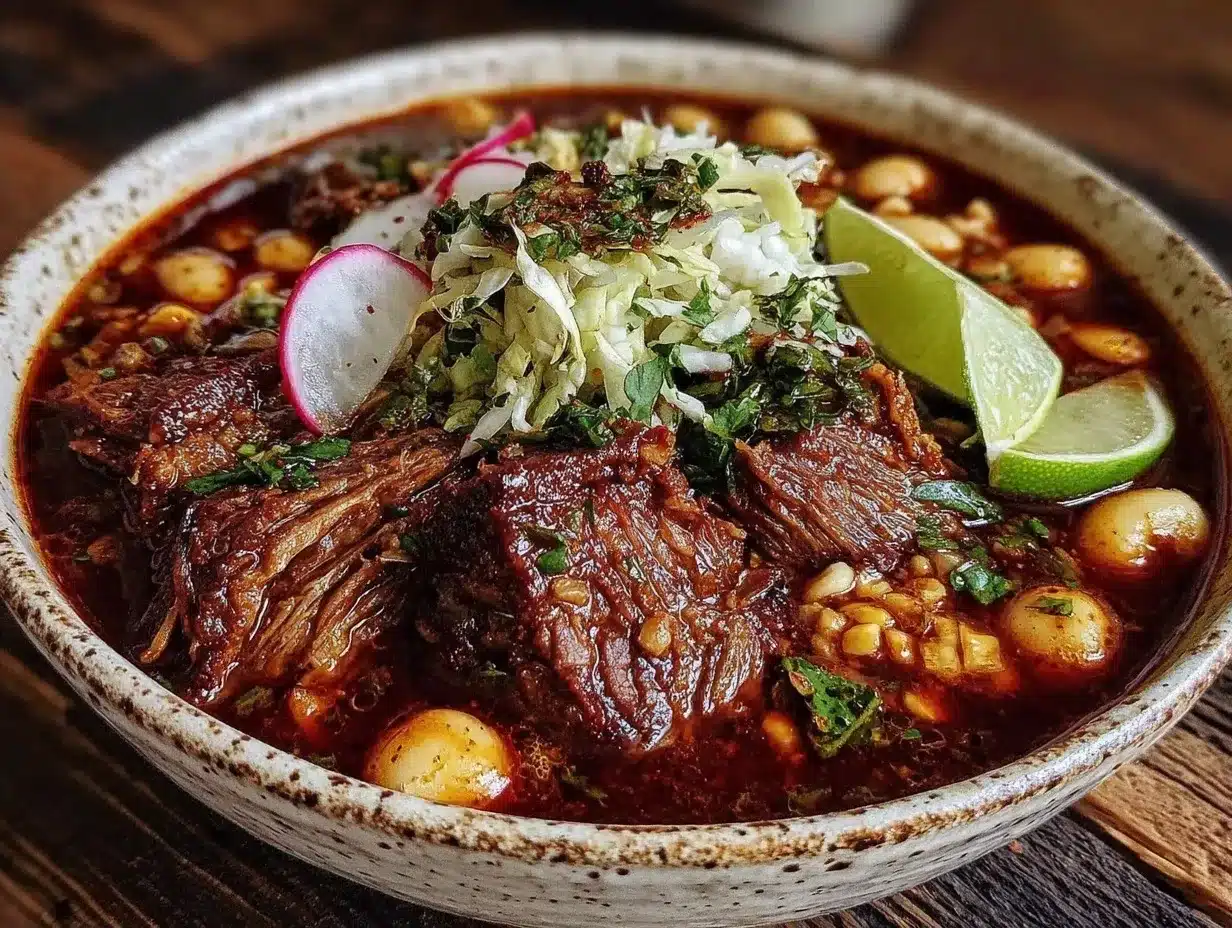
White Hominy (2 cans / 24 oz each, drained and rinsed) — Hominy is nixtamalized corn. It’s chewy, big, and adds a unique texture. Canned is fine and saves hours of soaking, but rinse it well to remove the metallic taste of the canning liquid. If you find fresh hominy in the produce section, use 3 cups of that instead.
Chicken broth or water (8 cups / 2 liters) — I use low-sodium chicken broth for depth, but you can use water if you prefer. Just be sure to salt adequately later.
The Toppings (The Self-Care Part)
This is where you customize your comfort. Set these out in small bowls:
- Shredded cabbage or lettuce (2 cups) — Adds crunch and freshness. Napa cabbage is best.
- Radishes (4-5, thinly sliced) — Peppery and crisp. Essential.
- Limes (2-3, cut into wedges) — The acid cuts through the richness. You’ll want lots of this.
- Dried oregano (for sprinkling) — A final burst of aroma.
- Avocado (1-2, sliced or diced) — Creamy balance to the heat.
- Cilantro (1 bunch, chopped) — Freshness.
Personal Tip: I always keep a small bowl of grated Cotija or Queso Fresco nearby. It’s salty and crumbly, and it adds a nice contrast to the soft pork. If you can’t find Mexican cheese, feta works in a pinch.
Equipment Needed
You don’t need fancy gadgets for this. Here’s what I actually use. Keep it simple.
Large Dutch oven or heavy-bottomed pot — I use a 7-quart Dutch oven. You need space for the pork, the liquid, and the hominy. A regular pot works, but a Dutch oven holds heat better, which helps with that slow, gentle simmer.
Blender — Any blender works. I use a standard countertop blender. If you’re making a large batch, you might need to blend the chiles in two batches.
Strainer or slotted spoon — To remove the boiled onions and garlic before blending, or to skim fat later.
Sharp knife and cutting board — For chopping the toppings. The prep is minimal, but a good knife makes it pleasant.
Small bowls — For the toppings. Having them ready before you serve makes the whole experience feel more intentional.
Tool Tip: Don’t have a Dutch oven? A large stockpot works fine. Just keep an eye on the heat so it doesn’t boil too vigorously.
How to Make It: Step-by-Step
Alright, let’s make this. I’m walking you through exactly how I do it, including the little tricks I’ve picked up over the years. This is a slow process, so take a breath. Pour yourself a glass of water or a cup of tea, and let the kitchen fill with aroma.
Step 1: Prep the Chiles (10 minutes)
Remove the stems and seeds from the dried Guajillo and Ancho chiles. This is important—the seeds can be bitter and too spicy. Break the pods into pieces. Place them in a heat-proof bowl and cover with hot (not boiling) water. Let them soak for 15-20 minutes until they are soft and pliable. This rehydrates them so they blend smoothly. While they soak, chop your cabbage and slice your radishes. Set those aside.
Step 2: Boil the Pork (15 minutes)
In your large pot, combine the pork chunks, quartered onion, garlic cloves, bay leaves, and 8 cups of broth or water. Bring to a boil over high heat. Once boiling, reduce the heat to low, cover partially, and let it simmer gently for 1.5 to 2 hours. You’re looking for the pork to become fork-tender. It should fall apart when you poke it. Why this matters: Boiling the pork first infuses the broth with meaty flavor and removes any impurities. Skim off any foam that rises to the top during the first 20 minutes.
Step 3: Blend the Sauce (5 minutes)
Drain the soaked chiles, reserving a little of the soaking liquid. Place the chiles in your blender. Add the bay leaves (optional, if you want extra flavor) and a splash of the hot chile soaking liquid to help it blend. Blend on high until you get a completely smooth, vibrant red paste. If it’s too thick, add a little more water. You should have about 2 cups of sauce.
Step 4: Combine and Simmer (1 hour)
Once the pork is tender, remove it from the pot with tongs and set it on a cutting board. Strain the broth through a fine-mesh sieve into a bowl, discarding the softened onions and garlic. Return the clear broth to the pot. Add the blended chile sauce and stir well. Bring back to a gentle simmer.
While the broth heats, shred the pork. You can use two forks or just pull it apart with your hands. Discard any large pieces of fat or gristle. Add the shredded pork and the drained hominy to the red broth. Simmer uncovered for 30-45 minutes. Sensory cue: The house will smell incredible. Spicy, earthy, savory. The broth should deepen in color and flavor.
Step 5: Season and Rest (5 minutes)
Taste the broth. This is crucial. Add salt to taste. It might need more than you think. Add Mexican oregano and stir. Let it sit off the heat for 10 minutes. Why: This rest period allows the flavors to meld. It’s the final act of self-care—letting the food settle before you eat it.
Step 6: Serve
Ladle the hot pozole into large bowls. Top with shredded cabbage, sliced radishes, avocado, a squeeze of lime, a sprinkle of dried oregano, and crumbled cheese. Serve immediately. Eat slowly.
Total Time: About 3.5 to 4 hours (mostly hands-off simmering)
Expert Tips & Tricks
Here’s everything I’ve learned from making this dozens of times. These tips will save you from my mistakes.
- Don’t Rush the Chiles — If you don’t soak them enough, they’ll be stringy and hard to blend. Soft is the goal. If your blender is weak, soak them longer.
- Skim the Fat — After simmering, you might see a layer of fat on top. You can skim it off with a spoon if you want a lighter broth, but I usually leave a little bit for richness. It’s your call.
- Shred the Pork Properly — Don’t just chop it. Shred it. The texture of pulled pork in pozole is key. It should mix with the hominy and broth, not sit as big chunks.
- Adjust the Heat — Dried chiles vary in heat. If you want it milder, remove more seeds. If you want more kick, add a chopped fresh serrano pepper when you blend the chiles.
- Use Low-Sodium Broth — Hominy and cheese are salty. Starting with low-sodium broth gives you control over the final salt level.
Common Mistakes:
- Sauce is too thick: Add more broth or water when blending. It should be the consistency of thin tomato sauce.
- Pork is tough: Keep simmering. Tough pork needs more time. Check every 30 minutes.
- Broth is bland: It needs more salt and oregano. Taste and adjust. Pozole should be robust.
Variations & Substitutions
Once you’ve nailed the basic version, here’s how you can mix it up. I’ve tried all of these.
- Pozole Verde (Green) — Skip the red chiles. Blend tomatillos, jalapeños, cilantro, and pumpkin seeds. It’s brighter and tangier.
- Pozole Blanco (White) — Skip the chiles entirely. Just use the pork broth, hominy, and garlic. Serve with a creamy salsa verde on the side.
- Vegetarian Pozole — Swap pork for mushrooms (cremini or shiitake) and add a bit of smoked paprika for depth. Use vegetable broth. It’s surprisingly hearty.
- Quick Version — Use rotisserie chicken instead of pork. Shred it and add it in the last 10 minutes. It won’t be as tender, but it’s faster.
Serving & Storage
How to Serve:
I usually serve this straight from the pot to the table. It’s rustic and communal. But if you’re eating alone, like I often do, I ladle it into a deep bowl and sit at the counter. It feels like a treat.
Side Dishes:
– Warm corn tortillas (essential for scooping)
– Simple side salad with lime vinaigrette
– Sliced avocado
Storage Instructions:
Refrigerator: Store in an airtight container for up to 4 days. The flavors get better! Reheat gently on the stove, adding a splash of broth if it’s too thick.
Freezing: Yes, it freezes well! Freeze in portions for up to 3 months. Thaw in the fridge overnight. The hominy might get softer, but it’s still delicious.
Pro Tip: If you’re meal prepping, keep the toppings separate. Add them fresh when you reheat.
Nutrition Information
I’m not a nutritionist, but here’s the breakdown if you’re tracking. This is a hearty meal, so portion sizes matter.
Per Serving (based on 6 servings):
- Calories: 450
- Protein: 35g
- Carbs: 40g
- Fat: 18g
- Fiber: 8g
- Sodium: 600mg (varies by salt)
What’s Good: High protein, good fiber from hominy and veggies. Healthy fats from avocado.
What to Know: It’s calorie-dense due to the pork and cheese. But it’s nutrient-rich. One bowl is usually enough.
Final Thoughts
So that’s my pozole. It’s not the fastest thing in the world. But sometimes, the slow things are the ones we need most. When I’m tired, when the world feels loud, this pot of red broth is my quiet place. It’s warm. It’s nourishing. It’s mine.
If you make this, take a moment. Notice the smell. Notice the steam. Notice how good it feels to eat something you made with care. That’s the point. That’s the self-care.
If you try this, let me know how it went. I’d love to hear about your toppings, your kitchen, your evening. Happy cooking, and be gentle with yourself.
Frequently Asked Questions
Can I make this in a slow cooker?
Yes! Sear the pork first if you can, then add everything (except toppings) to the slow cooker. Cook on low for 8 hours or high for 4-5 hours. The texture might be slightly different, but it’s still great.
Why is my pozole too spicy?
It’s likely the chile seeds. Next time, remove more seeds. To fix it now, add more broth or a diced potato while simmering (remove it later). The potato absorbs some heat.
Can I use canned hominy?
Yes, canned is fine. Just rinse it well. If you use dried hominy, you need to soak it overnight and cook it longer (3-4 hours) before adding the pork.
Is pozole supposed to be thick?
Not really. It’s a soup. But the hominy and pork starch can thicken it slightly. If you want it thinner, add more broth.
What cheese is best?
Cotija or Queso Fresco are traditional. Feta is a good substitute if you can’t find Mexican cheese. It adds that salty, crumbly contrast.
Can I freeze this?
Absolutely. It freezes beautifully. Just thaw in the fridge and reheat gently.
Pin This Recipe!


Mexican Pozole Rojo: Gentle Self-Care for Tired Evenings
- Total Time: 4 hours
- Yield: 6 servings 1x
Description
A slow-simmered, comforting red pork stew with hominy and dried chiles, designed to be a nourishing, hands-off meal that heals the soul.
Ingredients
- 3–4 lbs pork shoulder (Boston butt), cut into large chunks
- 10–12 dried Guajillo chiles, stems and seeds removed
- 4–6 dried Ancho chiles, stems and seeds removed
- 1 large yellow onion, quartered
- 6–8 cloves garlic, peeled
- 2–3 bay leaves
- 1 teaspoon Mexican oregano
- 2 cans (24 oz each) white hominy, drained and rinsed
- 8 cups low-sodium chicken broth or water
- 2 cups shredded cabbage or lettuce
- 4–5 radishes, thinly sliced
- 2–3 limes, cut into wedges
- 1–2 avocados, sliced or diced
- 1 bunch cilantro, chopped
- Dried oregano for sprinkling
- Grated Cotija or Queso Fresco cheese (optional)
Instructions
- Remove stems and seeds from dried Guajillo and Ancho chiles. Break into pieces and soak in hot water for 15-20 minutes until soft.
- In a large Dutch oven or heavy-bottomed pot, combine pork chunks, quartered onion, garlic cloves, bay leaves, and broth/water. Bring to a boil, then reduce heat to low, cover partially, and simmer for 1.5 to 2 hours until pork is fork-tender. Skim foam from the surface.
- Drain soaked chiles, reserving some liquid. Blend chiles with a splash of soaking liquid and optional bay leaves until smooth to create a vibrant red paste.
- Remove tender pork from the pot and set aside. Strain the broth through a fine-mesh sieve, discarding onions and garlic. Return clear broth to the pot.
- Add the blended chile sauce to the broth and bring to a gentle simmer.
- Shred the pork, discarding large pieces of fat or gristle. Add shredded pork and drained hominy to the red broth. Simmer uncovered for 30-45 minutes.
- Taste the broth and add salt and Mexican oregano as needed. Let the pozole rest off the heat for 10 minutes to allow flavors to meld.
- Ladle into bowls and serve with toppings: shredded cabbage, radishes, avocado, lime wedges, dried oregano, and cheese.
Notes
This recipe is forgiving and can be made in a slow cooker (low 8 hours or high 4-5 hours). The flavors deepen overnight, making it excellent for meal prep. Keep toppings separate when storing. If the sauce is too thick, add more broth when blending. If the pork is tough, continue simmering.
- Prep Time: 10 minutes
- Cook Time: 3 hours 30 minutes
- Category: Main Course
- Cuisine: Mexican
Nutrition
- Serving Size: 1 large bowl
- Calories: 450
- Sodium: 600
- Fat: 18
- Carbohydrates: 40
- Fiber: 8
- Protein: 35
Keywords: Mexican Pozole, Pozole Rojo, pork stew, hominy soup, comfort food, slow cooker recipe, Mexican cuisine, red chile stew