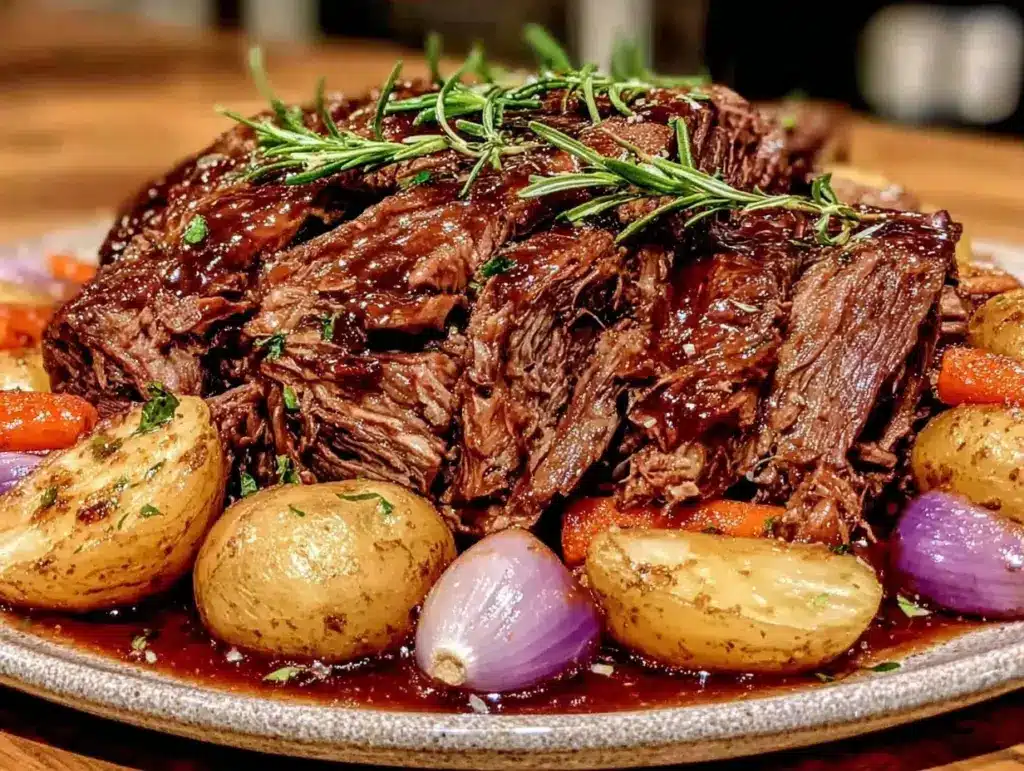
There is a specific kind of loneliness that comes with cooking for one. You know the feeling. You pull out your biggest pot because that’s what the recipe calls for, you chop three carrots when you really only need one, and suddenly you’re staring at a mountain of food that’s going to rot in your fridge before you can finish it. I’ve been there. I’ve spent entire weekends eating reheated pot roast on stale bread because I couldn’t bear to throw it away, even though the flavor was already turning weird.
That’s why I finally stopped trying to scale down big recipes and started building this slow cooker pot roast with red wine for small batches from scratch. It’s not just a smaller version of a family meal. It’s a completely different animal. It’s designed for two people (or one very hungry person with strong willpower). It uses a smaller cut of meat, a modest amount of wine, and just enough vegetables to make it feel like a real dinner without turning your kitchen into a grocery store inventory exercise.
I’ve tested this recipe about a dozen times over the last six months. Some versions were too watery, some had meat that fell apart into stringy shreds, and one had too much wine that tasted bitter. But the version I’m sharing now? It’s perfect. The meat is fork-tender but still holds its shape. The gravy is rich and deeply flavored from the red wine and thyme, and best of all, it makes exactly one or two extra servings for lunch the next day. No waste. No stress. Just a cozy, hearty meal that fits your life.
Why You’ll Love This Small-Batch Pot Roast
If you’ve ever felt guilty about throwing away half a pot roast, this recipe is your redemption arc. Here’s why this small-batch version has completely changed my weeknight routine:
Right-Sized Portions — Seriously, this makes about 4-6 cups of finished dish. That’s two generous dinners for two people, or three smaller meals if you’re meal-prepping. It fits perfectly in a standard quart-sized container. No giant Tupperware towers cluttering your fridge.
Uses a Whole Bottle of Wine — Okay, not a whole bottle. About 3/4 cup. But that’s enough to open a nice bottle, pour yourself a glass while it simmers, and cook with the rest without feeling wasteful. If you open a bottle and don’t use it all, that’s your problem to solve later (maybe a nice pairing idea for another night?). The wine reduces into a deep, complex gravy that tastes like you spent hours at a fancy bistro.
No Weird Vegetable Baggage — Most pot roast recipes call for 4 carrots, 3 stalks of celery, and a whole onion. For two people? That’s a lot of chopping and a lot of leftovers. This recipe uses just one large carrot, half an onion, and a few sprigs of fresh thyme. It’s focused. It’s intentional. It tastes better because you’re not drowning the meat in filler.
Tender Meat, Every Time — I use a smaller chuck roast (about 1.5 to 2 pounds). This size cooks in 6-7 hours on low, which is perfect for a lazy Sunday or a slow weekday. The meat stays moist because it’s not swimming in excess liquid. It’s rich, not soggy.
Freezes Like a Dream — Because the portion is small, you can freeze the leftovers in individual portions. No more thawing a giant block of meat and wondering what to do with half of it. Just pull out one container, reheat, and eat. It’s meal prep without the effort.
This is my go-to when I want comfort food but don’t want to commit to feeding an army. It’s warm, it’s savory, and it leaves my kitchen smelling amazing without leaving me with a week of leftovers I didn’t ask for.
Ingredients You’ll Need
Here’s the best part: you probably have most of this already. I’m particular about three ingredients here, and I’ll tell you exactly why. For a small batch, quality matters more than quantity because there’s less to hide behind.
Chuck Roast (1.5 to 2 pounds / 680-900g) — This is the heart of the dish. Look for a small chuck roast, sometimes labeled as a “braising steak” or “pot roast” in smaller sizes. It needs marbling. If it looks lean and pink, put it back. You want fat marbling throughout; that’s what turns into tender, juicy meat. Don’t buy the pre-trimmed lean stuff. It’ll be dry.
Red Wine (3/4 cup / 180ml) — This is non-negotiable. You need a dry red wine that you’d actually drink. A Cabernet Sauvignon, Merlot, or Pinot Noir works great. Avoid “cooking wine” from the vinegar aisle. It’s salty and tastes like chemicals. Open a bottle, pour yourself a glass, and use the rest. If you don’t drink wine, use beef broth plus 1 tablespoon of balsamic vinegar for depth.
Beef Broth (1 cup / 240ml) — Low-sodium is best so you can control the saltiness. The wine adds salt, and the soy sauce (more on that later) adds salt. Start low, adjust later.
Onion (1 medium yellow onion, chopped / about 150g) — Just one. Chop it into rough chunks. You want onion flavor, not onion overload. Yellow onions are sweet and savory when cooked down.
Carrots (2 large or 3 medium, cut into 1-inch chunks / about 200g) — Peel them and cut them into rustic chunks. They should be big enough to hold up in the slow cooker but small enough to eat easily. Don’t slice them thin; they’ll turn to mush.
Garlic (4 cloves, minced / about 2 tablespoons) — Fresh garlic is key. Jarred garlic has a metallic taste that clashes with the wine. Fresh garlic gets sweet and mellow after 7 hours of cooking. Don’t skimp.
Tomato Paste (2 tablespoons) — This adds umami and depth. It’s not there to make it taste like tomato sauce. It’s there to give the gravy a rich, dark color and a savory backbone. Sear it in the pan first for better flavor.
Worcestershire Sauce (1 tablespoon) — This is the secret weapon. It adds a tangy, savory depth that mimics long-simmered stocks. It’s not overpowering, but you’ll miss it if it’s not there.
Soy Sauce (1 tablespoon) — Yes, soy sauce in a pot roast. It adds salt and umami without tasting Asian. It’s a trick I learned from a chef friend who swears by it for dark gravies.
Fresh Thyme (4-5 sprigs) — Fresh thyme is better than dried here. The leaves infuse the liquid beautifully. If you only have dried, use 1 teaspoon, but fresh is worth the trip to the store.
Bay Leaf (1) — Standard stuff. Remove it before serving. It adds a subtle herbal note.
All-Purpose Flour (2 tablespoons) — Used to dredge the meat before searing. This helps thicken the gravy and creates a crust that locks in flavor.
Salt and Black Pepper — To taste. Use kosher salt if you have it. Coarse black pepper adds a nice bite.
Optional: Potatoes (1 pound small Yukon Gold potatoes, halved) — I usually skip potatoes in the slow cooker because they can get mushy. But if you want them, add them in the last 2 hours. They hold their shape better than russets.
Equipment Needed
You don’t need fancy equipment for this. Here’s what I actually use.
Small Slow Cooker (3-4 quart) — This is crucial. A 6-quart cooker will leave too much air space, and the meat won’t cook evenly. A 3-4 quart cooker is perfect for 1.5-2 pounds of meat. If you only have a big one, it still works, but you might need to add a little more liquid.
Large Skillet — For searing the meat. I use a 10-inch cast iron skillet. It holds heat well and gets a good crust. Stainless steel works too.
Sharp Knife — For chopping the onion and carrots. A dull knife makes chopping onions a crying session.
Cutting Board — Any size. I use a plastic one for easier cleanup.
Measuring Cups and Spoons — Standard stuff. Dollar store versions work fine.
Wooden Spoon or Silicone Spatula — For stirring the sear and the gravy.
Slotted Spoon — For removing the meat from the slow cooker if you want to shred it or plate it separately.
Optional: Potato Masher — If you add potatoes and want to mash them into the gravy for extra thickness.
How to Make It: Step-by-Step
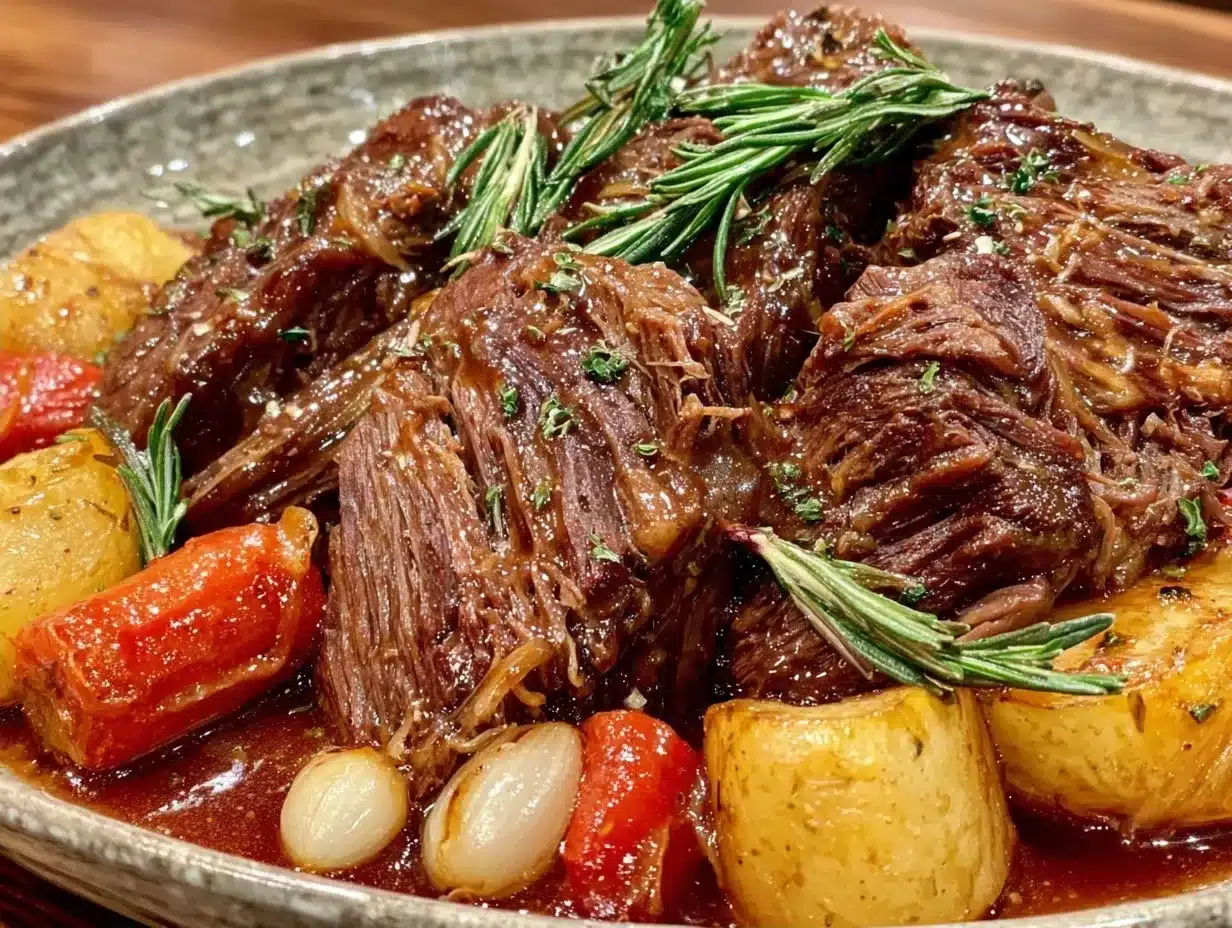
Alright, let’s make this! I’m walking you through exactly how I do it, including the little tricks I’ve picked up. This isn’t just “throw it in the pot.” There’s a method that makes the difference between good pot roast and great pot roast.
Step 1: Prep the Meat (5 minutes)
Pat the chuck roast dry with paper towels. This seems minor, but dry meat sears better. Wet meat steams. Season the meat generously on all sides with salt and black pepper. Dust it lightly with flour, shaking off any excess. The flour helps thicken the gravy and creates a crust.
Step 2: Sear the Meat (10 minutes)
Heat 1 tablespoon of oil in your large skillet over medium-high heat. When the oil shimmers, add the meat. Sear it for 3-4 minutes per side until it’s deeply browned. Don’t rush this. You want a dark, crusty exterior. This is where the flavor starts. If the meat sticks, don’t panic. Just let it release naturally. Remove the meat and set it aside on a plate.
Step 3: Deglaze the Pan (2 minutes)
Reduce heat to medium. Add the chopped onion to the same skillet. Cook for 2-3 minutes until softened. Add the garlic and tomato paste. Cook for 1 minute, stirring constantly. The tomato paste should darken slightly. Pour in the red wine. Scrape up all the brown bits from the bottom of the pan with a wooden spoon. These bits are pure flavor. Let the wine simmer for 2 minutes to cook off the alcohol.
Step 4: Build the Gravy Base (1 minute)
Add the beef broth, Worcestershire sauce, soy sauce, thyme sprigs, and bay leaf to the skillet. Stir to combine. This is your gravy base. It should smell incredible. If it smells good raw, it will taste amazing cooked.
Step 5: Load the Slow Cooker (2 minutes)
Place the seared meat into the slow cooker. Pour the wine-onion mixture over the meat. Add the carrot chunks around the meat. If you’re adding potatoes, add them now. Pour any remaining liquid from the skillet over the top. Make sure the meat is mostly submerged. If it’s not, add a splash more broth.
Step 6: Cook (6-7 hours)
Cover and cook on LOW for 6-7 hours. Do not cook on HIGH. Low and slow is the key to tender meat. If you cook on high, the meat will be tough. Set a timer. Check it at 6 hours. The meat should be fork-tender but not falling apart. If it’s still tough, give it another hour.
Step 7: Finish the Gravy (5 minutes)
Remove the meat and vegetables to a serving platter. Discard the thyme sprigs and bay leaf. If the gravy is too thin, mix 1 tablespoon of cornstarch with 1 tablespoon of cold water to make a slurry. Stir it into the hot liquid in the slow cooker. Cook on HIGH for 10-15 minutes until thickened. If you like it thicker, add more slurry. If it’s too thick, add a splash of broth.
Step 8: Serve
Spoon the gravy over the meat and vegetables. Serve with crusty bread, mashed potatoes, or rice. The gravy is the star here. Don’t skip it.
Total Time: About 7.5 hours (15 minutes active, 7 hours hands-off)
Expert Tips & Tricks
Here’s everything I’ve learned from making this dozens of times. These tips will save you from my mistakes.
Sear the Meat Well
This is the #1 tip. The sear creates the Maillard reaction, which gives the pot roast its deep, savory flavor. If you skip the sear, you’re just boiling meat in wine. It’s fine, but it’s not great. Take the time to get a good crust.
Don’t Skimp on Wine
The wine is not just liquid. It’s flavor. It adds acidity, tannins, and complexity. If you use broth instead, the dish will taste flat. Use a wine you like. If you don’t like it, you won’t like the pot roast.
Use Low-Sodium Broth
Wine and soy sauce are salty. If you use high-sodium broth, the dish will be too salty. Start low, taste, and adjust at the end.
Check for Tenderness
At 6 hours, poke the meat with a fork. If it goes in easily, it’s done. If it resists, cook for another hour. Don’t pull it out early. Tough meat is disappointing.
Thicken the Gravy
The natural juices from the meat will thicken the gravy, but it might be thin. The cornstarch slurry is a quick fix. Add it at the end. Stir well and let it cook for 10 minutes.
Common Mistakes (and how to avoid them):
Mistake: Meat is tough
Fix: Cook it longer. Or, the cut was too lean. Next time, look for more marbling.
Mistake: Gravy is too thin
Fix: Use a cornstarch slurry. Or, cook it uncovered on HIGH for 20 minutes to reduce.
Mistake: Gravy is too salty
Fix: Add a peeled potato to the gravy while it heats. The potato absorbs salt. Remove it before serving. Or, add a splash of water or broth.
Variations & Substitutions
Once you’ve nailed the basic version, here’s how you can mix it up. I’ve tried all of these.
Gluten-Free
Use gluten-free soy sauce and skip the flour dredge. Use a cornstarch slurry for thickening. Everything else is naturally gluten-free.
Low-Carb
Skip the potatoes. Use more carrots or add mushrooms. Use a cornstarch slurry or just reduce the gravy naturally. The meat and veggies are low-carb anyway.
Vegetarian
Swap the meat for large portobello mushrooms or seared tofu. Use vegetable broth. The wine and herbs work great with mushrooms. It’s a completely different dish, but still cozy.
Different Veggies
Add parsnips, turnips, or celery. Just chop them to the same size as the carrots. They’ll cook evenly. I like adding parsnips for a sweet contrast.
Spicy Version
Add a pinch of red pepper flakes or a dash of hot sauce to the gravy. It adds a nice kick that cuts through the richness.
Serving & Storage
How to Serve:
I usually serve this straight from the slow cooker insert at the dinner table—it looks rustic and stays warm. But here are other ways I’ve enjoyed it:
Side Dishes:
– Crusty sourdough bread (for soaking up gravy)
– Mashed potatoes (classic)
– Rice or noodles (budget-friendly)
– Simple green salad with vinaigrette (to cut the richness)
Storage Instructions:
Refrigerator:
Store in an airtight container for up to 4 days. The flavors actually get better after a day or two. The meat absorbs more of the gravy.
Reheating:
Best method: Add to a skillet with a splash of broth or water over low heat. Stir until heated through.
Microwave method: Heat in 1-minute intervals, stirring between. Add a splash of liquid to prevent drying out.
Never works: Trying to reheat in the slow cooker on “warm” for hours. It’ll dry out. Ask me how I know.
Freezing:
Yes, this freezes well! Cool completely, then freeze in individual portions or a single large container for up to 3 months. Thaw in the fridge overnight. Reheat gently. The meat stays tender.
Nutrition Information
I’m not a nutritionist, but here’s the breakdown if you’re tracking. This is per serving (based on 2 servings).
| Nutrient | Amount |
|---|---|
| Calories | 450 |
| Protein | 35g |
| Carbs | 15g |
| Fiber | 3g |
| Fat | 25g |
| Sodium | 600mg |
What’s Good: High protein, moderate carbs, rich in iron from the beef. The wine adds antioxidants.
What to Know: Higher in calories from the meat and wine. Contains alcohol (though most cooks off). Moderate sodium.
Final Thoughts
So that’s my small-batch slow cooker pot roast! I’ve probably talked your ear off at this point, but when you make a recipe this often, you have a lot to say about it. This has saved my weeknight dinners more times than I can count. It’s my answer to “what’s for dinner” when I’m tired, don’t want takeout, and still want something that tastes really good. It’s cozy, it’s comforting, and it doesn’t leave me with a week of leftovers I didn’t ask for.
If you make this, drop a comment and let me know what you think! I love hearing how recipes turn out in your kitchen. And if something doesn’t work, tell me that too—I’m here to help troubleshoot. Happy cooking! And I hope your kitchen smells half as good as mine does right now.
Frequently Asked Questions
Can I use a different cut of meat?
Chuck roast is best because of the fat content. But you can use brisket or short ribs. Just make sure they’re small enough to fit in your slow cooker. Leaner cuts like round steak will be tougher and drier.
Can I cook this on HIGH?
You can, but it’ll take 3-4 hours and the meat might not be as tender. Low and slow is the key to breaking down the connective tissue. If you’re in a rush, HIGH works, but expect a slightly chewier result.
Why is my gravy too thin?
Usually means you didn’t sear the meat well enough to release flavor, or you added too much liquid. Use a cornstarch slurry at the end. Or, cook it uncovered on HIGH for 20 minutes to reduce.
Can I freeze this?
Yes! Cool completely, then freeze in individual portions. It freezes well for up to 3 months. Thaw in the fridge and reheat gently.
Can I add potatoes?
Yes, but add them in the last 2 hours. If you add them at the beginning, they’ll turn to mush. Yukon Golds hold their shape better than russets.
What if I don’t drink wine?
Use beef broth plus 1 tablespoon of balsamic vinegar. It adds the acidity and depth that wine provides. It’s not the same, but it’s still delicious.
How do I reheat leftovers without drying out?
Add a splash of broth or water to the leftovers. Reheat gently on the stove. Microwaving can dry it out, so if you must, use low power and stir frequently.
Pin This Recipe!
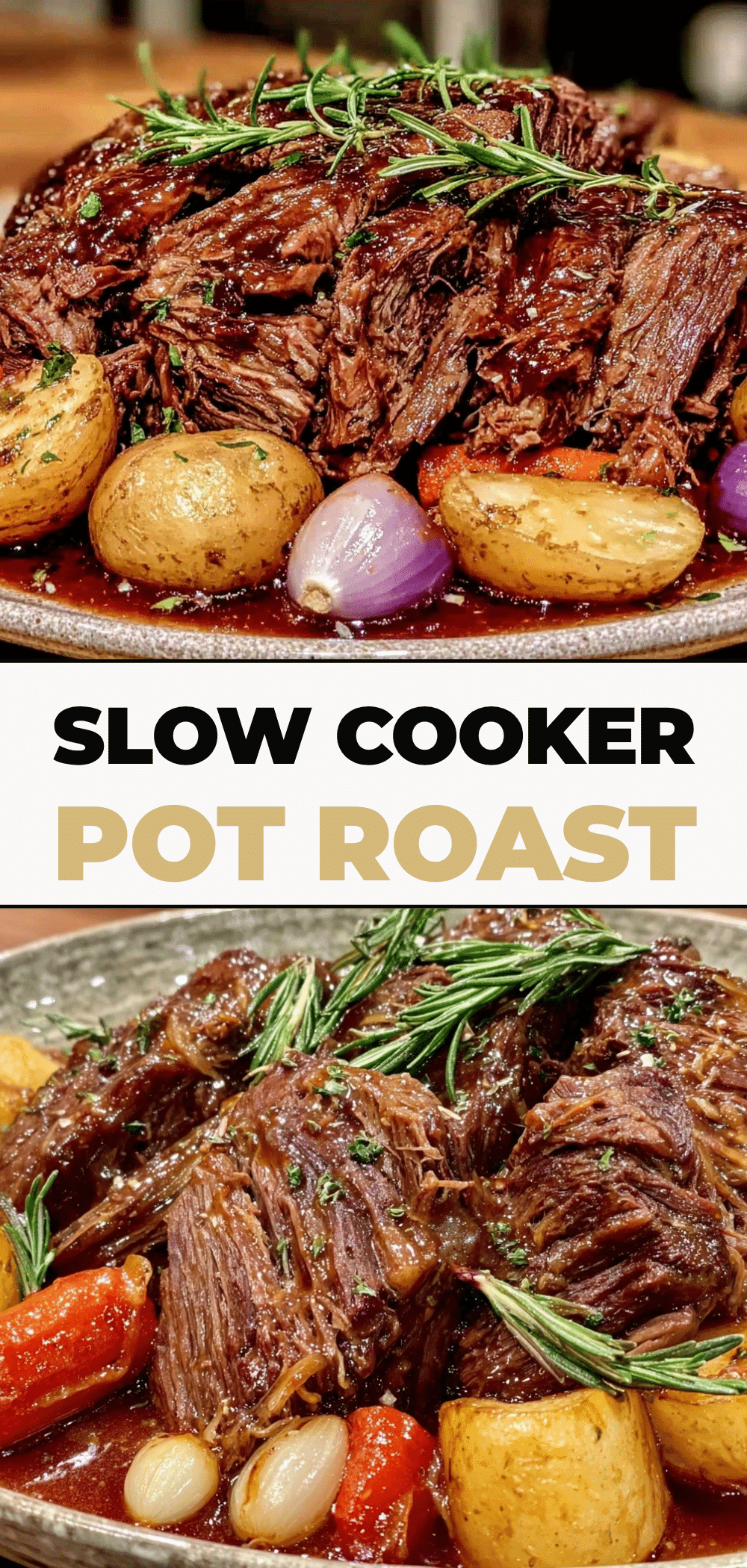
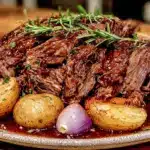
Slow Cooker Pot Roast with Red Wine: Small Batch, No Leftovers
- Total Time: 7.5 hours
- Yield: 2 servings 1x
Description
A perfectly scaled slow cooker pot roast designed for one or two people, featuring tender chuck roast, rich red wine gravy, and minimal vegetable waste.
Ingredients
- 1.5 to 2 pounds chuck roast
- 3/4 cup dry red wine (Cabernet Sauvignon, Merlot, or Pinot Noir)
- 1 cup low-sodium beef broth
- 1 medium yellow onion, chopped
- 2 large or 3 medium carrots, cut into 1-inch chunks
- 4 cloves garlic, minced
- 2 tablespoons tomato paste
- 1 tablespoon Worcestershire sauce
- 1 tablespoon soy sauce
- 4–5 sprigs fresh thyme
- 1 bay leaf
- 2 tablespoons all-purpose flour
- Salt and black pepper to taste
- 1 tablespoon oil (for searing)
- Optional: 1 pound small Yukon Gold potatoes, halved
Instructions
- Pat the chuck roast dry with paper towels. Season generously with salt and pepper, then dust lightly with flour, shaking off excess.
- Heat 1 tablespoon of oil in a large skillet over medium-high heat. Sear the meat for 3-4 minutes per side until deeply browned. Remove meat and set aside.
- Reduce heat to medium. Add chopped onion to the skillet and cook for 2-3 minutes until softened. Add garlic and tomato paste, cooking for 1 minute until tomato paste darkens.
- Pour in the red wine and scrape up brown bits from the bottom of the pan. Simmer for 2 minutes to cook off alcohol.
- Add beef broth, Worcestershire sauce, soy sauce, thyme sprigs, and bay leaf to the skillet. Stir to combine.
- Place the seared meat into a 3-4 quart slow cooker. Pour the wine-onion mixture over the meat. Add carrot chunks around the meat. If using potatoes, add them now. Ensure meat is mostly submerged.
- Cover and cook on LOW for 6-7 hours until meat is fork-tender.
- Remove meat and vegetables to a serving platter. Discard thyme sprigs and bay leaf.
- If gravy is too thin, mix 1 tablespoon cornstarch with 1 tablespoon cold water to make a slurry. Stir into the hot liquid in the slow cooker and cook on HIGH for 10-15 minutes until thickened.
- Spoon gravy over meat and vegetables. Serve with crusty bread, mashed potatoes, or rice.
Notes
Do not cook on HIGH as the meat may become tough. If you don’t drink wine, substitute with beef broth plus 1 tablespoon of balsamic vinegar. For gluten-free, use GF soy sauce and skip the flour dredge, using a cornstarch slurry for thickening. Add potatoes in the last 2 hours of cooking to prevent mushiness.
- Prep Time: 15 minutes
- Cook Time: 6-7 hours
- Category: Main Course
- Cuisine: American
Nutrition
- Serving Size: Approximately 4-6 cu
- Calories: 450
- Sodium: 600
- Fat: 25
- Carbohydrates: 15
- Fiber: 3
- Protein: 35
Keywords: slow cooker pot roast, small batch recipes, dinner for two, red wine pot roast, chuck roast, meal prep, comfort food