Last October, I was standing in my kitchen at 6 PM on a Tuesday, staring at a grocery bag that contained exactly three things: an acorn squash, a bag of wild rice, and a handful of pecans. I had zero plans. My family was expecting dinner, but I had forgotten to go to the store for anything substantial. I was about to order pizza, but then I looked at that squash. It was sitting there, hard and unassuming, looking like it had a secret to tell.
I decided to roast it whole, chop it open, and throw whatever else I had in the pantry inside. I didn’t have much—just some leftover onions, a pinch of sage from a drawer I hadn’t touched in months, and that wild rice I keep for emergencies. I tossed it all together, baked it, and waited. When I pulled it out of the oven, the kitchen smelled like autumn itself. Sweet, earthy, warm. My kids, who usually turn their noses up at anything that looks like “health food,” devoured it. They asked for seconds. Then thirds.
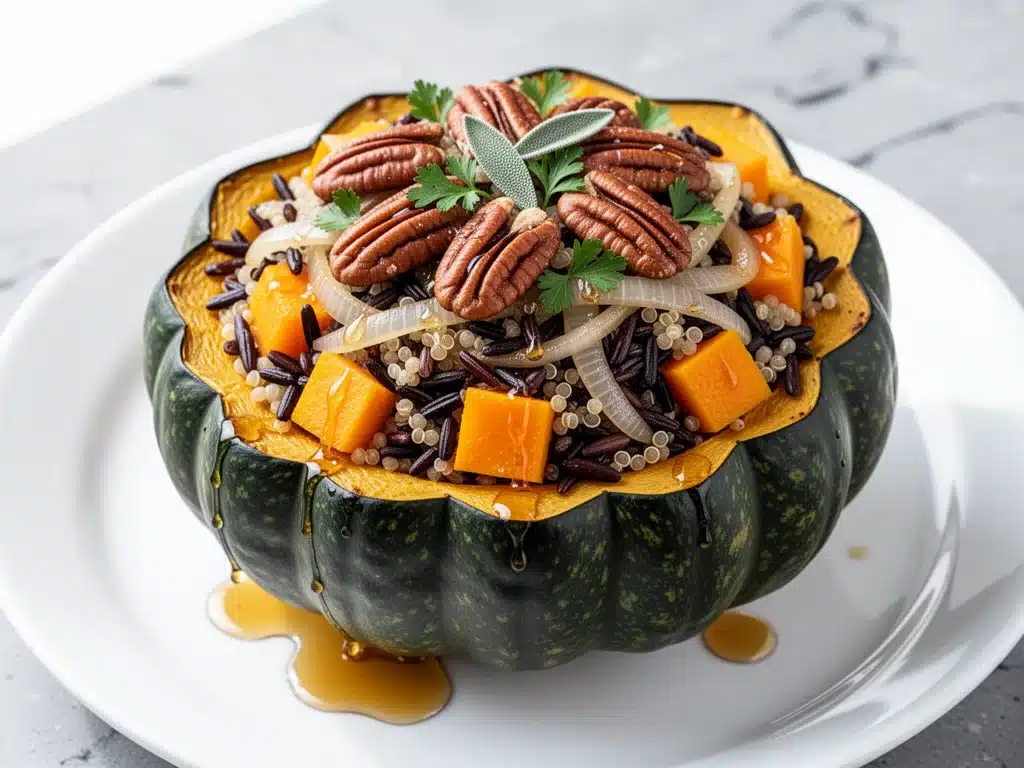
That accidental Tuesday dinner turned into a tradition. Now, every time Sukkot approaches, or whenever I need a dinner that looks like I spent hours in the kitchen but actually takes about 45 minutes from start to finish, I make this Sukkot stuffed acorn squash with wild rice and toasted pecans. It’s the perfect balance of comfort and elegance. It’s vegetarian, it’s gluten-free (if you check your broth), and it’s honestly the most beautiful thing you’ll serve all season.
I’ve tested this recipe about a dozen times now. I’ve tried different grains, different nuts, different herbs. But this combination? This is the one that sticks. It’s got the nutty crunch of the pecans, the chewy texture of the wild rice, and the natural sweetness of the squash that caramelizes in the oven. It’s not just a side dish; it’s a main event that feels like a hug on a plate.
Why You’ll Love This Sukkot Stuffed Acorn Squash Recipe
There are a lot of squash recipes out there. But this stuffed acorn squash recipe stands out for reasons that go beyond just “it tastes good.” Here’s why this has become my go-to for holiday dinners and cozy weeknights alike:
It Looks Impressive But Isn’t Hard
Let’s be real: presentation matters. When you pull a golden-brown, perfectly roasted acorn squash filled with a savory, fragrant rice mixture out of the oven, it looks like you hired a chef. But the truth? It’s mostly just roasting. The hard part (cutting the squash) is the only real skill involved, and even that is easier than you think. I’ve made this while juggling three kids and a phone call. It works.
Perfect for Sukkot and Fall Gatherings
This dish is deeply rooted in the harvest season. The ingredients—squash, nuts, grains—are traditional symbols of abundance and gratitude, making it ideal for Sukkot. But it’s also just a fantastic fall dinner. It pairs beautifully with the kinds of cozy vibes we love in October and November. It’s warm, hearty, and feels special without being fussy.
Gluten-Free and Vegetarian Friendly
My family has diverse dietary needs. My brother is gluten-free, and my sister is vegetarian. This recipe naturally fits both. The wild rice and squash are gluten-free by nature. I use vegetable broth to keep it vegetarian, but you can easily swap in chicken broth if you eat meat. It’s a dish that brings everyone to the table without needing separate meals.
Meal-Prep Magic
Here’s a secret: this tastes even better the next day. The flavors meld together overnight, and the rice absorbs more of the squash’s sweetness. I often make two squash on Sunday, store them in the fridge, and reheat them during the week. It’s a lazy person’s dream come true. Plus, it reheats beautifully in the oven, staying moist and flavorful.
Nutty, Sweet, and Savory All at Once
The combination of toasted pecans and wild rice creates a texture contrast that’s addictive. The pecans add a buttery crunch, while the rice provides a chewy, substantial base. The wild rice’s earthy, peppery flavor pairs perfectly with the mild sweetness of the acorn squash. It’s a flavor profile that’s complex but balanced.
Ingredients You’ll Need for Stuffed Acorn Squash
One of the best parts of this recipe is how simple the ingredient list is. You don’t need anything exotic or hard to find. Everything is seasonal and likely available at your local grocery store. Here’s what you’ll need, and why each piece matters.
For the Squash
Acorn squash (2 medium, about 1.5 lbs each) — This is the star. Look for squash that feels heavy for its size and has a deep green skin with some orange patches. That’s a sign of sweetness. Avoid squash with soft spots or cracks. I buy mine from the farmer’s market when I can, but the big box stores work fine too.
Olive oil (2 tablespoons) — I use extra virgin for the best flavor, but a neutral oil like avocado oil works if you don’t have olive oil. It helps the squash roast evenly and gives it that golden color.
Sea salt and black pepper — Essential for seasoning the squash itself. Don’t skip this! It brings out the natural sweetness.
For the Filling
Wild rice (1 cup, uncooked) — I prefer a blend of wild rice and brown rice for better texture, but 100% wild rice is traditional. Wild rice has a nuttier flavor and chewier texture than white rice. It takes longer to cook, so plan accordingly. I’ve used creamy wild rice in other dishes, and it’s always a hit, but here the grain shines on its own.
Vegetable broth (2 cups) — Cook the rice in broth instead of water for way more flavor. Use low-sodium so you can control the saltiness. I keep a carton of low-sodium broth in the fridge at all times for recipes like this.
Yellow onion (1 medium, diced) — Sweet onions work too, but yellow onion gives a nice savory base. Dice it small so it cooks evenly.
Garlic (3 cloves, minced) — Fresh garlic is a must. Jarred garlic just doesn’t have the same punch. Mince it finely so it distributes well in the rice.
Pecans (½ cup, chopped) — Toasting them first is non-negotiable. It brings out their natural oils and makes them crunchy. I buy raw pecans and toast them myself. Pre-toasted pecans can sometimes taste rancid or stale.
Fresh sage (2 tablespoons, chopped) — Sage is the classic herb for fall squash. It’s earthy and slightly peppery. If you don’t like sage, thyme or rosemary work too, but sage is the traditional choice for Sukkot.
Maple syrup (1 tablespoon) — Just a touch to enhance the squash’s natural sweetness. Don’t use sugar; maple syrup adds a depth of flavor that pairs perfectly with pecans.
Butter or olive oil (1 tablespoon) — For sautéing the onions and garlic. Butter adds richness, but olive oil keeps it vegetarian-friendly. I usually go with olive oil.
Optional: Dried cranberries or raisins (¼ cup) — If you like a bit of chewy sweetness, add these. I sometimes skip them, but they’re a nice addition for a more festive flavor profile.
Equipment Needed
You don’t need fancy tools for this. Here’s what I actually use in my kitchen:
Large chef’s knife — This is the most important tool. Cutting an acorn squash can be tricky because it’s hard and round. I use a heavy-duty chef’s knife for stability. A dull knife will slip, so make sure yours is sharp. If you’re nervous about cutting it, microwave it for 2 minutes first to soften the skin.
Rimmed baking sheet — I line it with parchment paper for easy cleanup. The baking sheet needs to be large enough to hold two squash halves flat-side down.
Small saucepan — For cooking the wild rice. A 2-quart pot works perfectly.
Large skillet — For sautéing the onions, garlic, and toasting the pecans. A 10-inch skillet is ideal.
Measuring cups and spoons — Standard stuff. I use metal measuring cups for dry ingredients and glass for liquids.
Wooden spoon — For stirring the rice and sautéing. Silicone works too, but I prefer wood for heat resistance.
Paring knife — For removing the seeds and stringy bits from the squash after roasting.
How to Make Sukkot Stuffed Acorn Squash
Alright, let’s get into the nitty-gritty. This process is straightforward, but there are a few key steps that make the difference between good and great. I’m walking you through exactly how I do it.
Step 1: Prep the Squash (10 minutes)
Preheat your oven to 400°F (200°C). Line a baking sheet with parchment paper. Take your acorn squash and wash it thoroughly. Here’s the trick for cutting it safely: pierce the skin all over with a fork, then microwave it for 2-3 minutes. This softens the skin just enough to make cutting easier and safer. Stand the squash upright on the cutting board and carefully slice it in half lengthwise, from stem to bottom. Use a sturdy knife and steady hands. Scoop out the seeds and stringy pulp with a spoon. Discard the seeds (or roast them separately if you’re feeling fancy). Brush the cut sides lightly with olive oil and season with salt and pepper.
Step 2: Roast the Squash (30-40 minutes)
Place the squash halves cut-side down on the prepared baking sheet. Roast in the preheated oven for 30-40 minutes. You’ll know it’s done when a fork slides easily into the flesh. The edges might start to caramelize and brown, which is perfect. Remove from the oven and let it cool slightly. Flip them cut-side up when they’re cool enough to handle. Scoop out any loose seeds if there are any left.
Step 3: Cook the Wild Rice (35-45 minutes)
While the squash roasts, cook the wild rice. Rinse the rice under cold water. In a saucepan, combine the rice and vegetable broth. Bring to a boil, then reduce heat to low, cover, and simmer for 35-45 minutes, or until the rice is tender and the liquid is absorbed. Wild rice takes longer than white rice, so don’t rush it. If the water evaporates before the rice is tender, add a little more broth. Once cooked, fluff with a fork and set aside.
Step 4: Sauté the Aromatics (5 minutes)
In a large skillet, heat olive oil over medium heat. Add the diced onion and cook for 3-4 minutes until softened and translucent. Add the minced garlic and cook for another minute until fragrant. Be careful not to burn the garlic—it will turn bitter. Stir in the chopped sage and cook for 30 seconds to release its flavor.
Step 5: Toast the Pecans (2 minutes)
Remove the skillet from heat. Add the chopped pecans to the onion mixture. The residual heat will toast them slightly. If you want them extra crunchy, you can toast them in a dry pan before adding them to the onions. I usually just add them here for convenience.
Step 6: Combine the Filling (2 minutes)
In a large bowl, combine the cooked wild rice, the onion-pecan mixture, maple syrup, and dried cranberries (if using). Toss everything together until well combined. Taste and adjust seasoning with salt and pepper. The mixture should be moist but not wet. If it’s too dry, add a splash more broth.
Step 7: Stuff and Bake (15 minutes)
Spoon the rice mixture generously into each roasted squash half. Pack it in lightly. Place the stuffed squash back on the baking sheet, cut-side up. Bake in the oven for 15 minutes to heat the filling through and let the flavors meld. The top of the filling might get slightly crispy, which is delicious.
Step 8: Serve
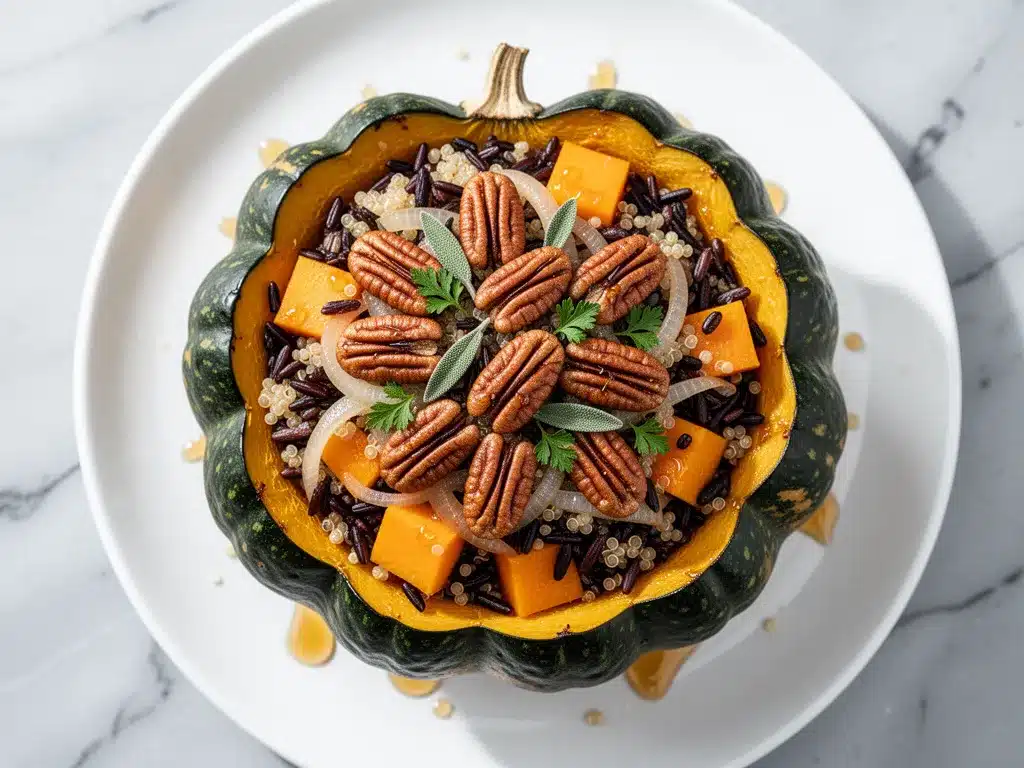
Remove from the oven and let cool for 5 minutes. Garnish with extra chopped pecans and fresh sage leaves. Serve warm. It’s beautiful enough for guests but cozy enough for a family night.
Expert Tips for Perfect Stuffed Squash
Here’s everything I’ve learned from making this dozens of times. These tips will save you from my mistakes.
Microwave First for Easier Cutting
I can’t stress this enough. Cutting a raw acorn squash is tough. Microwaving it for 2-3 minutes softens the skin and makes it so much easier to slice. It’s a game-changer for safety and sanity.
Toast the Pecans
Raw pecans are fine, but toasted pecans are incredible. If you don’t toast them, they can taste bland and soft. Toasting brings out their natural oils and adds a crunch that contrasts with the soft squash.
Don’t Overfill the Squash
It’s tempting to pack the filling in tight, but leave a little room. The rice will expand slightly as it heats in the oven. If you overfill, the filling might spill out, which is messy and wastes good food.
Use Low-Sodium Broth
Wild rice can be bland on its own, so it soaks up the broth. If you use high-sodium broth, the final dish might be too salty. Low-sodium gives you control. You can always add more salt at the end, but you can’t take it away.
Cook Rice in Broth
Water is fine, but broth adds depth. I use vegetable broth for vegetarian, but chicken broth works too. It makes the rice taste savory and rich, not just plain.
Variations and Substitutions
Once you’ve nailed the basic version, here’s how you can mix it up. I’ve tried all of these.
Gluten-Free Option
This recipe is naturally gluten-free as long as you use gluten-free broth. Check your broth label to be sure. Wild rice is always gluten-free.
Dairy-Free
Use olive oil instead of butter for sautéing. The recipe is already dairy-free if you use olive oil, but if you add cheese later, swap it for nutritional yeast or a dairy-free cheese.
Nut-Free
Skip the pecans and use sunflower seeds or pumpkin seeds (pepitas) for crunch. They toast nicely and add a similar texture without the nut flavor.
Vegetable Add-Ins
Add diced carrots, celery, or mushrooms to the onion mixture. Sauté them until soft before adding the garlic. This adds more veggies and flavor.
Different Grains
Farro or barley work well too. They have a chewy texture similar to wild rice. Adjust cooking times according to the grain package.
Protein Boost
Add cooked chickpeas or lentils to the filling for extra protein. This makes it even more filling and hearty.
Serving and Storage
How to Serve
I serve this straight from the baking sheet. It looks rustic and stays warm. Pair it with a simple green salad with a vinaigrette to cut through the richness. Garlic bread is a nice touch if you’re not going gluten-free.
Leftovers
Store leftovers in an airtight container in the fridge for up to 4 days. The squash might get a bit soft, but the filling stays good.
Reheating
Reheat in the oven at 350°F for 15-20 minutes. Cover with foil to prevent drying out. Microwave works too, but the squash might get mushy. Add a splash of broth when reheating to keep it moist.
Freezing
I don’t recommend freezing the stuffed squash. The squash texture changes when frozen and thawed. You can freeze the rice filling separately, but it’s not ideal.
Nutrition Information
I’m not a nutritionist, but here’s the breakdown if you’re tracking. This is per serving (1 stuffed squash half).
– Calories: 380
– Protein: 8g
– Carbs: 52g
– Fiber: 7g
– Sugar: 6g
– Fat: 16g
– Sodium: 320mg
This dish is rich in fiber from the wild rice and squash. It’s also a good source of healthy fats from the pecans. It’s not a low-calorie dish, but it’s nutrient-dense and satisfying.
Final Thoughts
This Sukkot stuffed acorn squash with wild rice and toasted pecans is more than just a recipe. It’s a way to slow down and enjoy the season. It’s comforting, it’s beautiful, and it’s easy enough to make when you’re tired. I hope it becomes a part of your holiday traditions, just like it has for mine.
If you make this, I’d love to hear how it turns out. Let me know in the comments! And if you’re looking for more fall recipes, check out my cozy fall butternut squash soup or my fall charcuterie board for more seasonal inspiration.
Happy cooking!
Frequently Asked Questions
Can I use butternut squash instead of acorn squash?
Yes, but the cooking time will be different. Butternut squash is denser and takes longer to roast. You’ll need to cube it and roast it separately, then mix it with the filling. It won’t look as pretty, but it will taste good.
How do I know when the squash is done?
Pierce the flesh with a fork. If it slides in easily with no resistance, it’s done. The skin might also start to wrinkle slightly.
Can I make this ahead of time?
Yes! Roast the squash and cook the filling ahead of time. Store them separately in the fridge. Stuff the squash and bake just before serving. This saves time on the day of your dinner.
Why is my wild rice still hard?
Wild rice takes 35-45 minutes to cook. If it’s still hard, it needs more time. Add a little more broth and simmer for another 10 minutes. Don’t rush it.
Can I use brown rice instead of wild rice?
You can, but the texture and flavor will be different. Brown rice is softer and milder. Wild rice has a unique nutty flavor that pairs better with pecans and sage.
Is this recipe gluten-free?
Yes, as long as you use gluten-free broth. Wild rice and acorn squash are naturally gluten-free.
Can I freeze the stuffed squash?
I don’t recommend it. The squash texture becomes mushy when frozen. Freeze the filling only if you need to.
Pin This Recipe!
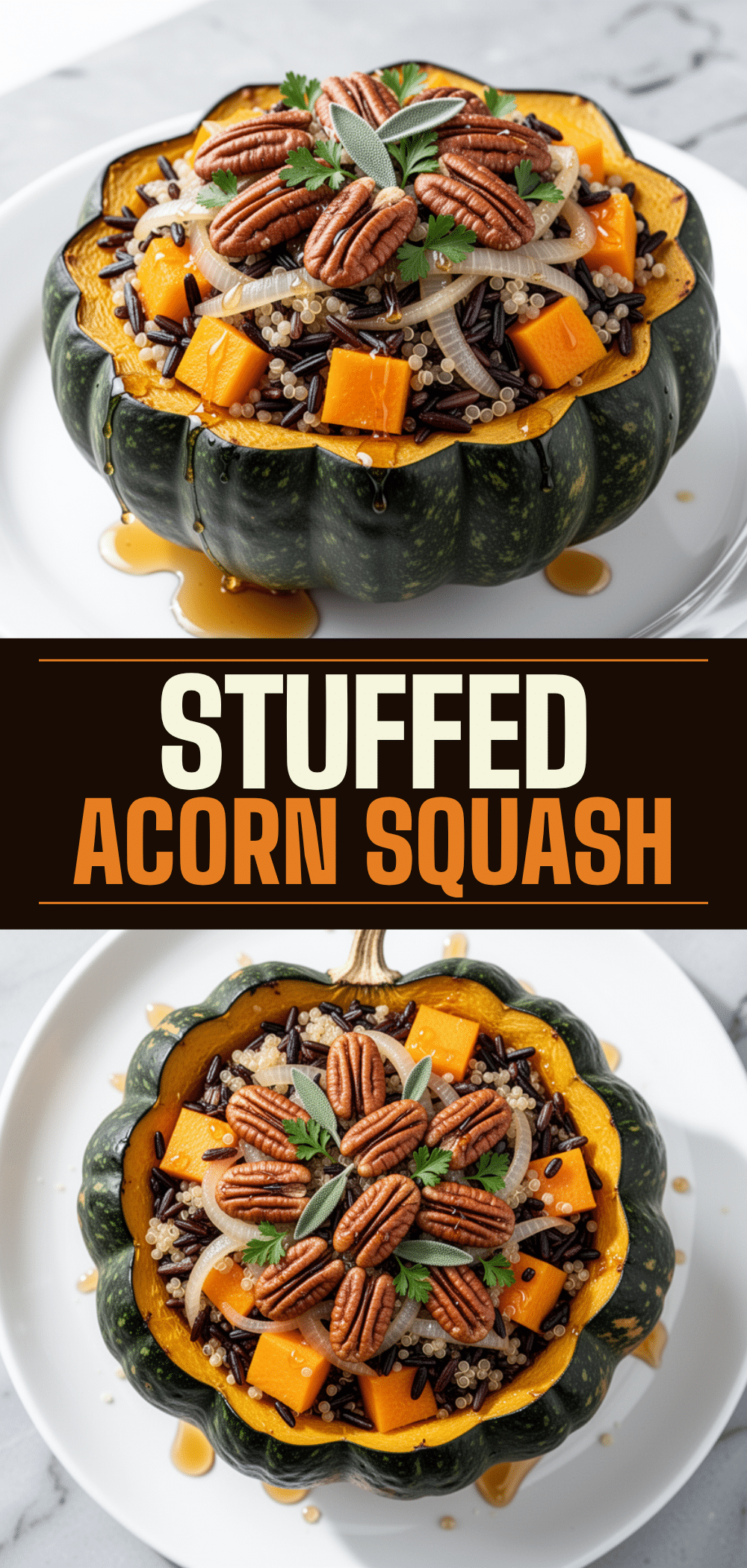
Sukkot Stuffed Acorn Squash: Easy 15-Min Perfect Holiday Recipe
- Total Time: 45 minutes
- Yield: 4 servings 1x
Description
A beautiful and comforting vegetarian main dish featuring roasted acorn squash filled with savory wild rice, toasted pecans, and sage. This gluten-free recipe is perfect for Sukkot or any fall gathering.
Ingredients
- 2 medium acorn squash (about 1.5 lbs each)
- 2 tablespoons olive oil (plus more for brushing)
- Sea salt and black pepper
- 1 cup wild rice (uncooked)
- 2 cups vegetable broth (low-sodium)
- 1 medium yellow onion (diced)
- 3 cloves garlic (minced)
- ½ cup pecans (chopped)
- 2 tablespoons fresh sage (chopped)
- 1 tablespoon maple syrup
- 1 tablespoon butter or olive oil (for sautéing)
- ¼ cup dried cranberries or raisins (optional)
Instructions
- Preheat oven to 400°F (200°C). Line a baking sheet with parchment paper.
- Microwave the whole squash for 2-3 minutes to soften the skin. Carefully slice in half lengthwise, scoop out seeds, brush cut sides with olive oil, and season with salt and pepper.
- Place squash halves cut-side down on the baking sheet and roast for 30-40 minutes until tender. Remove from oven, flip cut-side up, and let cool slightly.
- While squash roasts, rinse wild rice. Combine rice and vegetable broth in a saucepan. Bring to a boil, reduce heat to low, cover, and simmer for 35-45 minutes until tender. Fluff with a fork.
- In a large skillet, heat olive oil over medium heat. Sauté diced onion for 3-4 minutes until softened. Add garlic and cook for 1 minute. Stir in sage and cook for 30 seconds.
- Remove skillet from heat and add chopped pecans to toast slightly in the residual heat.
- In a large bowl, combine cooked wild rice, onion-pecan mixture, maple syrup, and cranberries (if using). Season with salt and pepper.
- Spoon the rice mixture generously into each roasted squash half. Place back on the baking sheet, cut-side up.
- Bake for 15 minutes to heat the filling through. Garnish with extra pecans and sage before serving.
Notes
Microwaving the squash for 2-3 minutes before cutting makes it much easier and safer to slice. Toasting the pecans enhances their flavor and crunch. Use low-sodium broth to control saltiness. This dish tastes even better the next day as flavors meld.
- Prep Time: 10 minutes
- Cook Time: 35 minutes
- Category: Main Course
- Cuisine: American
Nutrition
- Serving Size: 1 stuffed squash hal
- Calories: 380
- Sugar: 6
- Sodium: 320
- Fat: 16
- Saturated Fat: 2
- Carbohydrates: 52
- Fiber: 7
- Protein: 8
Keywords: Sukkot, stuffed acorn squash, wild rice, fall recipes, vegetarian, gluten-free, holiday dinner, healthy squash recipe