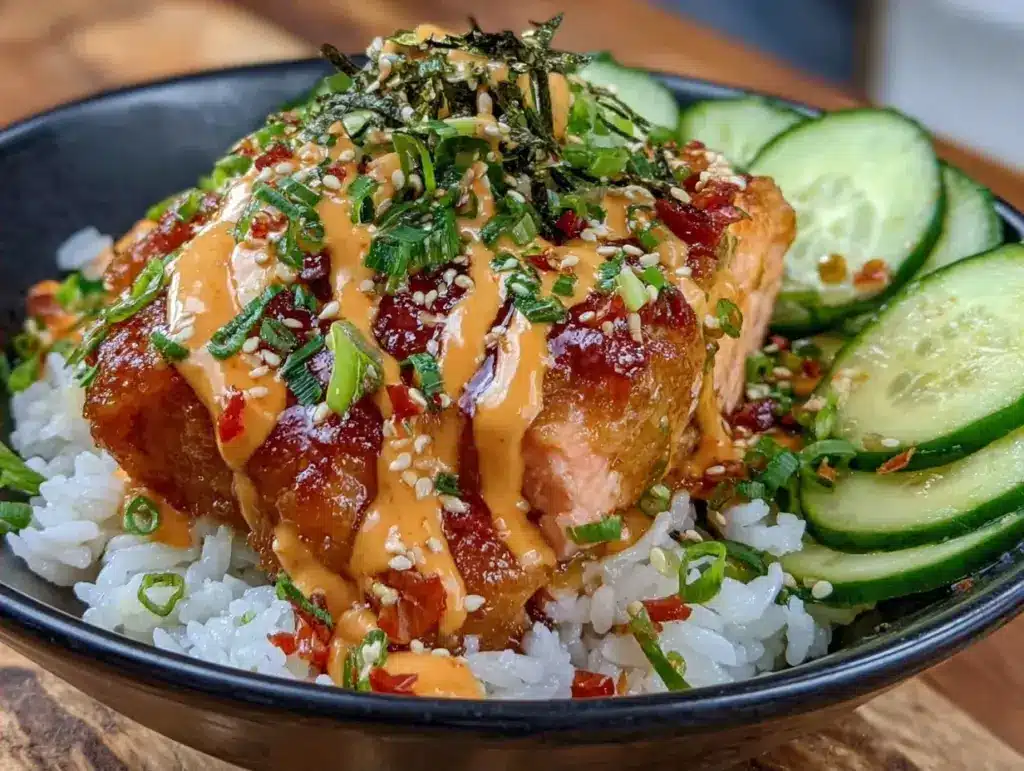
I have a confession to make. For the longest time, I was terrified of cooking salmon. Not because it was hard, but because I was terrified of ruining it. I’d stare at that pink fillet like it was a bomb waiting to go off. Do I sear it? Bake it? Is it done? Is it *too* done? I ended up buying frozen, overcooked salmon sticks from the grocery store for years. They were dry, rubbery, and tasted like regret.
Then, last summer, I was at a small sushi spot in Portland. I ordered the salmon rice bowl, expecting the usual dry, sad fish. Instead, I got this incredible, buttery piece of salmon that melted on my tongue, resting on a bed of perfectly seasoned rice, topped with a spicy mayo that was creamy, tangy, and just hot enough to make my eyes water. And then there was the cucumber. Cool, crisp, salty cucumber slices that cut through all that richness. It was perfect. I ate three bowls that week.
I went home determined to recreate it. I expected to fail. I expected rubbery fish and bland rice. But here’s the thing: this Salmon Rice Bowl with Spicy Mayo and Cucumber is actually stupid simple. It’s one of those recipes where you really can’t mess it up. If you can boil water and mix a sauce, you can make this. It’s forgiving, it’s fast, and it tastes like you spent an hour in a fancy restaurant when it actually took 20 minutes.
I’ve made this bowl at least fifteen times since that trip. Sometimes I bake the salmon, sometimes I pan-sear it. I’ve tried different rice, different peppers for the heat. But the core formula stays the same: good fish, good rice, good sauce, good crunch. And I’m going to walk you through exactly how to get it right, every single time.
Why You’ll Love This Salmon Rice Bowl
This isn’t just dinner; it’s a mood booster. There is something deeply satisfying about building a bowl that looks beautiful and tastes even better. Here’s why this Salmon Rice Bowl with Spicy Mayo and Cucumber has taken over my kitchen:
It’s Foolproof for Beginners — Seriously. You don’t need to be a chef. You don’t need to know how to fillet a fish or make sushi rice from scratch (though I’ll show you a hack for that). The salmon is so forgiving that even if you overcook it slightly, it stays moist because of the sauce. I’ve made this for my sister who thinks she can’t cook, and she made it better than me the second time.
Spicy Mayo is a Game-Changer — We’ve all had it at sushi restaurants, but making it at home is so easy and so much fresher. It’s not just mayonnaise and hot sauce. It’s mayo, a little rice vinegar, a touch of sugar, and sesame oil. It’s creamy, tangy, and addictive. I find myself eating it with a spoon if I’m not careful.
It’s Ready in 20 Minutes — I know, I said “busy schedule” earlier, but let’s reframe that. This is fast because it’s simple. You aren’t chopping twenty vegetables. You aren’t juggling five pans. You cook rice, you cook salmon, you mix sauce. Done. It’s efficient without feeling rushed.
The Crunch Factor — This is the secret weapon. Most salmon bowls are soft. Soft fish, soft rice, soft avocado. But the cucumber? Salted, sliced thin, it adds this incredible snap. It wakes up your whole palate. It’s the difference between a good meal and a great one.
It Feels Fancy, Costs Pennies — Ordering this at a restaurant is $18. Making it at home is probably $8-10 for the whole batch. You feel like you’re treating yourself, but you’re actually saving money. Win-win.
Ingredients You’ll Need
Here’s the best part: you probably have half of this already. This Salmon Rice Bowl with Spicy Mayo and Cucumber relies on quality, not complexity. You don’t need a trip to a specialty Asian market. The grocery store is fine.
For the Salmon
Salmon fillets (2 pounds / 900g) — I use center-cut fillets. They cook the most evenly. Skin-on or skin-off is up to you, but skin-on helps keep it moist in the pan. Look for bright pink, firm flesh. If it smells fishy, put it back. You want it to smell like the ocean, not a fish market.
Soy sauce (2 tablespoons) — I use low-sodium because we’re adding more salt later. Regular soy sauce works, just reduce the salt in the rice.
Maple syrup (1 tablespoon) — This isn’t a sweet dish, but the maple helps the salmon caramelize and balance the salt. Honey works too, but maple has a better flavor profile here. If you’re avoiding sugar, skip it, but I don’t recommend it.
Minced garlic (2 cloves) — Fresh is best. Jarred garlic has a metallic taste that really shows up in simple dishes. Mince it yourself. It takes 30 seconds.
Neutral oil (1 tablespoon) — Avocado oil or canola oil. Don’t use olive oil here; it burns too easily at the high heat we need for the salmon.
For the Rice
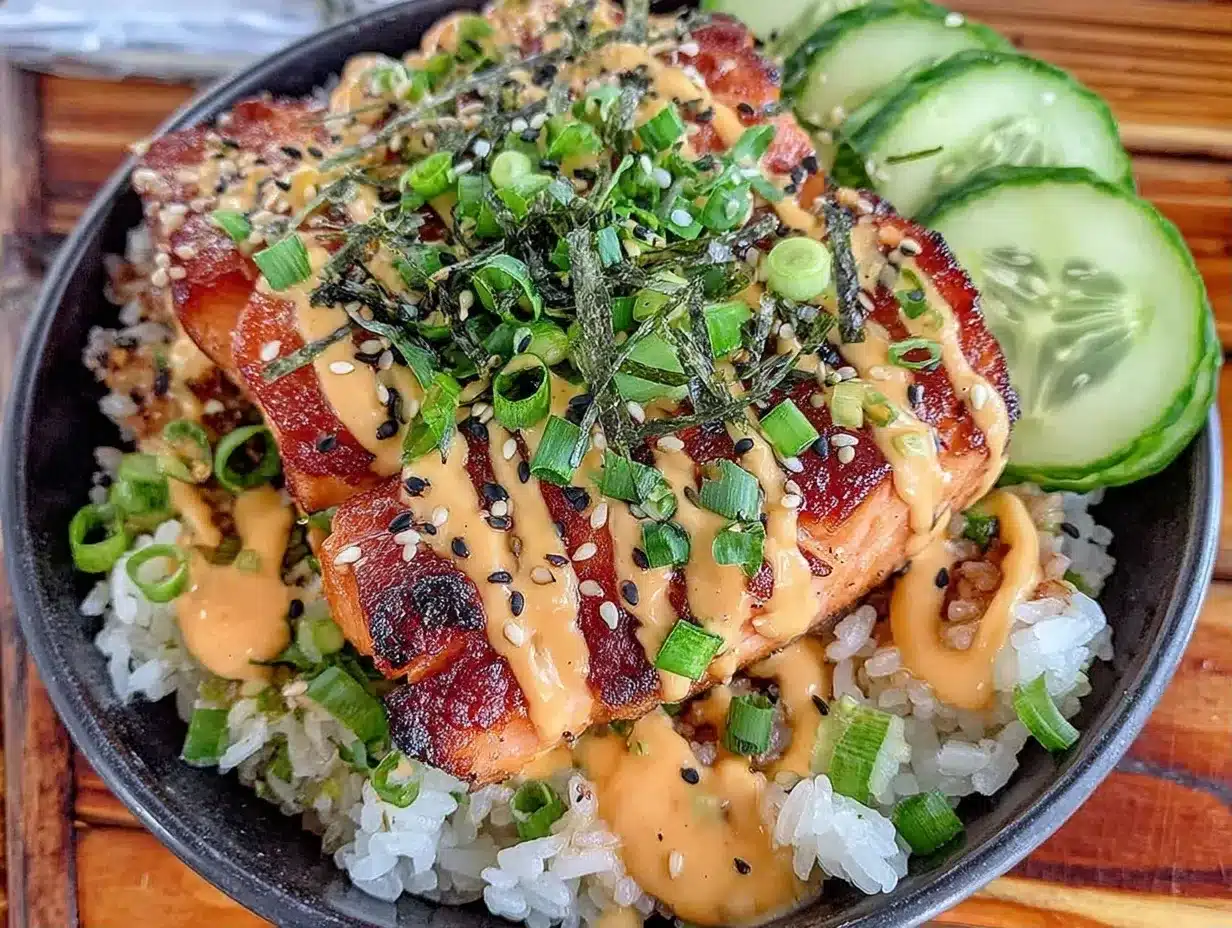
Sushi rice or short-grain white rice (1 ½ cups / 300g) — This is crucial. Do not use long-grain rice like Basmati or Jasmine. It won’t have the right sticky texture. Short-grain rice is starchy and clings together. If you can’t find sushi rice, Arborio works in a pinch, but it’s creamier, not stickier.
Rice vinegar (2 tablespoons) — This is what seasons the rice. It gives it that tangy sushi flavor. Do not substitute with white vinegar or apple cider vinegar. It changes the flavor completely.
Sugar (1 tablespoon) — Balances the vinegar. White sugar is fine.
Salt (½ teaspoon) — Just a pinch to bring it all out.
For the Spicy Mayo
Mayonnaise (½ cup / 120g) — I use Hellmann’s or Kewpie. Kewpie is richer and more savory, but regular mayo works fine. Don’t use light mayo. It’s too watery and lacks the fat needed for a creamy sauce.
Sriracha (2-3 tablespoons) — Depends on how spicy you like it. Start with 2 tablespoons. You can always add more. Sriracha has garlic and vinegar in it, so it adds flavor, not just heat.
Sesame oil (1 teaspoon) — Toasted sesame oil. This is the nutty aroma that makes it taste like sushi. Just a little goes a long way.
Rice vinegar (1 teaspoon) — A little tang to cut the richness of the mayo.
For the Bowl Assembly
English cucumber (1 large) — English cucumbers are seedless and less watery. They’re perfect for this. Regular cucumbers work, but you might want to scoop out the seeds first.
Avocado (1 ripe) — Sliced. Adds creaminess. If you’re not a fan, you can skip it, but I think it’s essential for texture.
Seaweed snacks (1 packet) — Or nori sheets cut into strips. Adds a nice salty crunch and visual contrast.
White sesame seeds (1 tablespoon) — For garnish. Toast them in a dry pan for 2 minutes if you have time. It makes a huge difference.
Green onions (2 stalks, sliced) — For color and a mild onion bite.
Equipment Needed
You don’t need fancy tools. Here’s what I actually use:
Rice cooker or small pot — I love my rice cooker because it’s set-and-forget. But a small pot with a tight lid works perfectly. Just make sure it’s not too big, or the rice will dry out.
Non-stick skillet — 10-inch is perfect for two salmon fillets. I prefer non-stick because salmon loves to stick to stainless steel if you’re not careful. Cast iron is fine if you’re experienced, but non-stick is foolproof for beginners.
Small bowl — For mixing the spicy mayo. Any bowl works.
Sharp knife — For slicing the cucumber and avocado. A dull knife will mash the avocado. Learned this the hard way.
Peeler or knife — To slice the cucumber thinly. A peeler makes beautiful ribbons, but a knife works fine too.
How to Make It: Step-by-Step
Alright, let’s make this! I’m walking you through exactly how I do it, including the little tricks I’ve picked up so you don’t have to guess.
Step 1: Cook the Rice (Start this first!)
Rinse your rice. Seriously, rinse it until the water runs clear. This removes excess starch and prevents gummy rice. Place it in your rice cooker or pot with 1 ½ cups of water. Cook according to package directions. If using a pot, bring to a boil, cover, reduce to low heat, and simmer for 18 minutes. Don’t lift the lid!
While the rice cooks, mix the rice vinegar, sugar, and salt in a small bowl until dissolved. Once the rice is done, fluff it with a fork and gently fold in the vinegar mixture. Cover and let it steam for 10 minutes. This step is crucial for the right texture.
Step 2: Make the Spicy Mayo
In a small bowl, whisk together the mayonnaise, sriracha, sesame oil, and rice vinegar. Taste it. Do you want more heat? Add more sriracha. Do you want more tang? Add a splash more vinegar. It should be creamy, pink, and aromatic. Set it aside. It gets better as it sits.
Step 3: Prep the Salmon
Pat the salmon fillets dry with paper towels. Moisture is the enemy of a good sear. Season both sides with salt and pepper. In a small bowl, mix the soy sauce and maple syrup. Brush this mixture generously over the top of the salmon (the side that will face up). Don’t worry about the bottom yet.
Step 4: Cook the Salmon
Heat the neutral oil in your skillet over medium-high heat. Once the oil shimmers, place the salmon fillets in the pan, skin-side down (if skin-on) or presentation-side down. Press down gently with a spatula to ensure even contact.
Cook for 4-5 minutes. Do not touch it! Let it sear. You’ll see the color change from translucent pink to opaque white about halfway up the side of the fish. Flip it carefully. Cook for another 2-3 minutes. The salmon is done when it flakes easily with a fork and reaches an internal temperature of 145°F. If you like it rare, take it off at 125°F. It will continue cooking slightly as it rests.
Step 5: Slice the Cucumber
While the salmon cooks, slice the cucumber. Use a peeler to make long, thin ribbons. If you prefer rounds, slice it thinly. Place the cucumber slices in a bowl with a pinch of salt. Let them sit for 5 minutes. This draws out excess water and makes them crispier. Rinse and pat dry before assembling.
Step 6: Assemble the Bowl
Take a large bowl. Scoop a generous portion of the seasoned rice into the bottom. Place the salmon fillet on top of the rice. Arrange the cucumber ribbons, avocado slices, and seaweed snacks around the salmon. Drizzle the spicy mayo generously over everything. Sprinkle with toasted sesame seeds and sliced green onions.
Enjoy immediately. The salmon is best hot, the rice is best warm, and the sauce is best cold. That contrast is the magic.
Expert Tips & Tricks
Here’s everything I’ve learned from making this dozens of times. These tips will save you from my mistakes.
Don’t Skip Rinsing the Rice — I know it’s annoying, but it’s the difference between fluffy rice and glue. Rinse until the water is clear. If you’re in a hurry, rinse for 2 minutes. It’s worth it.
Pat the Salmon Dry — Wet salmon steams. Dry salmon sears. Use paper towels. Get it as dry as possible before it hits the pan.
Use a Thermometer — If you’re worried about overcooking, use an instant-read thermometer. Salmon continues to cook after you take it off the heat. Pull it off when it’s 140°F, and it’ll reach 145°F as it rests. This guarantees moist fish every time.
Salt the Cucumber — I can’t stress this enough. Salting the cucumber removes water and concentrates the flavor. It makes the cucumber taste like a crunchy, salty garnish rather than a watery vegetable. Rinse it after salting so it’s not too salty.
Toast Your Sesame Seeds — Raw sesame seeds are fine, but toasted ones add a nutty aroma that elevates the whole dish. Just dump them in a dry pan over medium heat and stir constantly for 2-3 minutes until they smell nutty and turn light brown. Watch them closely—they burn fast.
Make Extra Spicy Mayo — You will want this on everything. I keep a jar in the fridge for weeks. It’s great with fried rice, roasted vegetables, or even on burgers. Double the recipe when you make this.
Variations & Substitutions
Once you’ve nailed the basic version, here’s how you can mix it up. I’ve tried all of these.
Cooking Method Swap — Don’t want to use a skillet? Bake the salmon at 400°F for 12-15 minutes. Brush with the soy-maple mixture before baking. It’s less seared, but still delicious and easier cleanup. Or use an air fryer at 400°F for 8-10 minutes. Both work great.
Protein Swap — If you don’t like salmon, this bowl works with shrimp, chicken breast, or even tofu. For tofu, press it, cube it, and pan-fry until crispy. For chicken, slice it thin and stir-fry quickly. The sauce works with all of them.
Rice Swap — If you can’t find short-grain rice, use brown rice. It takes longer to cook, but the flavor is nutty and pairs well with the salmon. Just adjust your cooking time.
Vegetable Add-ins — I like to add edamame for protein. Or some shredded carrots for color. Or even some corn kernels. Get creative with what you have in the fridge.
Spice Level — Want it milder? Use half the sriracha. Want it hotter? Add a dash of chili crisp or cayenne pepper. Chili crisp adds a nice crunch too.
Serving & Storage
How to Serve: I usually serve this straight from the kitchen to the table. It’s a one-bowl wonder, so cleanup is minimal. Pair it with a simple side salad or some steamed broccoli if you want more veggies. A cold glass of green tea or the homemade peach iced tea I mentioned earlier is perfect here.
Storage: Store leftovers in an airtight container in the fridge for up to 3 days. The rice will harden, so reheat it with a splash of water in the microwave. The salmon will lose some of its sear, but it’s still good. The spicy mayo keeps for a week.
Reheating: Microwave the rice and salmon together with a damp paper towel over them to keep them moist. Reheat for 1-2 minutes. Add fresh cucumber and avocado after reheating, as they don’t reheat well.
Freezing: I don’t recommend freezing this. The rice texture changes, and the mayo separates. Make it fresh.
Nutrition Information
I’m not a nutritionist, but here’s the breakdown if you’re tracking.
Per Serving (based on 2 servings):
| Nutrient | Amount |
|---|---|
| Calories | 650 |
| Protein | 40g |
| Carbs | 65g |
| Fiber | 4g |
| Sugar | 12g |
| Fat | 25g |
| Saturated Fat | 4g |
| Cholesterol | 90mg |
| Sodium | 850mg |
What’s Good: High protein from the salmon, healthy fats from the avocado and mayo, and complex carbs from the rice. It’s a balanced meal.
What to Know: Higher in sodium due to the soy sauce and mayo. Use low-sodium soy sauce to reduce this. The carbs are significant, so adjust portions if you’re watching your intake.
My Take: This is comfort food with a twist. It’s rich and satisfying. Don’t overthink the nutrition. Enjoy it as a treat or a solid, healthy-ish weeknight meal.
Final Thoughts
So that’s my go-to Salmon Rice Bowl with Spicy Mayo and Cucumber! I’ve probably talked your ear off at this point, but when you make a recipe this often, you have a lot to say about it.
This has saved dinners more times than I can count. It’s my answer to “what’s for dinner” when I want something that feels special but doesn’t require a lot of effort. My kids love it (they think the spicy mayo is a treat), my husband loves it (he says it’s better than takeout), and I love it because it’s easy.
Make it yours! Try different veggies, adjust the spice, swap the rice. The best recipes are the ones you adapt to your family’s tastes.
If you make this, drop a comment and let me know what you think! I love hearing how recipes turn out in your kitchen. And if something doesn’t work, tell me that too—I’m here to help troubleshoot.
Happy cooking! And I hope your kitchen smells half as good as mine does right now.
Frequently Asked Questions
Can I use long-grain rice instead of sushi rice?
You can, but the texture will be different. Long-grain rice is fluffier and less sticky. It won’t hold the bowl together as well. If you must use it, add a little more water when cooking to make it softer. But short-grain is best for this dish.
Why is my spicy mayo too runny?
Usually, this means you used light mayo or added too much liquid. Light mayo has more water content. Use full-fat mayo for the best texture. If it’s too runny, add a little more mayonnaise or a teaspoon of sesame paste (tahini) to thicken it.
How do I know when the salmon is done?
The easiest way is to press it gently with a fork. If it flakes apart easily, it’s done. The color should be opaque pink throughout, with no translucent raw parts. If you have a thermometer, aim for 145°F internal temperature.
Can I make this ahead for meal prep?
Yes, but assemble it right before eating. Cook the rice and salmon ahead, store them separately. Mix the spicy mayo ahead. Slice the cucumber ahead (keep it in water to stay crisp). When you’re ready to eat, assemble the bowl. This keeps the textures fresh.
What if I don’t have sriracha?
You can use any hot sauce you like. Cholula, Tabasco, or even chili garlic sauce work. Just adjust the amount to your taste. Chili garlic sauce adds a nice crunch and garlic flavor.
Can I use frozen salmon?
Yes, but thaw it completely first. Pat it very dry before cooking. Frozen salmon can be watery, so extra drying is crucial. Fresh salmon is better, but frozen works in a pinch.
Is this recipe gluten-free?
Not as written, because of the soy sauce. Use tamari (gluten-free soy sauce) instead to make it gluten-free. The rest of the ingredients are naturally gluten-free.
Pin This Recipe!
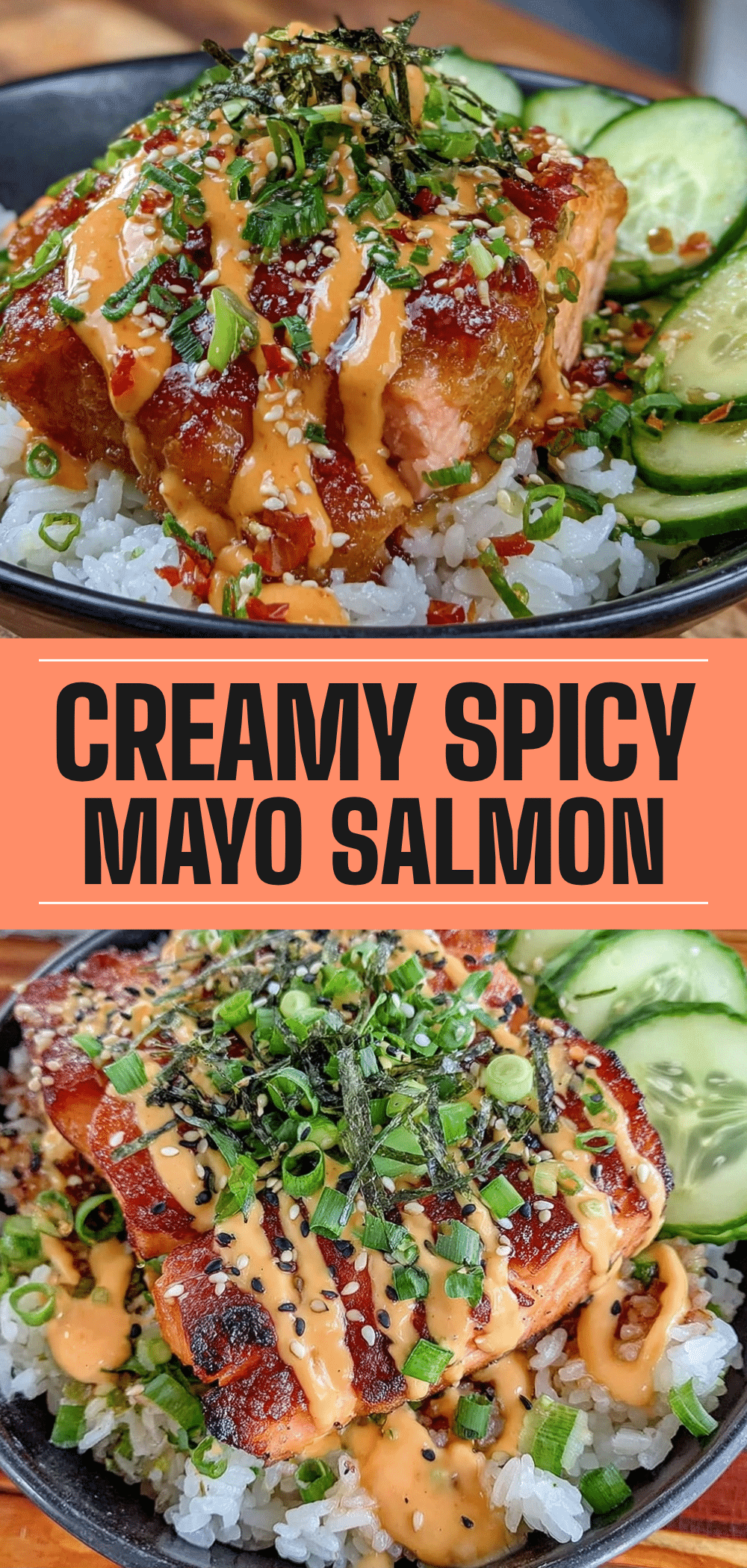
Salmon Rice Bowl with Spicy Mayo and Cucumber
- Total Time: 20 minutes
- Yield: 2 servings 1x
Description
A foolproof, fast, and delicious salmon rice bowl featuring pan-seared salmon, seasoned sushi rice, crisp salted cucumber, and a creamy homemade spicy mayo. Ready in just 20 minutes.
Ingredients
- 2 pounds salmon fillets (center-cut, skin-on or skin-off)
- 2 tablespoons soy sauce (low-sodium recommended)
- 1 tablespoon maple syrup
- 2 cloves garlic, minced
- 1 tablespoon neutral oil (avocado or canola)
- 1 ½ cups sushi rice or short-grain white rice
- 1 ½ cups water (for rice)
- 2 tablespoons rice vinegar
- 1 tablespoon sugar
- ½ teaspoon salt (for rice)
- ½ cup mayonnaise (full-fat)
- 2–3 tablespoons Sriracha
- 1 teaspoon toasted sesame oil
- 1 teaspoon rice vinegar (for mayo)
- 1 large English cucumber
- 1 ripe avocado, sliced
- 1 packet seaweed snacks or nori sheets
- 1 tablespoon white sesame seeds
- 2 stalks green onions, sliced
- Salt and pepper (for seasoning salmon)
Instructions
- Rinse the sushi rice until the water runs clear. Place in a rice cooker or pot with 1 ½ cups of water and cook according to package directions.
- While rice cooks, mix 2 tablespoons rice vinegar, 1 tablespoon sugar, and ½ teaspoon salt in a small bowl until dissolved.
- Once rice is done, fluff with a fork, gently fold in the vinegar mixture, cover, and let steam for 10 minutes.
- In a small bowl, whisk together ½ cup mayonnaise, 2-3 tablespoons Sriracha, 1 teaspoon sesame oil, and 1 teaspoon rice vinegar. Set aside.
- Pat salmon fillets dry with paper towels. Season with salt and pepper. Mix 2 tablespoons soy sauce and 1 tablespoon maple syrup, then brush generously over the top of the salmon.
- Heat 1 tablespoon neutral oil in a non-stick skillet over medium-high heat. Place salmon skin-side down (or presentation-side down). Press gently.
- Cook for 4-5 minutes without touching. Flip and cook for another 2-3 minutes until internal temperature reaches 145°F (or 125°F for rare).
- While salmon cooks, slice cucumber into thin ribbons or rounds. Toss with a pinch of salt and let sit for 5 minutes to draw out water. Rinse and pat dry.
- To assemble, place seasoned rice in a large bowl. Top with salmon, cucumber ribbons, avocado slices, and seaweed snacks.
- Drizzle generously with spicy mayo. Sprinkle with toasted sesame seeds and sliced green onions. Serve immediately.
Notes
[‘Rinsing the rice is crucial to remove excess starch and prevent gummy texture.’, ‘Patting the salmon dry ensures a good sear rather than steaming.’, ‘Salting the cucumber removes water and concentrates flavor, making it crispier.’, ‘Toast sesame seeds in a dry pan for 2 minutes for better aroma.’, ‘Leftovers can be stored in the fridge for up to 3 days. Reheat rice with a splash of water.’, ‘Do not freeze this dish as the rice texture changes and mayo separates.’]
- Prep Time: 10 minutes
- Cook Time: 10 minutes
- Category: Main Course
- Cuisine: Japanese
Nutrition
- Serving Size: 1 bowl per serving
- Calories: 650
- Sugar: 12
- Sodium: 850
- Fat: 25
- Saturated Fat: 4
- Carbohydrates: 65
- Fiber: 4
- Protein: 40
Keywords: salmon rice bowl, spicy mayo, sushi rice, cucumber salad, healthy dinner, quick meals, seafood bowl, Asian fusion