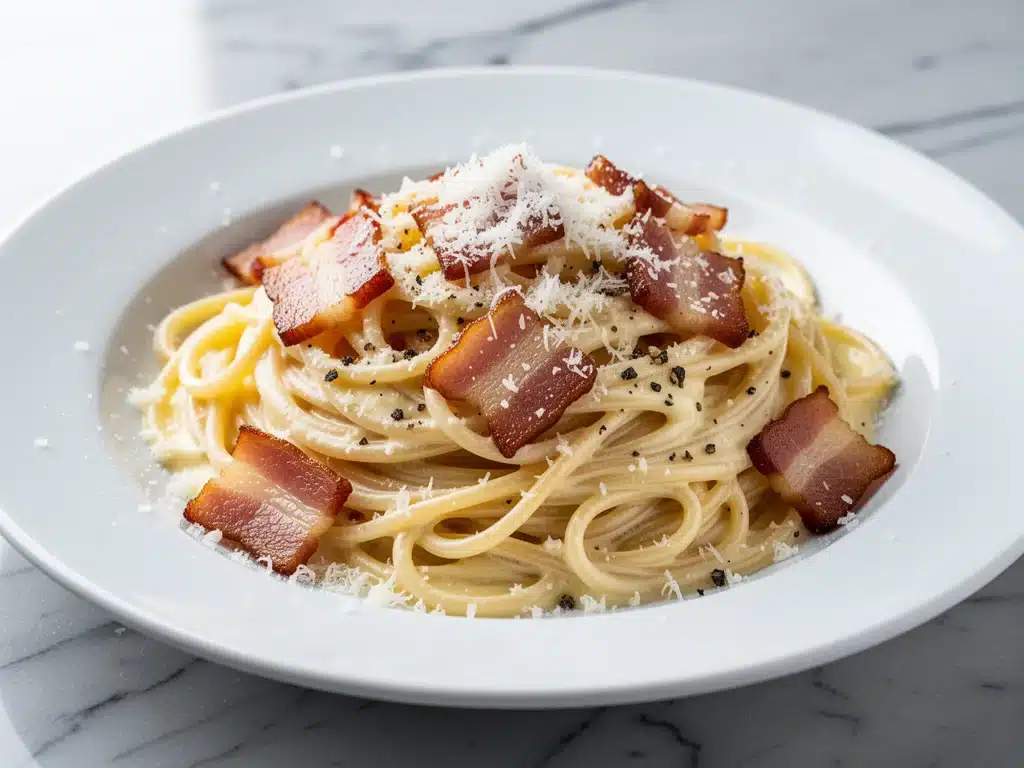
I still remember the exact moment I realized everything I knew about carbonara was wrong. It was three years ago in a tiny trattoria in Rome, sitting at a wobbly table with a view of a cobblestone street that smelled like rain and old stone. I ordered carbonara because, let’s be honest, it’s the ultimate pasta test. If a place can do carbonara right, they can cook.
When the plate arrived, I took a bite. And then another. And then I asked the waiter, “Where’s the cream?” He looked at me like I’d just insulted his grandmother. He explained gently that real carbonara doesn’t use cream. It uses eggs, cheese, fat, and pepper. That’s it. That’s the whole recipe.
I went home and tried to recreate it for months. I burned eggs. I made scrambled eggs with pasta. I added pancake instead of guanciale because I couldn’t find guanciale. I was frustrated, embarrassed, and hungry. But after about twelve failed attempts, I finally cracked the code. It wasn’t about the ingredients—it was about the temperature. It was about patience. And once I got it, this authentic Italian carbonara with guanciale and pecorino romano became my go-to dish for impressing guests, comforting myself on bad days, and proving to my Italian in-laws that I’m not a total disaster in the kitchen.
Here’s the truth: carbonara is simple, but it’s not easy. It requires focus. It requires respect for the ingredients. But when you pull that glossy, creamy, pepper-flecked pasta out of the pan, the smell alone will make you forget every mistake you made getting there. This recipe is my refined version—tested, tweaked, and trusted.
Why You’ll Love This Authentic Italian Carbonara
There are a lot of pasta recipes out there. Some are quick, some are fancy, some are healthy. But this authentic Italian carbonara with guanciale and pecorino romano hits a different sweet spot. It’s rich without being heavy, simple without being boring, and luxurious without requiring a trip to Italy.
Here’s why this recipe has earned a permanent spot in my weekly rotation:
- Technique Over Complexity — You don’t need fancy equipment or hard-to-find skills. You just need a skillet, a whisk, and the ability to manage heat. I’ve made this while my toddler was screaming in the next room. It still turned out perfect.
- Ingredient Quality Matters — This recipe teaches you to taste the difference between good and great ingredients. When you use real guanciale and aged Pecorino Romano, you don’t need salt, butter, or cream to make it delicious. The flavors are already there.
- Fast Weeknight Dinner — From boiling water to plating, this takes about 20 minutes. It’s faster than ordering takeout and infinitely better. I make this on Tuesdays when I’m exhausted but still want to eat like a king.
- Impress Without Stress — Serving this to guests makes you look like a seasoned Italian chef. It looks elegant, tastes expensive, and actually makes you look like you had a plan (even if your plan was “panic and hope for the best”).
- Gluten-Free Friendly Base — The sauce is naturally gluten-free (it’s just eggs and cheese). You just need to swap the pasta. I’ve tested this with many brands and they all work.
This is the kind of recipe that reminds you why you love cooking. It’s comforting, it’s bold, and it tastes like you spent hours on it (even though you didn’t).
Ingredients You’ll Need
Before we get into the “how,” let’s talk about the “what.” This authentic Italian carbonara with guanciale and pecorino romano relies on four core ingredients. That’s it. Four. And because there’s nowhere to hide, you need to buy the best you can afford.
The Good Stuff (Worth the Money)
Guancale (8 ounces / 225g) — This is cured pork jowl. It’s fatty, salty, and incredibly flavorful. If you can’t find guanciale, pancetta is the next best option. Bacon is a distant third—it’s smoked, which changes the flavor profile entirely. I once tried bacon out of desperation and it tasted like breakfast pasta, not Italian dinner. Don’t do it. Look for guanciale at specialty meat shops or order it online.
Pecorino Romano (1.5 cups / 150g, freshly grated) — This is a sharp, salty sheep’s milk cheese. It’s stronger than Parmesan. Do not use Parmigiano-Reggiano if you want authentic flavor, though a 50/50 mix is acceptable if you find Pecorino too intense. Buy a wedge and grate it yourself. Pre-grated cheese has anti-caking agents that prevent it from melting smoothly. I learned this the hard way when my sauce looked grainy and sad.
Eggs (4 large, room temperature) — You’ll use all the yolks and two whole eggs. The extra yolks make the sauce richer and more stable. Room temperature eggs blend more evenly into the cheese mixture, reducing the risk of scrambling. Take them out of the fridge 30 minutes before you start.
Black Pepper (1 tablespoon, freshly cracked) — Carbonara means “charcoal maker” in Italian, and the pepper is supposed to be bold. Use a pepper mill and crack it coarse. You want visible flecks of pepper in every bite. Pre-ground pepper tastes dusty and flat. This isn’t a place to be shy.
The Basics
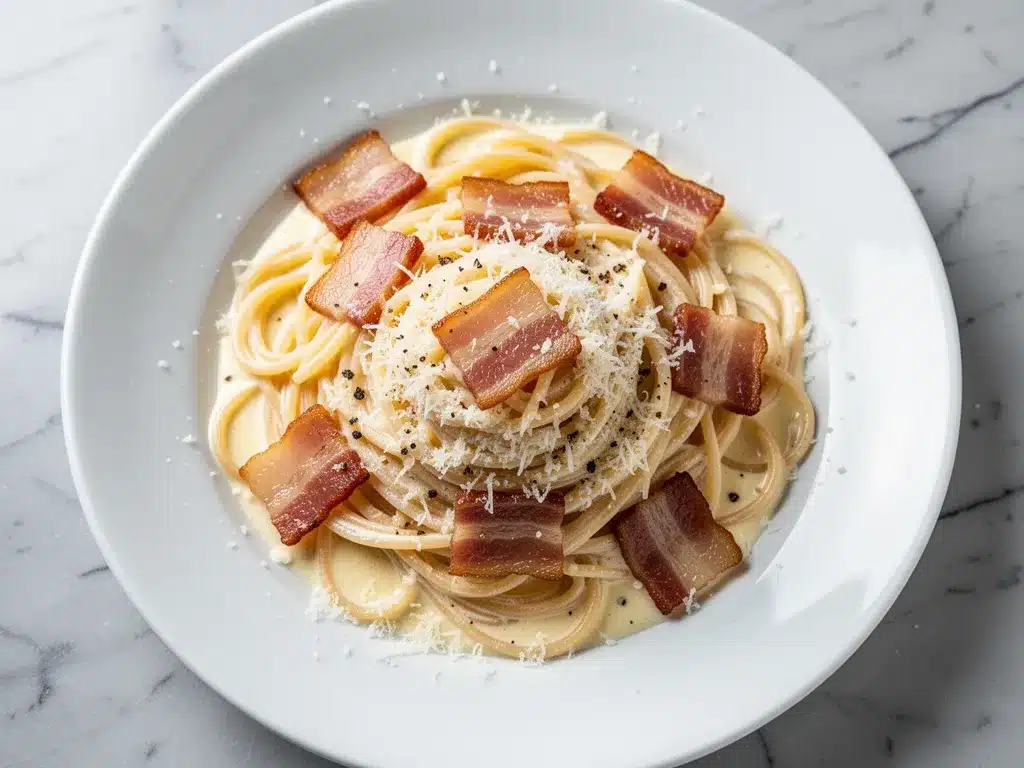
Pasta (1 pound / 450g) — Spaghetti is traditional, but I love rigatoni or bucatini because the sauce gets inside the tubes. Any long or short pasta works. Avoid thin pasta like angel hair—it doesn’t hold the sauce well. I usually grab whatever looks fresh at the market.
Salt (for pasta water) — You don’t need much salt in the sauce because the guanciale and Pecorino are already salty. Just salt your pasta water generously.
Pasta Water (reserved) — This is your secret weapon. The starchy water helps emulsify the eggs and cheese into a creamy sauce without curdling. Save at least 1 cup before you drain the pasta.
Equipment Needed
You don’t need a fancy kitchen to make this. Here’s what I actually use:
Large Skillet or Dutch Oven — I use a 12-inch stainless steel skillet. It needs to be wide enough to toss the pasta easily. Cast iron works too, but stainless steel gives you better control over the heat.
Whisk — Essential for mixing the eggs and cheese smoothly. A fork works in a pinch, but a whisk prevents lumps.
Colander — For draining pasta. Or use the lid method if you’re feeling old-school.
Pepper Mill — Freshly cracked pepper makes a world of difference. If you don’t have one, buy a cheap one. It’s worth it.
Box Grater — For grating the Pecorino. A microplane makes finer shreds that melt faster.
Large Pot — For boiling pasta. Make sure it’s big enough so the pasta has room to move.
How to Make It: Step-by-Step
Alright, let’s make this! I’m walking you through exactly how I do it, including the little tricks I’ve picked up. Pay attention to the heat—this is where most people mess up.
Step 1: Prep Your Ingredients (5 minutes)
Grate your Pecorino Romano. Cut your guanciale into ½-inch strips or cubes. Crack your eggs into a bowl and whisk them with the grated cheese and most of the black pepper. Set this mixture aside. You should have a thick, yellow paste. This is your “carbo” base.
Step 2: Cook the Guanciale (8-10 minutes)
Heat your large skillet over medium heat. Do not add oil. The guanciale will render its own fat. Add the guanciale to the cold pan and turn the heat to medium-low. This slow render is crucial. You want the fat to melt out and the meat to become golden and crispy, not burnt. Stir occasionally. This takes about 8-10 minutes. When it’s done, the pan should be full of liquid gold. Remove the guanciale with a slotted spoon and set it aside, leaving the fat in the pan.
Step 3: Boil the Pasta (8-10 minutes)
Bring a large pot of salted water to a boil. The water should taste like the ocean. Add the pasta and cook according to package directions until al dente. IMPORTANT: Before draining, scoop out 1 cup of pasta water and set it aside. This starchy water is magic for the sauce. Drain the pasta and set it aside.
Step 4: Warm the Pan (1 minute)
Turn off the heat under your skillet with the guanciale fat. The pan should still be warm, but not hot. This is the most important step. If the pan is too hot, your eggs will scramble. If it’s too cold, the cheese won’t melt. You want it to be just warm enough to gently cook the eggs.
Step 5: Combine Pasta and Fat (2 minutes)
Add the drained pasta directly into the skillet with the guanciale fat. Toss well so every strand is coated in fat. Add a splash of pasta water if it looks dry. The pasta should be glossy and shiny.
Step 6: Make the Sauce (2 minutes)
Remove the skillet from the heat entirely. Let it cool for 30 seconds. Then, pour the egg and cheese mixture over the pasta. Toss vigorously and continuously. The residual heat from the pasta and the pan will gently cook the eggs, creating a creamy sauce. If the sauce looks too thick or clumpy, add more pasta water, a tablespoon at a time. Keep tossing until the sauce is smooth, glossy, and coats the pasta like a blanket.
Step 7: Finish and Serve (1 minute)
Add the crispy guanciale back into the pan. Toss one last time. Taste and adjust pepper if needed. Serve immediately on warm plates. Top with extra Pecorino Romano and a crack of black pepper. Do not let this sit. Carbonara waits for no one.
Expert Tips & Tricks
Here’s everything I’ve learned from making this dozens of times. These tips will save you from my mistakes.
Control the Heat — The number one reason carbonara fails is scrambled eggs. Always remove the pan from the heat before adding the egg mixture. If your pan is too hot, wait 30 seconds. If you’re worried, take the pan off the burner entirely and toss the pasta in the sink for a second to cool it down.
Room Temperature Eggs — Cold eggs shock the hot pasta and can cause uneven cooking. Take your eggs out of the fridge 30 minutes before you start. This small step makes a big difference.
Don’t Skimp on Pepper — This isn’t just garnish. The pepper is a main flavor. Use enough that you can see it. If you’re sensitive to spice, use less, but don’t skip it.
Use Pasta Water Wisely — The starchy water is what binds the sauce. Add it slowly. You want a creamy consistency, not a soupy one. If you add too much, the sauce will break.
Grate Your Own Cheese — Pre-grated cheese contains cellulose to prevent clumping. This cellulose stops the cheese from melting smoothly. Buy a wedge of Pecorino Romano and grate it yourself. It takes 3 minutes and makes a huge difference.
Make the Guanciale Crispy — Don’t rush this step. Render the fat slowly. You want the guanciale to be crispy on the outside and tender on the inside. If it’s chewy, you didn’t cook it long enough.
Variations & Substitutions
Once you’ve nailed the basic version, here’s how you can mix it up. I’ve tried all of these.
Pancetta Version — If you can’t find guanciale, use pancetta. It’s cured pork belly. It’s slightly leaner and less fatty than guanciale, but still delicious. I use this when I’m in a hurry.
Bacon Version (Not Recommended) — I know some people do this. It’s not authentic, and it’s not as good. But if you’re desperate, use thick-cut, unsmoked bacon. Smoked bacon will overpower the delicate egg sauce. Use this as a last resort.
Vegetarian Version — Skip the guanciale and use sautéed mushrooms or roasted zucchini. Add a splash of olive oil to the pan. It’s not the same, but it’s still tasty.
Gluten-Free — Use gluten-free pasta. Everything else is naturally gluten-free. I’ve tested this with Barilla and De Cecco gluten-free pasta, and they both work great. Just be careful not to overcook it.
Cheese Swap — If Pecorino is too sharp, mix it with Parmigiano-Reggiano. A 50/50 blend is milder and still delicious. I use this when serving kids or guests who are sensitive to strong flavors.
Spicy Kick — Add red pepper flakes to the guanciale fat while it renders. This adds a nice heat that cuts through the richness. I do this when I want something more exciting.
Serving & Storage
How to Serve
Carbonara is best served immediately. It’s not a make-ahead dish. The sauce continues to thicken as it cools, and reheating can cause it to break. Serve it on warm plates with extra black pepper and Pecorino on top. Pair it with a simple green salad to cut through the richness.
Side Dishes
Garlic Bread — Obviously. Carbonara is rich, so you need something crunchy and garlicky to balance it.
Arugula Salad — Toss arugula with lemon juice and olive oil. The bitterness and acidity cut through the creaminess.
Roasted Vegetables — Broccoli or asparagus work well. Keep it simple so it doesn’t compete with the pasta.
Storage Instructions
Refrigerator — Store leftovers in an airtight container for up to 2 days. The sauce will thicken in the fridge. To reheat, add a splash of milk or cream and heat gently on the stove, stirring constantly. Do not microwave—it will scramble the eggs.
Freezing — Do not freeze carbonara. The eggs will separate and the texture will become grainy. It’s just not worth it. Make it fresh.
Meal Prep — This is not a meal prep recipe. Make it when you’re ready to eat. If you need to prep ahead, you can grate the cheese and cut the guanciale the night before. But cook the pasta and sauce fresh.
Nutrition Information
I’m not a nutritionist, but here’s the breakdown if you’re tracking.
| Nutrient | Per Serving (1/4 of recipe) |
|---|---|
| Calories | 650 |
| Protein | 28g |
| Carbs | 70g |
| Fat | 28g |
| Saturated Fat | 12g |
| Cholesterol | 220mg |
| Sodium | 800mg |
What’s Good: High protein from eggs and cheese. Satisfying and filling. What to Know: Higher in calories and sodium due to the guanciale and cheese. It’s a rich dish, so a little goes a long way. I usually serve a smaller portion with a large salad to balance it out.
Final Thoughts
So that’s my go-to authentic Italian carbonara with guanciale and pecorino romano! I’ve probably talked your ear off at this point, but when you make a recipe this often, you have a lot to say about it.
This has saved weeknight dinners more times than I can count. It’s my answer to “what’s for dinner” when I’m tired, don’t want takeout, and still want something that tastes really good. My kids are happy, my husband’s happy, and I’m happy because I’m not stressed about cooking.
Make it yours! Try different add-ins, swap in your favorite vegetables, adjust the garlic (though more is always better in my opinion). The best recipes are the ones you adapt to your family’s tastes.
If you make this, drop a comment and let me know what you think! I love hearing how recipes turn out in your kitchen. And if something doesn’t work, tell me that too—I’m here to help troubleshoot.
Happy cooking! And I hope your kitchen smells half as good as mine does right now.
Frequently Asked Questions
Q: Can I use cream in carbonara?
A: Authentic Italian carbonara does not use cream. The creaminess comes from emulsifying eggs, cheese, and pasta water. Adding cream is a common non-Italian variation, but it changes the flavor and texture. If you want a richer sauce, add more egg yolks instead of cream.
Q: Why did my sauce turn into scrambled eggs?
A: The pan was too hot. Always remove the pan from the heat before adding the egg mixture. Let it cool for 30 seconds. Toss vigorously and quickly. If the eggs start to cook too fast, add more pasta water to cool them down.
Q: Can I use bacon instead of guanciale?
A: You can, but it’s not authentic. Bacon is smoked, which adds a flavor that doesn’t belong in traditional carbonara. If you must use bacon, choose thick-cut, unsmoked bacon. But I recommend trying to find guanciale or pancetta.
Q: How do I reheat leftovers?
A: Add a splash of milk or cream to a skillet, add your leftover pasta, and heat gently over low heat, stirring frequently. The extra liquid brings back the creamy texture. Microwave sort of works but tends to dry it out. If you do microwave, definitely add a splash of milk first and heat in short bursts, stirring between.
Q: Can I make this ahead for a dinner party?
A: Sort of. Prep the ingredients (grate cheese, cut guanciale) the night before. But cook the pasta and sauce fresh right before serving. Carbonara is best when it’s hot and fresh. I do this all the time to reduce stress.
Q: Why did my sauce get grainy?
A: The cheese wasn’t fully melted, or the heat was too high. Always grate your own cheese and add it gradually. Remove the pan from the heat before adding the eggs. If it’s already grainy, try whisking in a splash of warm pasta water—sometimes you can save it.
Q: Can I use Parmesan instead of Pecorino?
A: You can, but the flavor will be milder. Pecorino Romano is sharp and salty, which is traditional. If you find Pecorino too strong, mix it with Parmigiano-Reggiano. A 50/50 blend is a good compromise.
Pin This Recipe!
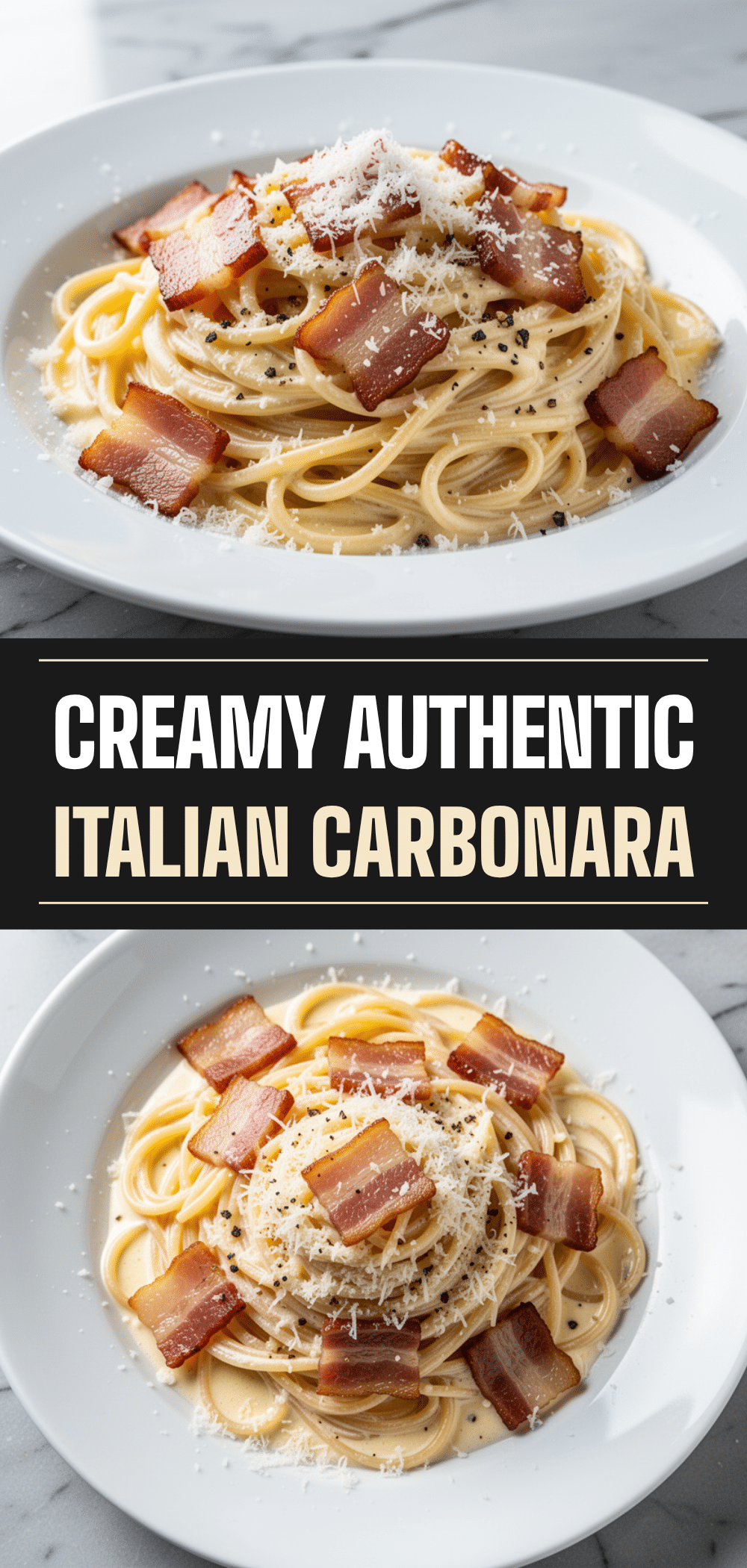
Authentic Italian Carbonara: Best Guanciale Recipe
- Total Time: 20 minutes
- Yield: 4 servings 1x
Description
An authentic Italian carbonara recipe using guanciale, Pecorino Romano, eggs, and black pepper. This technique-focused dish creates a creamy sauce without cream, relying on emulsification for a rich, luxurious result.
Ingredients
- 8 ounces (225g) guanciale, cut into ½-inch strips or cubes
- 1.5 cups (150g) Pecorino Romano, freshly grated
- 4 large eggs, room temperature (2 whole eggs + 2 yolks)
- 1 tablespoon black pepper, freshly cracked
- 1 pound (450g) pasta (spaghetti, rigatoni, or bucatini)
- Salt, for pasta water
- Reserved pasta water, at least 1 cup
Instructions
- Grate the Pecorino Romano. Crack eggs into a bowl and whisk with the grated cheese and most of the black pepper to form a thick paste. Set aside.
- Heat a large skillet over medium heat. Add guanciale to the cold pan and turn heat to medium-low. Cook slowly for 8-10 minutes until fat renders and meat is golden and crispy. Remove guanciale with a slotted spoon, leaving fat in the pan.
- Bring a large pot of salted water to a boil. Cook pasta until al dente. Before draining, reserve 1 cup of pasta water. Drain pasta.
- Turn off the heat under the skillet with the guanciale fat. Let it cool slightly so it is warm but not hot.
- Add drained pasta to the skillet with the fat. Toss well to coat. Add a splash of pasta water if needed.
- Remove skillet from heat entirely and let cool for 30 seconds. Pour egg and cheese mixture over pasta. Toss vigorously and continuously until a smooth, glossy sauce forms. Add more pasta water if too thick.
- Add crispy guanciale back to the pan. Toss one last time. Serve immediately on warm plates with extra Pecorino and black pepper.
Notes
Do not use cream in authentic carbonara. The creaminess comes from emulsifying eggs, cheese, and starchy pasta water. Ensure the pan is off the heat when adding the egg mixture to prevent scrambling. Use room temperature eggs for better blending. Do not freeze leftovers as the texture will become grainy.
- Prep Time: 5 minutes
- Cook Time: 15 minutes
- Category: Main Course
- Cuisine: Italian
Nutrition
- Serving Size: 1/4 of recipe
- Calories: 650
- Sodium: 800
- Fat: 28
- Saturated Fat: 12
- Carbohydrates: 70
- Protein: 28
Keywords: authentic Italian carbonara, guanciale recipe, pecorino romano, pasta recipe, egg pasta, gluten-free pasta option, weeknight dinner