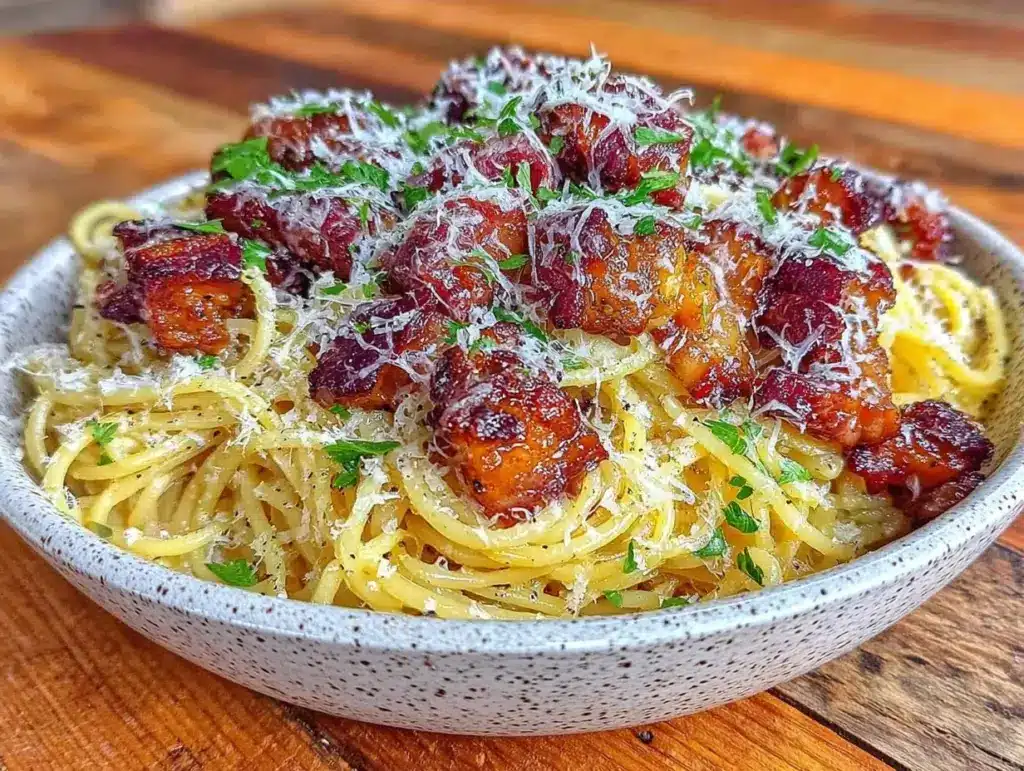
It was a Tuesday in November, the kind of night where the wind howls outside and I’m standing in my kitchen at 7:15 PM, staring into the abyss of my pantry. My husband had a late meeting, the kids were already in pajamas, and I had exactly twenty minutes to make something that felt like a hug but didn’t require a shopping trip. I didn’t have time for a complex meal prep bowl or to wait for a mediterranean shrimp pasta to simmer down. I needed speed. I needed richness. I needed carbonara.
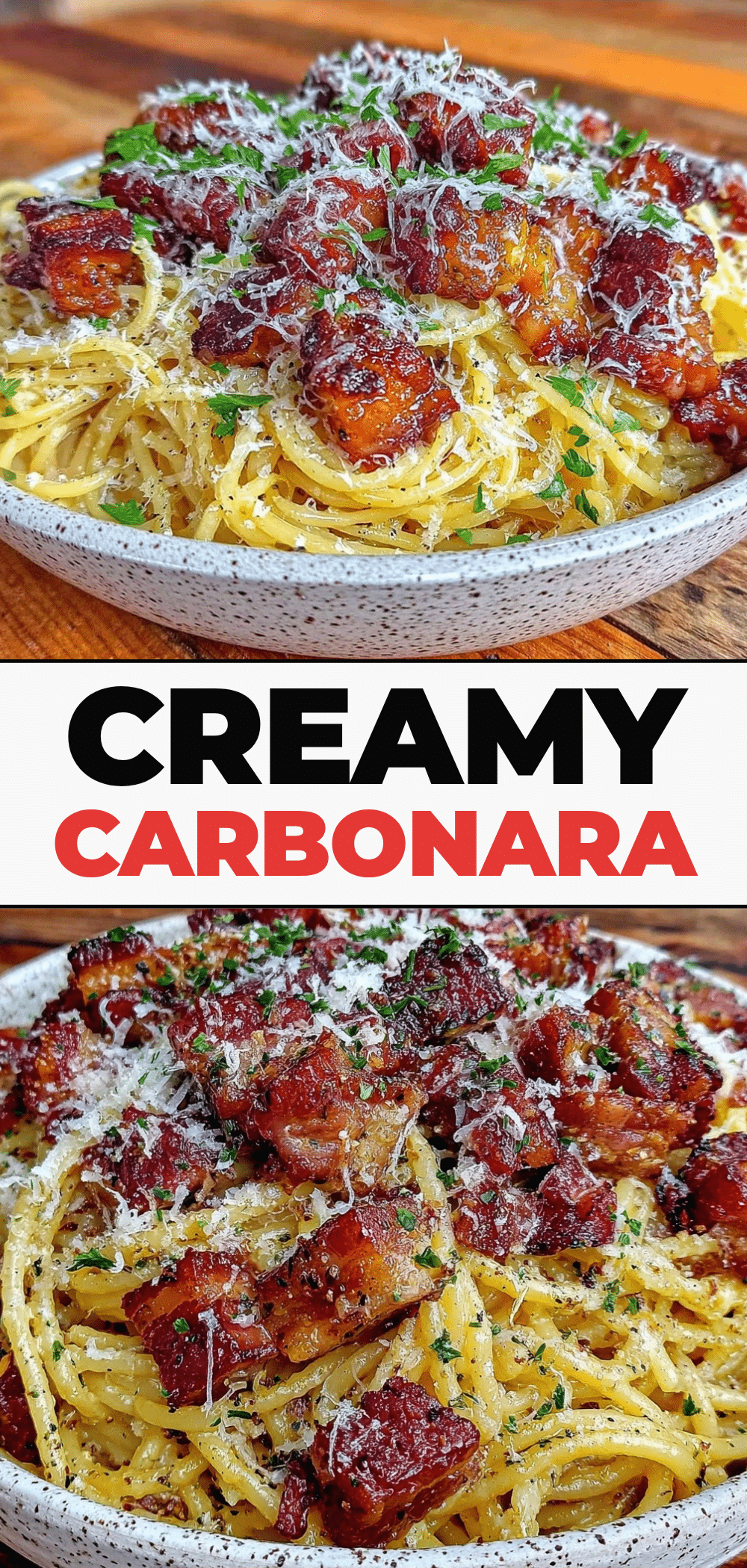
Now, before you roll your eyes and say, “But that’s not authentic,” let me stop you right there. I respect the purists. I do. But I also respect people who want to eat dinner before midnight. This version of Authentic Italian Carbonara with Guanciale is the bridge. It keeps the soul of the Roman classic—the eggs, the cheese, the pork, the pepper—but it strips away the intimidation factor. It’s fast. It’s incredibly high in protein. And frankly, it’s the best fuel you can put in your body after a long day because it doesn’t leave you feeling sluggish. It leaves you feeling satisfied.
I’ve made this recipe at least fifty times in the last three years. I’ve made it when I’m exhausted, when I’m celebrating, and when I’m trying to get my picky eater to eat something that isn’t plain pasta. It has become my absolute go-to for busy weeknights. The secret isn’t in the technique (though that matters); it’s in the ingredients. Specifically, guanciale. Once you taste it, you’ll never go back to bacon. And I’ll show you exactly how to make the sauce creamy without it scrambling into cheesy omelet bits.
Why You’ll Love This Recipe
There are a dozen reasons I keep coming back to this dish, but let’s be real about the ones that actually matter for your life right now.
It’s Actually Authentic (But Forgiving) — No cream. No peas. No chicken. Just four ingredients that do heavy lifting. This isn’t “Italian-American” carbonara; it’s the real deal from Rome, simplified for your Tuesday night. It tastes restaurant-quality because it *is* restaurant-quality, just without the $45 price tag.
Protein-Packed Fuel — We often forget that dinner should keep us going. This dish is loaded with protein from the eggs, the guanciale, and the Pecorino Romano. It’s dense, savory, and keeps your blood sugar stable. It’s not a light salad that leaves you hungry an hour later. It’s real food that fuels your evening, whether that means helping with homework, catching up on work, or just relaxing.
Ready in 20 Minutes — Seriously. If you can boil water and whisk eggs, you can do this. The active cooking time is maybe 15 minutes. The rest is just waiting for the pasta. It’s faster than ordering takeout, and it doesn’t arrive in a greasy box.
Gluten-Free Friendly — If you or your family avoids gluten, this is one of the few pasta dishes you can eat without worry. Just swap the spaghetti for your favorite gluten-free brand, and the flavor profile remains exactly the same. The sauce clings beautifully, so you won’t miss the wheat.
Makes You Feel Like a Pro — There is a specific kind of pride that comes from nailing a technically tricky dish. When you pull this off, you look like a chef. Your family thinks you’re a magician. And honestly? It’s a great confidence booster in the kitchen.
This is my answer to “what’s for dinner” when I have no energy but high standards. It’s reliable, it’s delicious, and it’s fuel that tastes like a treat.
Ingredients You’ll Need
This is a minimalist recipe. The fewer ingredients, the more each one matters. I’m not asking you to hunt down obscure items, but I am asking you to respect the quality of what you buy. Here’s what you need:
Guanciale (8 oz / 225g) — This is the non-negotiable star. Guanciale is cured pork jowl. It has a higher fat content and a more delicate, pork-forward flavor than bacon. It renders down into crispy, melt-in-your-mouth goodness. If you can’t find guanciale, thick-cut bacon is the backup, but I promise you, once you try guanciale, you’ll be hooked. It’s worth the trip to a specialty shop or online order.
Pecorino Romano (1.5 cups / 150g, freshly grated) — This is a sharp, salty sheep’s milk cheese. It cuts through the richness of the pork and eggs. Do not use Parmesan if you want authenticity; it’s too nutty and mild. Use a block and grate it yourself. Pre-grated cheese has anti-caking agents that prevent it from melting smoothly into a sauce.
Large Eggs (4 whole + 2 yolks) — This is the magic. The whole eggs provide structure, and the extra yolks add richness and color. Room temperature eggs incorporate more easily, but cold eggs work if you temper them slowly. I always use cage-free or pasture-raised eggs because the quality shines in simple dishes like this.
Black Pepper (2-3 teaspoons, freshly cracked) — Carbonara means “coal miner style,” and the pepper is the soot. You want it bold. Use a mortar and pestle or a pepper mill. Pre-ground pepper is a crime against this dish. You want visible flakes of pepper in every bite.
Spaghetti (1 pound / 450g) — Long pasta is traditional because it holds the silky sauce well. Spaghetti is classic, but I also love linguine or even trofie. If you’re going gluten-free, use brown rice spaghetti or corn-based pasta. Just make sure it’s high quality so it doesn’t get mushy.
Salt (For the pasta water) — You’ll need a good amount to season the pasta itself. The pasta water is your seasoning partner.
Optional: A splash of white wine — Some people deglaze the pan with a splash of dry white wine after cooking the guanciale. It adds brightness. I sometimes do it when I want a slightly lighter flavor profile, but it’s not traditional. Use it if you like, but don’t feel pressured.
Equipment Needed
You don’t need a fancy kitchen for this. Here’s what I actually use:
Large Skillet or Dutch Oven — I use a 12-inch stainless steel skillet. It needs to be big enough to hold the guanciale and eventually toss the pasta in. Cast iron works too, but stainless steel gives you better control over the heat when you’re dealing with eggs.
Large Pot — For boiling the pasta. Any big pot works. I use my 8-quart stockpot. Make sure it fits the pasta comfortably.
Mixing Bowl — Medium-sized bowl for whisking the eggs and cheese. Glass or ceramic is fine.
Tongs — Essential for tossing the pasta. Spoons just don’t work as well for coating every strand.
Pepper Mill — If you don’t have one, buy one. Freshly cracked pepper changes everything.
Grater — A box grater or microplane for the Pecorino. Freshly grated is key.
Colander — For draining the pasta. Or just use the lid if you’re feeling adventurous.
How to Make It: Step-by-Step
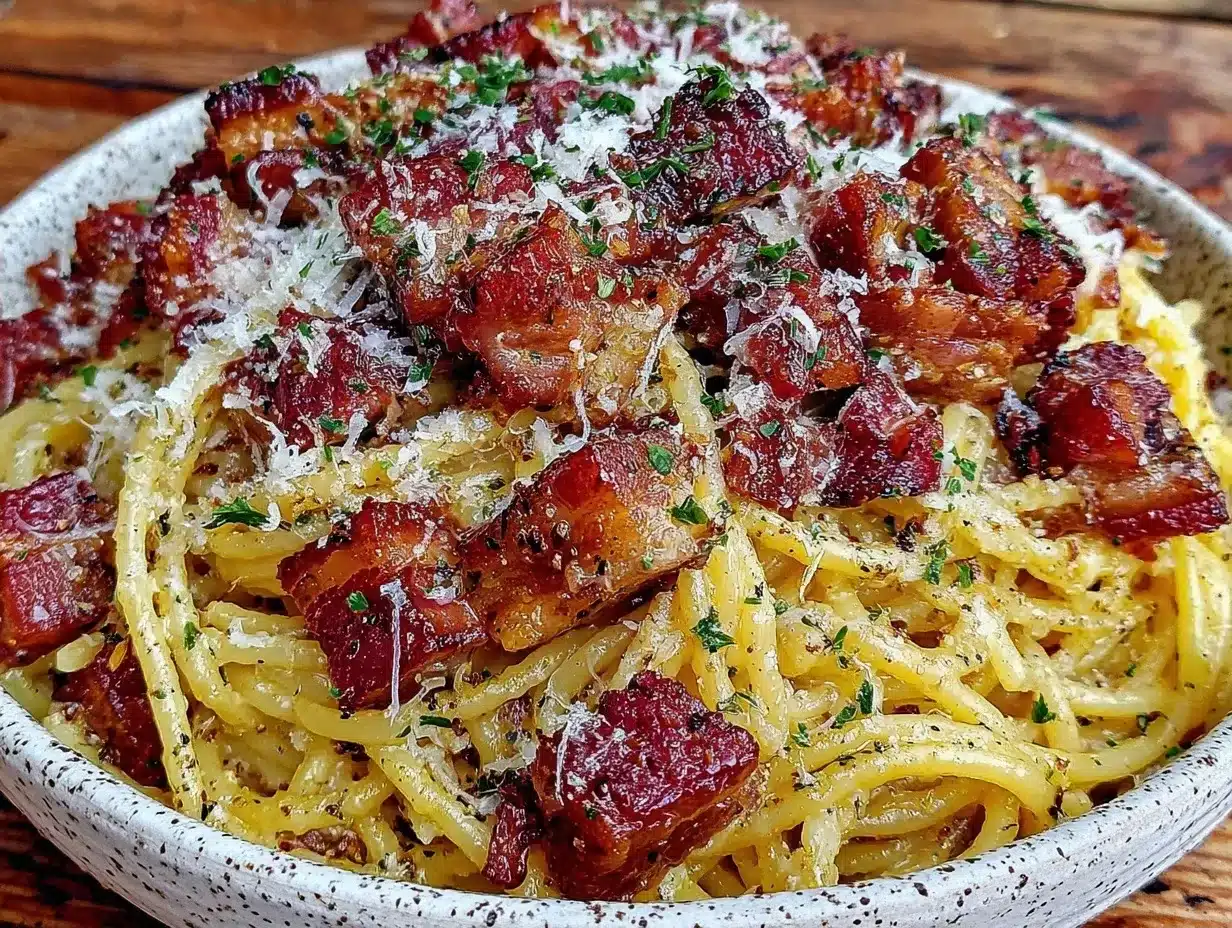
Alright, let’s make this! The trick to carbonara is timing. The sauce needs to be ready exactly when the pasta is ready. Here is exactly how I do it.
Step 1: Prep the Guanciale (5 minutes) — Cut the guanciale into strips or cubes, about 1/2 inch thick. If you’re using bacon, do the same. Place it in a cold skillet. Turn the heat to medium. This is crucial. Starting cold allows the fat to render slowly, making the meat crispy without burning. Cook for 8-10 minutes, flipping occasionally, until it’s golden and crispy. Remove the guanciale with a slotted spoon, leaving the rendered fat in the pan. Set the meat aside on a plate.
Step 2: Make the Egg Mixture (2 minutes) — While the guanciale cooks, whisk the eggs and egg yolks in your mixing bowl. Add the grated Pecorino Romano and a generous amount of freshly cracked black pepper. Whisk until it forms a thick, paste-like consistency. It should look like a thick batter. Taste it (carefully) to check seasoning—it should be salty because the cheese is salty. Set aside.
Step 3: Cook the Pasta (10-12 minutes) — Bring a large pot of salted water to a boil. The water should taste like the ocean. Add the spaghetti. Cook according to package directions, but start checking it 1-2 minutes before the recommended time. You want it al dente (firm to the bite). IMPORTANT: Before draining, scoop out 1 cup of starchy pasta water. This is liquid gold for the sauce. Drain the pasta, but do not rinse it.
Step 4: Combine Pasta and Fat (2 minutes) — Add the hot, drained pasta directly into the skillet with the reserved guanciale fat. Toss well to coat every strand in the pork fat. The pasta is still hot, which is good. Let it sit for 30 seconds to absorb the flavor.
Step 5: The Magic Moment (1 minute) — Remove the skillet from the heat. This is the most important step. If the pan is too hot, your eggs will scramble. Wait 30 seconds for the pan to cool slightly. Pour the egg and cheese mixture over the hot pasta. Immediately start tossing vigorously with your tongs. The residual heat from the pasta and the fat will cook the eggs gently, creating a creamy sauce. If it looks too thick or clumpy, add a splash of the reserved pasta water. Keep tossing until the sauce is glossy and coats the pasta.
Step 6: Finish and Serve — Stir in the crispy guanciale (reserving a few pieces for garnish). Serve immediately on warm plates. Top with extra Pecorino and a final crack of black pepper. Eat it right away. It waits for no one.
Expert Tips & Tricks
I’ve made this dish dozens of times, and I’ve made every mistake possible. Here’s how to avoid them.
The Pan Must Be Off the Heat — I cannot stress this enough. If you add the eggs while the pan is on the burner, you will make scrambled eggs on pasta. It’s not a disaster, but it’s not carbonara. Remove the pan, wait 30 seconds, then add the eggs.
Temper the Eggs (If You’re Nervous) — If you’re worried about scrambling, take a ladle of the hot pasta water and slowly whisk it into the egg mixture while it’s in the bowl. This brings the temperature up gradually. Then pour that tempered mixture back into the pasta. It’s a safety net.
Use Pasta Water Liberally — The starch in the water emulsifies with the fat and eggs to create the sauce. If your sauce looks dry or clumpy, add pasta water a tablespoon at a time while tossing. It’s like magic.
Don’t Skimp on Pepper — The pepper is a main ingredient, not a garnish. You want to see it. You want to taste it. Crack it fresh.
Work Fast — Once you add the eggs, you have about 60 seconds to toss everything before it sets. Have your tongs ready. Have your plates ready. Move with purpose.
Guanciale vs. Bacon — If you use bacon, choose thick-cut, uncured bacon if possible. Thin bacon burns too fast. And remember, bacon is saltier than guanciale, so you might not need as much Pecorino.
Variations & Substitutions
Once you’ve nailed the basic version, here’s how you can mix it up.
Gluten-Free Carbonara — Simply use gluten-free spaghetti. Brown rice or corn-based pasta works best. The technique remains exactly the same. The sauce clings just as well.
Chicken Carbonara — Swap the guanciale for diced chicken breast or thighs. Sauté the chicken first, remove, then cook the guanciale (if using) or just use olive oil. Add the chicken back in at the end. It’s lighter but still delicious.
Vegetarian Carbonara — Skip the pork. Use mushrooms (cremini or shiitake) sautéed in olive oil until browned. They add a savory, umami depth that mimics the pork. Or just skip the meat entirely and add extra black pepper and garlic.
Spicy Carbonara — Add red pepper flakes to the egg mixture or toss them in with the guanciale. It adds a nice kick that cuts the richness.
Herb-Infused — Stir in fresh parsley or chives at the very end. It adds color and a fresh note. Not traditional, but tasty.
Serving & Storage
How to Serve: — I serve this straight from the skillet to the table. It’s rustic and communal. Pair it with a simple green salad with a lemon vinaigrette to cut the richness. Garlic bread is optional, but honestly, the carbonara is so rich you might not need it. If you want a drink, a crisp Pinot Grigio or a light red like Chianti pairs beautifully.
Storage: — Carbonara is best eaten fresh. It does not reheat well. The eggs can separate and become grainy if reheated. If you must save leftovers, store them in an airtight container in the fridge for up to 2 days. To reheat, add a splash of milk or cream and warm gently on low heat, stirring constantly. It won’t be as good as fresh, but it’s edible.
Freezing: — Do not freeze carbonara. The texture will be ruined. Make it fresh.
Nutrition Information
I’m not a nutritionist, but here’s the breakdown if you’re tracking. Keep in mind this is a rich, protein-dense meal.
Per Serving (based on 4 servings):
- Calories: 650
- Protein: 32g
- Carbs: 70g
- Fiber: 3g
- Fat: 22g
- Sodium: 800mg (varies by cheese/pork saltiness)
What’s Good: — High protein from eggs and pork. The carbs come from whole-grain or regular pasta, providing sustained energy. It’s a complete meal in one bowl.
What to Know: — It’s high in sodium due to the cured pork and Pecorino. Use low-sodium broth if you’re sensitive, and rinse the guanciale briefly if you want to reduce salt. It’s not a “light” dish, but it’s nutrient-dense.
Final Thoughts
So that’s my go-to Authentic Italian Carbonara with Guanciale. It’s simple, it’s powerful, and it’s the perfect weeknight fuel. I’ve made it when I was too tired to think, and it always comes out delicious. It’s my answer to “what’s for dinner” when I want something that feels special but doesn’t take all night.
Make it yours. Try different peppers, different cheeses, different pastas. The core technique is the same, but the flavor can be yours. If you make this, drop a comment and let me know how it went. I love hearing how recipes turn out in your kitchen.
Happy cooking! And I hope your kitchen smells as amazing as mine does right now.
Frequently Asked Questions
Q: Can I use bacon instead of guanciale?
A: Yes, you can. It’s the most common substitution. Use thick-cut bacon for better texture. Keep in mind that bacon is often saltier and smoked, which changes the flavor profile slightly. Guanciale is milder and porkier, but bacon works in a pinch.
Q: Why did my sauce turn out scrambled?
A: The pan was too hot. When you add the egg mixture, the pan must be off the heat. The residual heat from the pasta is enough to cook the eggs gently. If you’re worried, wait an extra minute after draining the pasta before adding the eggs.
Q: Can I make this ahead of time?
A: No, carbonara is best fresh. The sauce continues to thicken as it cools, and reheating can cause the eggs to separate. Prep your ingredients (grate cheese, cut guanciale) ahead of time, but cook and eat immediately.
Q: Is this recipe gluten-free?
A: The traditional ingredients (eggs, cheese, pork, pepper) are gluten-free. Just use gluten-free pasta. Check your cheese label to ensure no anti-caking agents contain wheat, though most Pecorino is safe.
Q: Can I use Parmesan instead of Pecorino?
A: You can, but it won’t be authentic. Pecorino is sharper and saltier, which balances the rich eggs. Parmesan is milder and nuttier. If you use Parmesan, you might need to add a bit more salt. For the most authentic taste, stick with Pecorino.
Q: How do I reheat leftovers?
A: Add a splash of milk or cream to a skillet, add the leftover pasta, and warm gently over low heat, stirring constantly. Do not use a microwave, as it heats unevenly and can scramble the eggs further.
Pin This Recipe!
Authentic Italian Carbonara with Guanciale
- Total Time: 20 minutes
- Yield: 4 servings 1x
Description
A fast, protein-packed weeknight dinner that bridges the gap between traditional Roman authenticity and modern convenience. This recipe uses guanciale, Pecorino Romano, eggs, and black pepper to create a creamy sauce without cream, ready in just 20 minutes.
Ingredients
- 8 oz (225g) Guanciale, cut into strips or cubes
- 1.5 cups (150g) Pecorino Romano, freshly grated
- 4 large eggs
- 2 large egg yolks
- 2–3 teaspoons black pepper, freshly cracked
- 1 pound (450g) Spaghetti
- Salt, for pasta water
- Optional: Splash of dry white wine
Instructions
- Cut guanciale into 1/2 inch strips or cubes. Place in a cold large skillet and turn heat to medium. Cook for 8-10 minutes, flipping occasionally, until golden and crispy. Remove with a slotted spoon, leaving rendered fat in the pan.
- While guanciale cooks, whisk eggs, egg yolks, grated Pecorino Romano, and black pepper in a mixing bowl until a thick paste forms. Set aside.
- Bring a large pot of salted water to a boil. Cook spaghetti until al dente. Before draining, reserve 1 cup of starchy pasta water. Drain pasta (do not rinse).
- Add hot drained pasta to the skillet with the reserved guanciale fat. Toss to coat and let sit for 30 seconds.
- Remove skillet from heat and wait 30 seconds for it to cool slightly. Pour egg mixture over pasta and toss vigorously with tongs. The residual heat will cook the eggs gently into a creamy sauce. Add pasta water splash if needed to reach desired consistency.
- Stir in crispy guanciale (reserving some for garnish). Serve immediately topped with extra Pecorino and black pepper.
Notes
The pan must be removed from the heat before adding the egg mixture to prevent scrambling. Use freshly grated Pecorino Romano, not pre-grated, for best melting. Carbonara is best eaten fresh and does not reheat well; do not freeze.
- Prep Time: 5 minutes
- Cook Time: 15 minutes
- Category: Main Course
- Cuisine: Italian
Nutrition
- Serving Size: 1/4 of the recipe
- Calories: 650
- Sugar: 2
- Sodium: 800
- Fat: 22
- Saturated Fat: 8
- Carbohydrates: 70
- Fiber: 3
- Protein: 32
Keywords: carbonara, guanciale, italian pasta, weeknight dinner, high protein, gluten-free option, authentic carbonara, easy pasta