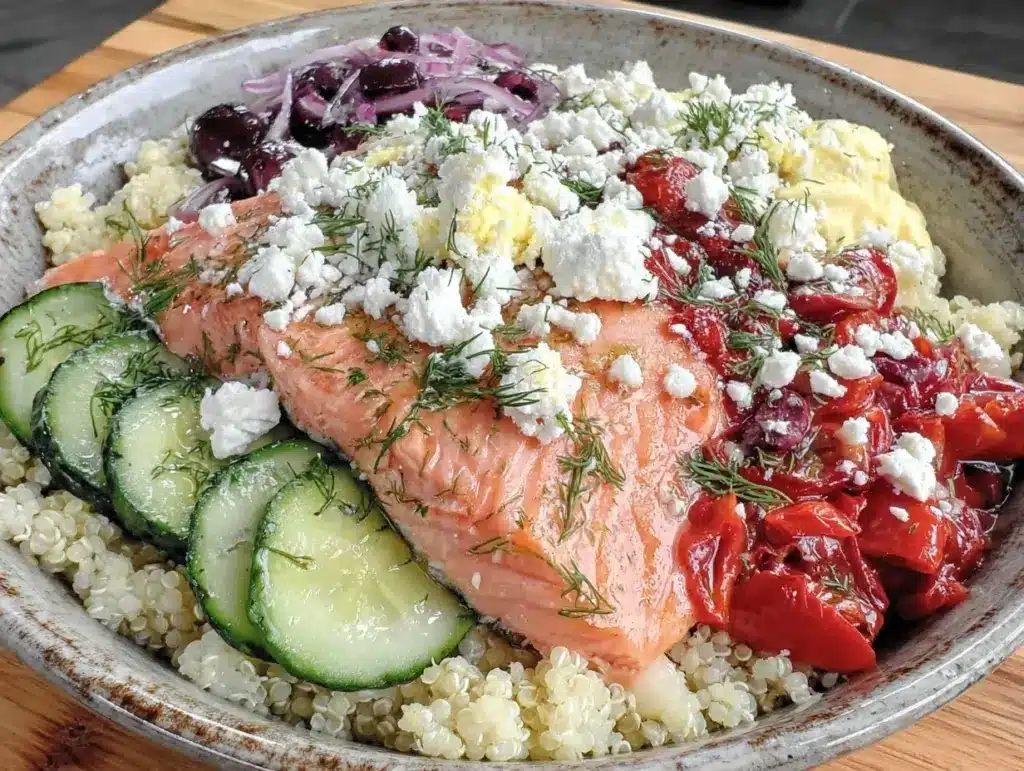
I used to think that eating “healthy” meant boring, sad salads with flavorless grilled chicken. I was wrong. It turns out, eating well doesn’t have to mean sacrificing taste or spending a fortune on takeout. Last month, I was craving something fresh but didn’t want to cook a complicated dinner. I pulled together what I had in the fridge—salmon, a cucumber, some feta—and tossed it with a simple lemon-herb dressing. The result? My kids actually asked for seconds. And not just polite seconds. I’m talking “can I have another bowl before bed?” levels of interest.
That was the moment I realized I had stumbled onto the ultimate weeknight winner. This Mediterranean Salmon Bowl with Cucumber and Feta is better than takeout because it’s fresh, vibrant, and ridiculously easy. It’s the kind of meal that makes you feel like you’re on vacation, even if you’re eating it at your kitchen table on a Tuesday. I’ve made this at least a dozen times since that first accidental success, tweaking the ratios until it was perfect. It’s become my go-to when I want something that feels gourmet but takes almost zero effort.
Here’s the thing about this recipe: it’s forgiving. You don’t need to be a chef to make it work. In fact, the fewer fancy techniques you try to use, the better it turns out. It’s minimalist by design. If you can chop a cucumber and drizzle a sauce, you can make this. I’ve tested it with wild-caught salmon, farmed salmon, even leftover grilled fish, and it always works. It’s the kind of dish that makes you look like a culinary genius without actually doing much work at all.
Why You’ll Love This Mediterranean Salmon Bowl
There are a lot of reasons I keep coming back to this bowl, but they all boil down to simplicity and flavor. This isn’t just another fish recipe; it’s a complete, satisfying meal that comes together faster than you can order UberEats. Here’s why this has earned a permanent spot in my rotation.
- Stupid Simple Ingredients — Seriously, five main components. Salmon, cucumber, feta, rice (or quinoa), and a lemony dressing. You probably have most of these in your kitchen right now. I don’t need to go to the store for special spices or obscure sauces.
- Lightning Fast — From start to finish, this takes about 20 minutes. The salmon cooks in 12 minutes. The rest is assembly. It’s perfect for when you want something that feels special but doesn’t require hours of prep.
- Actually Tastes Good Cold — This is a game-changer. The flavors meld together beautifully as it sits. I often make this for lunch the next day, and it’s even better. The cucumber stays crisp, the feta stays salty, and the salmon holds up perfectly.
- Healthy Without Being Boring — It’s packed with omega-3s, fresh veggies, and probiotics from the yogurt in the dressing. But it doesn’t taste like “diet food.” It tastes rich, tangy, and savory. My husband, who usually complains about “rabbit food,” loves this.
- Customizable Forever — Got extra olives? Throw them in. Want to add some chickpeas for protein? Done. This bowl is a canvas, and you’re the artist. It’s hard to mess up because the base flavors are so balanced.
This is my “if you can only make one thing this week” recipe. It’s reliable, delicious, and makes you feel good. No stress, no mess, just good food.
Ingredients You’ll Need
Here’s the best part: you probably have most of this already. This recipe relies on fresh, simple ingredients that shine on their own. I’m particular about three things here—the quality of the salmon, the freshness of the lemon, and the type of feta—but everything else is pretty standard.
For the Salmon
Salmon fillets (4 pieces, about 6oz each / 1.5kg) — I use wild-caught Alaskan salmon when it’s in season, but farmed Atlantic works great too. Look for fillets that are consistent in thickness so they cook evenly. Don’t buy the ones that are huge and weirdly shaped; stick to uniform pieces.
Olive oil (2 tablespoons / 30ml) — Use extra virgin for the best flavor. It’s the base of your marinade.
Garlic (2 cloves, minced / about 1 tablespoon) — Fresh only. Jarred garlic has a weird metallic taste that doesn’t pair well with delicate fish. I mince it myself because it’s faster than pressing.
Salt and black pepper — Kosher salt is my go-to. It’s easier to control than table salt. Season generously; the salmon needs that crunch.
For the Bowl Base
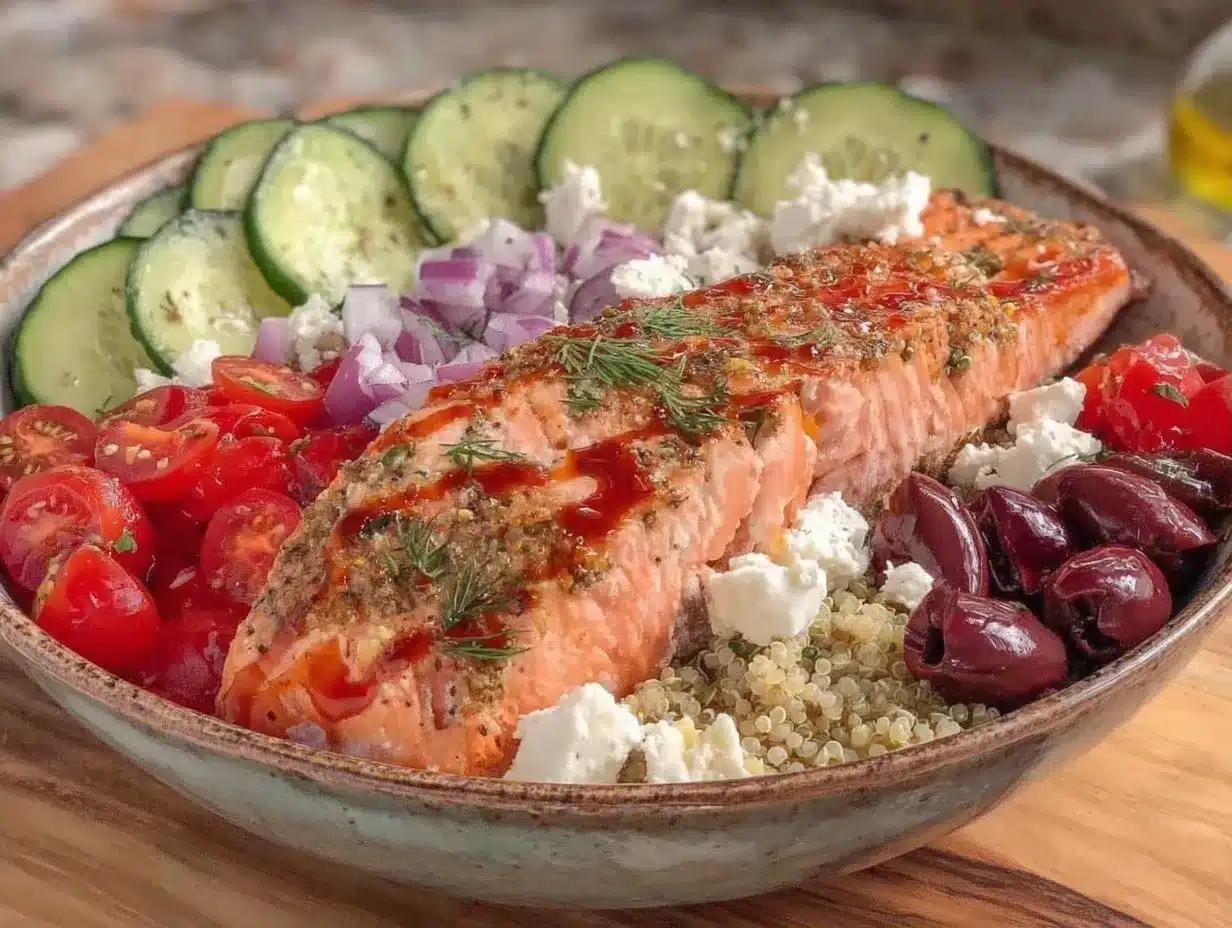
Basmati or Jasmine rice (1 cup uncooked / 185g) — I love basmati for its fluffy, separate grains. It holds up well in a bowl. Quinoa is a great gluten-free alternative if you prefer that.
Cucumber (1 large English cucumber / about 300g) — English cucumbers are better because they have fewer seeds and thinner skin. Regular cucumbers work too, but I usually peel them first to avoid bitterness.
Feta cheese (½ cup crumbled / 60g) — Buy a block and crumble it yourself. Pre-crumbled feta is often dried out and salty in a bad way. Fresh feta has that creamy, tangy pop that makes this dish.
For the Lemon-Herb Dressing
Plain Greek yogurt (½ cup / 120g) — Full-fat is best for creaminess. Sk yogurt works but makes the dressing watery. This replaces mayo for a lighter, tangier profile.
Lemon juice (3 tablespoons / 45ml) — Freshly squeezed is non-negotiable. Bottled lemon juice tastes flat and artificial. Squeeze two lemons to be safe.
Dried oregano (1 teaspoon) — Or use fresh if you have a garden. Dried oregano has a stronger, more earthy flavor that stands up to the lemon.
Maple syrup or honey (1 teaspoon) — Just a touch to balance the acidity of the lemon. You don’t want it sweet, just rounded out.
Optional Add-ins
Kalamata olives (½ cup, sliced) — Adds a salty, briny kick. I always keep a jar in the pantry.
Cherry tomatoes (1 cup, halved) — Adds sweetness and color. Summer tomatoes are incredible here.
Fresh dill or parsley (2 tablespoons, chopped) — Fresh herbs make this look and taste restaurant-quality. Dill pairs especially well with salmon.
Equipment Needed
You don’t need fancy gear for this. Here’s what I actually use.
Skillet or baking sheet — I prefer a skillet for more control over the salmon’s texture. Cast iron is great, but stainless steel or non-stick works fine. If you’re baking, use a rimmed baking sheet.
Small bowl — For mixing the dressing. Any small bowl will do.
Sharp knife — For chopping the cucumber and tomatoes. A dull knife makes you cry more—literally and figuratively.
Peeler — Optional, but useful if you’re using a standard cucumber.
Rice cooker or pot — For cooking the rice. I use a rice cooker because it’s foolproof. If you use a pot, just follow the package instructions.
Large mixing bowl — For assembling the final bowl. I like to mix everything in one big bowl to ensure even distribution.
How to Make It: Step-by-Step
Alright, let’s make this! I’m walking you through exactly how I do it. It’s simple, but there are a few tricks to keep the salmon moist and the dressing perfectly tangy.
Step 1: Cook the Rice (15-20 minutes)
Start by cooking your rice. Rinse it under cold water until the water runs clear—this removes excess starch and prevents mushy rice. Cook according to package directions. I usually add a pinch of salt to the water. Once it’s done, fluff it with a fork and set it aside. It can be warm or room temperature.
Step 2: Make the Dressing (2 minutes)
While the rice cooks, make the dressing. In a small bowl, whisk together the Greek yogurt, lemon juice, minced garlic, dried oregano, maple syrup, a pinch of salt, and black pepper. Taste it. It should be tangy and creamy. If it’s too sour, add a tiny bit more honey. If it’s too thick, add a splash of water. Set it aside.
Step 3: Prep the Veggies (5 minutes)
Peel the cucumber if you’re using a standard one, then dice it into small cubes. I like them bite-sized. Halve the cherry tomatoes if you’re using them. Crumble the feta cheese. Chop the fresh herbs. Having everything prepped makes assembly a breeze.
Step 4: Cook the Salmon (12 minutes)
Pat the salmon fillets dry with paper towels. This is crucial—dry fish sears better. Season both sides generously with salt and pepper. Heat olive oil in a skillet over medium-high heat. When the oil shimmers, add the salmon skin-side down (if skin-on). Cook for 4-5 minutes without moving it. The skin should get crispy.
Flip the salmon and cook for another 3-4 minutes, or until the fish is opaque and flakes easily with a fork. If you’re baking, preheat your oven to 400°F (200°C), place salmon on a lined baking sheet, and bake for 12-15 minutes. Don’t overcook it! Salmon continues to cook slightly after you take it off the heat.
Step 5: Assemble the Bowl
In a large bowl, combine the cooked rice, diced cucumber, tomatoes, and olives. Drizzle half the dressing over the veggies and toss gently to coat. Divide the rice mixture among four serving bowls. Flake the salmon into large chunks and place it on top. Drizzle the remaining dressing over the salmon. Sprinkle with crumbled feta and fresh herbs.
Step 6: Serve
Serve immediately. I like to squeeze a little extra lemon over the top just before eating. It wakes up all the flavors. Enjoy!
Expert Tips & Tricks
Here’s everything I’ve learned from making this dozens of times. These tips will save you from my mistakes.
Don’t Overcook the Salmon — This is the #1 mistake people make. Salmon goes from perfect to dry in seconds. Pull it off the heat when it’s just barely opaque in the center. It will finish cooking on the plate. If you’re unsure, use a thermometer; 145°F (63°C) is the target, but I pull it at 140°F for juicier results.
Flake, Don’t Slice — When serving, use a fork to gently flake the salmon. It distributes the fish better over the rice and veggies. It also makes it easier to eat in one bite.
Make the Dressing Ahead — The dressing actually tastes better if you let it sit for 15 minutes. The garlic and oregano infuse into the yogurt. I often make it in the morning and keep it in the fridge.
Use Room Temperature Salmon — Take your salmon out of the fridge 15 minutes before cooking. Cold salmon hits the hot pan and cooks unevenly. Room temp salmon cooks more evenly.
Toast Your Spices — If you want extra flavor, toast the dried oregano in the pan for 30 seconds before adding it to the dressing. It releases essential oils and makes the flavor pop.
Variations & Substitutions
Once you’ve nailed the basic version, here’s how you can mix it up. I’ve tried all of these.
Shrimp Bowl — Swap salmon for large shrimp. Sauté them for 2-3 minutes per side. They cook faster, so watch them closely. My kids prefer shrimp, so I make this version often.
Chicken Version — Use grilled chicken breasts instead of salmon. Marinate them in the same lemon-herb dressing before cooking. It’s a great way to use up leftovers.
Vegetarian Bowl — Skip the fish and add chickpeas or edamame. They provide protein and hold up well in the bowl. I sometimes add roasted cauliflower for extra heartiness.
Gluten-Free — This recipe is naturally gluten-free! Just make sure your feta and olives don’t have any added wheat-based fillers (rare, but possible). Use gluten-free soy sauce if you want to add a splash for umami.
Dairy-Free — Swap Greek yogurt for coconut yogurt or a vegan mayo alternative. Use nutritional yeast instead of feta. It’s different but still creamy and tangy.
No-Cook Option — Use pre-cooked rice from the fridge. Heat it in the microwave for 2 minutes. The whole meal comes together in 10 minutes.
Serving & Storage
How to Serve: I usually serve this straight from the bowl. It looks rustic and inviting. Add a side of warm pita bread if you want something to scoop up the extra dressing. A simple arugula salad with lemon vinaigrette is also great on the side.
Refrigerator: Store leftovers in an airtight container for up to 3 days. The salmon will firm up slightly, but it’s still delicious. The dressing might separate, so give it a stir before serving.
Reheating: I don’t recommend reheating the salmon. It’s best eaten cold or room temperature. If you must reheat, warm the rice and veggies gently in the microwave, then add the cold salmon on top. Heating salmon in the microwave makes it rubbery.
Freezing: This doesn’t freeze well. The cucumber gets soggy, and the salmon texture changes. Make it fresh for the best results.
Nutrition Information
I’m not a nutritionist, but here’s the breakdown if you’re tracking. This is per serving (based on 4 servings).
- Calories: 450
- Protein: 35g
- Carbs: 40g
- Fiber: 4g
- Fat: 18g
- Sodium: 600mg
Look, this is a healthy meal with lean protein and fresh veggies. It’s not a diet recipe, but it’s light enough that you won’t feel sluggish after eating it. When I want to make it lighter, I use less feta and more cucumbers. But usually? I just enjoy it as is. It’s comfort food in a bowl.
Final Thoughts
So that’s my Mediterranean Salmon Bowl! It’s become my go-to when I want something that feels special but doesn’t require much effort. It’s fresh, flavorful, and impossible to mess up. My family loves it, and I hope you will too. Make it yours! Try different add-ins, swap in your favorite veggies, or adjust the lemon to your taste. The best recipes are the ones you adapt to your family’s tastes.
If you make this, drop a comment and let me know what you think! I love hearing how recipes turn out in your kitchen. And if something doesn’t work, tell me that too—I’m here to help troubleshoot. Happy cooking!
Frequently Asked Questions
Can I use canned salmon instead of fresh?
You can, but the texture will be different. Canned salmon is softer and flakier. It works well if you’re on a budget or short on time. Just rinse it and pat it dry before adding it to the bowl. It’s a great option for a quick lunch.
Why is my dressing too thin?
Usually means your Greek yogurt was runny. Greek yogurt should be thick and creamy. If yours is thin, drain it through a cheesecloth or paper towel for 15 minutes before mixing. Or, add a bit more lemon juice or oregano to balance the extra liquid.
Can I make this ahead for a dinner party?
Absolutely. Prep all the veggies and make the dressing up to 2 days ahead. Cook the rice and salmon fresh right before serving. It’s best when the salmon is warm and the veggies are crisp. I do this all the time for small gatherings.
What rice is best for this bowl?
Basmati or Jasmine rice are my top picks. They’re fluffy and don’t get sticky. Quinoa is a great alternative for a gluten-free, high-protein option. Avoid Arborio or sticky rice—they’re too clumpy for a bowl like this.
Can I bake the salmon instead of pan-frying?
Yes! Baking is actually easier for beginners. Preheat oven to 400°F (200°C). Place salmon on a lined baking sheet and bake for 12-15 minutes. It’s less messy and harder to overcook. I use this method when I’m cooking for a crowd.
How do I store leftovers?
Store in an airtight container in the fridge for up to 3 days. Keep the dressing separate if possible, or mix it in and stir well before eating. The salmon will firm up, but it’s still tasty cold.
Pin This Recipe!
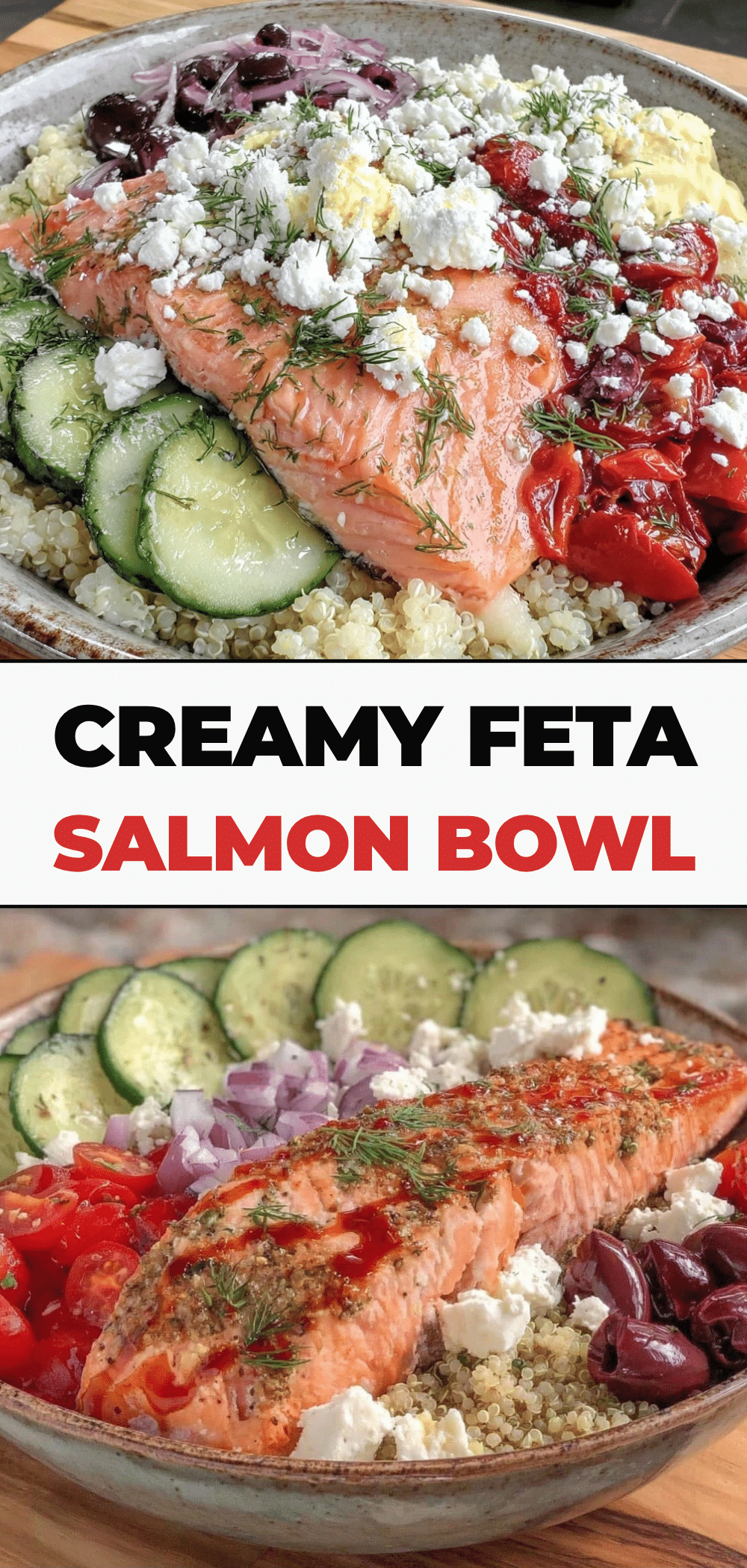
Mediterranean Salmon Bowl: Easy, Beginner-Friendly & Foolproof
- Total Time: 20 minutes
- Yield: 4 servings 1x
Description
A fresh, vibrant, and ridiculously easy Mediterranean Salmon Bowl with cucumber and feta that comes together in about 20 minutes. It’s a healthy, customizable weeknight winner that tastes gourmet but requires minimal effort.
Ingredients
- 4 salmon fillets (about 6oz each / 1.5kg)
- 2 tablespoons extra virgin olive oil
- 2 cloves garlic, minced
- Salt and black pepper to taste
- 1 cup uncooked Basmati or Jasmine rice (or quinoa)
- 1 large English cucumber, diced
- ½ cup crumbled feta cheese
- ½ cup plain Greek yogurt (full-fat)
- 3 tablespoons fresh lemon juice
- 1 teaspoon dried oregano
- 1 teaspoon maple syrup or honey
- Optional: ½ cup sliced Kalamata olives
- Optional: 1 cup halved cherry tomatoes
- Optional: 2 tablespoons chopped fresh dill or parsley
Instructions
- Cook the rice according to package directions, rinsing it first to remove excess starch. Fluff with a fork and set aside.
- In a small bowl, whisk together Greek yogurt, lemon juice, minced garlic, dried oregano, maple syrup, salt, and pepper to make the dressing. Adjust seasoning to taste.
- Prep the vegetables: dice the cucumber, halve the tomatoes, crumble the feta, and chop fresh herbs.
- Pat salmon fillets dry and season generously with salt and pepper.
- Heat olive oil in a skillet over medium-high heat. Add salmon skin-side down and cook for 4-5 minutes until skin is crispy.
- Flip salmon and cook for another 3-4 minutes until opaque and flaky. Alternatively, bake at 400°F (200°C) for 12-15 minutes.
- In a large bowl, combine rice, cucumber, tomatoes, and olives. Drizzle with half the dressing and toss gently.
- Divide the rice mixture among four serving bowls.
- Flake the cooked salmon into large chunks and place on top of the rice.
- Drizzle remaining dressing over the salmon, sprinkle with feta and fresh herbs, and serve immediately.
Notes
Do not overcook the salmon; pull it off heat when just barely opaque as it will continue to cook. For best flavor, let the dressing sit for 15 minutes before serving. This dish tastes great cold or at room temperature, making it ideal for meal prep. Avoid freezing as the cucumber becomes soggy.
- Prep Time: 15 minutes
- Cook Time: 12 minutes
- Category: Main Course
- Cuisine: Mediterranean
Nutrition
- Serving Size: 1 bowl
- Calories: 450
- Sugar: 6
- Sodium: 600
- Fat: 18
- Saturated Fat: 6
- Carbohydrates: 40
- Fiber: 4
- Protein: 35
Keywords: salmon bowl, mediterranean diet, healthy dinner, quick meals, salmon recipe, cucumber feta salad, weeknight dinner, gluten-free options