There is a specific, golden hour in my kitchen on Sunday mornings. It’s that quiet window between the dog finishing his breakfast and the rest of the world waking up, where the only sound is the whisk hitting the bowl and the oven timer ticking down. For years, I thought making biscuits was something you did once a year at Thanksgiving, if you were feeling particularly ambitious. I bought the canned tubes. I warmed them up. I felt a little guilty about the preservatives but told myself it was “good enough.”
Then, about three years ago, I stayed with my aunt in Georgia. She didn’t have a single can in her cupboard. Instead, she had a bag of flour, a tub of buttermilk, and a cast-iron skillet that had seen better decades. She handed me a rolling pin and said, “Don’t overwork it. Just listen to the dough.” I thought she was being poetic. She wasn’t. She was being precise.
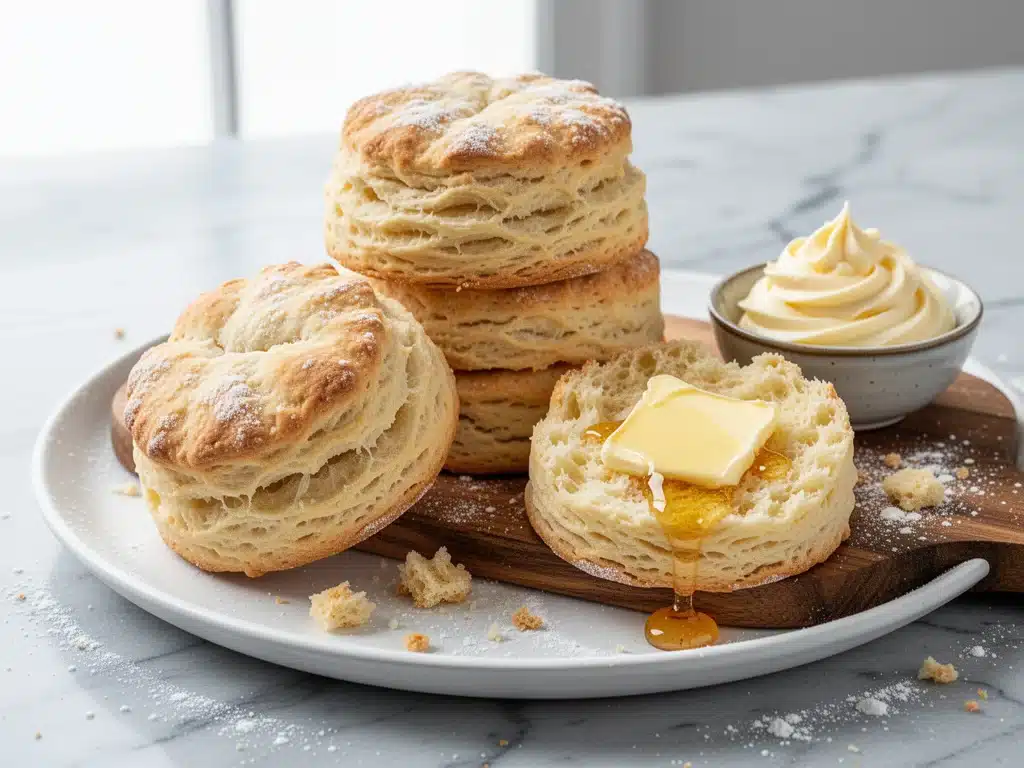
That first bite was shocking. It wasn’t just soft; it was shatteringly flaky on the outside and cloud-soft on the inside. It tasted like actual butter and history, not like cardboard and salt. I went home and tried to replicate it. I failed. I failed hard. My first batch was dense hockey pucks. My second was greasy bricks. But by the fifth attempt, I cracked the code. It wasn’t about fancy techniques or expensive ingredients. It was about temperature, patience, and knowing exactly when to stop touching the dough.
These Flaky Southern Buttermilk Biscuits are the result of that struggle. They are the biscuits I make on repeat. They are the biscuits that fill my apartment with the best smell in the world. They are the reason I now buy real buttermilk instead of the vinegar-water hack I used to use. And the best part? You only need five ingredients. No fancy gadgets. No mystery techniques. Just simple, honest food that tastes like you spent all morning in the kitchen (even though it takes less than 45 minutes).
Why You’ll Love This Recipe
I’ve made these biscuits for everything from lazy Sunday brunches to last-minute dinner parties when I forgot to buy appetizers. They are my secret weapon. Here’s why they’ve earned a permanent spot in my weekly rotation:
- Actually Flaky, Not Flat — Most homemade biscuit recipes promise flakiness and deliver dense disks. These have layers. Real layers. The secret is keeping the butter cold and folding the dough, which creates those air pockets that expand in the oven. It’s satisfying to pull one apart and watch it split open.
- Five Ingredients, Zero Stress — You don’t need a dozen items from the specialty store. Flour, butter, baking powder, salt, and buttermilk. That’s it. If you have these in your pantry (or can grab them on a quick run), you can make dinner or breakfast in under an hour.
- Stupid Simple Technique — I know, “simple” doesn’t always mean “easy.” But once you learn the fold-and-cut method, you’ll never go back to kneading. This recipe is forgiving. If you’re a beginner, you can’t mess it up. If you’re a pro, it’s a reliable baseline that works every time.
- Versatile AF — Yes, they are amazing with just butter and jam. But they are also the perfect vehicle for gravy (see: Biscuits and Gravy), the base for a killer fried chicken sandwich, or the vessel for my favorite crispy baked chicken nuggets when I’m doing a comfort food night. They freeze beautifully, too, so you can always have fresh ones ready.
- Better Than Takeout — I’ve tried the biscuits at those popular Southern chain restaurants. They’re good, sure. But these? These are better. And they cost pennies to make. The flavor difference between fresh-baked and store-bought is night and day.
This is the recipe I bring to potlucks. It’s the recipe that makes my husband stop scrolling on his phone and ask, “What is that smell?” It’s the recipe that turns a Tuesday night into a special occasion.
Ingredients You’ll Need
Here’s the thing about biscuit ingredients: they are simple, which means quality matters more than ever. You don’t have strong flavors like chocolate or spices to hide behind. It’s just flour and butter. So let’s talk about what to buy.
The Dry Stuff
All-Purpose Flour (3 cups / 375g) — Don’t use self-rising flour unless you want to adjust the baking powder and salt. All-purpose gives you the right protein content for tenderness. I use Gold Medal or King Arthur. Spoon it into your measuring cup and level it off. Do not scoop and pack, or you’ll end up with dry, dense biscuits.
Baking Powder (1 tablespoon / 12g) — This is your leavening agent. It needs to be fresh. If your baking powder is older than 6 months, toss it. I test mine by dropping a teaspoon in hot water—it should fizz violently. If it just sits there, it’s dead weight. Use a double-acting baking powder for the best rise.
Kosher Salt (1 teaspoon / 6g) — Salt brings out the flavor of the wheat and the butter. If you use table salt, reduce the amount by half because it’s denser. Kosher salt is easier to control and distributes evenly.
The Wet Stuff
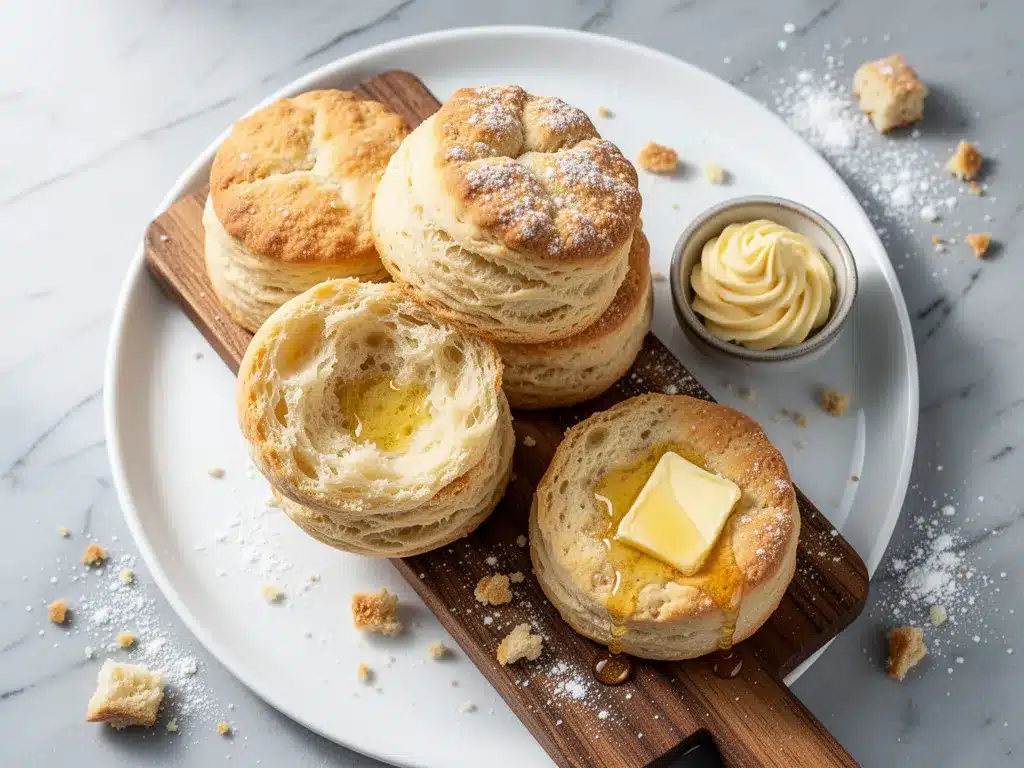
Cold Unsalted Butter (½ cup / 113g) — This is non-negotiable. Cold butter creates steam when it hits the hot oven, which lifts the layers. If the butter is soft or melted, you’ll get greasy biscuits. Cube it from the fridge and keep it there until the moment you use it. I like to use European-style butter for richer flavor, but any cold unsalted butter works.
Buttermilk (1 cup / 240ml) — Real buttermilk is tangy and thick. It reacts with the baking powder to create lift and adds that classic Southern flavor. Do not substitute with milk and lemon juice unless you are desperate—it works, but the texture and taste won’t be the same. I buy the small cartons because they expire fast, but if you have extra, freeze it in ice cube trays for future baking.
For the Glaze
Melted Butter (¼ cup / 55g) — Brushing the tops immediately after baking gives them that golden, shiny crust and extra richness. Use whatever butter you have left over from the biscuit dough.
Optional: Sugar (1 teaspoon) — If you like a slight sweetness (like for breakfast with jam), add a teaspoon to the dry ingredients. For savory biscuits (for gravy or chicken), skip it.
Equipment Needed
You don’t need a fancy kitchen to make these. Here’s what I actually use:
Baking Sheet — A standard 13×18 inch sheet. I line it with parchment paper for easy cleanup, but it’s not strictly necessary. Just make sure it’s flat and sturdy.
Large Bowl — A wide bowl makes mixing easier. Glass or ceramic is fine. Metal is okay too. Just make sure it’s big enough so you don’t spill flour everywhere.
Pastry Cutter or Fork — To cut the butter into the flour. I use a pastry cutter because it’s fast, but a fork or even your clean fingers work. If you use your fingers, keep them cold!
Rolling Pin — A standard wooden rolling pin. Or just use a clean, empty wine bottle if you’re feeling fancy (or broke).
Biscuit Cutter — A 2-inch round cutter. I use a fluted cutter because it seals the edges better, which helps the rise. If you don’t have one, use a glass. Just dip it in flour first so it doesn’t stick.
Whisk — For mixing the dry ingredients evenly. Don’t skip this step!
How to Make It: Step-by-Step
Alright, let’s get baking. I’m walking you through exactly how I do it, including the little tricks I’ve picked up over years of trial and error.
Step 1: Prep and Preheat (5 minutes)
Preheat your oven to 425°F (220°C). This high heat is crucial for the initial rise. Line a baking sheet with parchment paper. Take your butter out of the fridge and cut it into small cubes. Put it back in the fridge or freezer for 10 minutes while you measure the dry ingredients. We want that butter ice-cold.
Step 2: Mix the Dry Ingredients (2 minutes)
In your large bowl, whisk together the flour, baking powder, and salt. Make sure the baking powder is evenly distributed. If you have lumps, whisk them out. This ensures every biscuit rises equally.
Step 3: Cut in the Butter (3 minutes)
Add the cold, cubed butter to the flour mixture. Using a pastry cutter, two forks, or your fingers, work the butter into the flour. You’re looking for pea-sized chunks of butter. Some pieces can be larger (like small peas), but you don’t want a fine meal. Those chunks of butter are what create the flaky layers. If you over-mix here, the biscuits will be tough.
Step 4: Add the Buttermilk (1 minute)
Make a well in the center of the flour mixture. Pour in the buttermilk. Use a fork or a spatula to gently fold the liquid into the dry ingredients. Stop as soon as the dough comes together. It will look shaggy and messy. That’s perfect. Do not overmix. If there are still dry patches, just press them together with your hands lightly.
Step 5: Fold the Dough (5 minutes)
This is the most important step for flakiness. Turn the dough out onto a lightly floured surface. Pat it into a rectangle about ½ inch thick. Fold the dough in thirds, like a letter. Rotate it 90 degrees, pat it down again, and fold it again. Do this two or three times. Each fold creates layers of butter and dough. Be gentle. You’re not trying to knead bread; you’re trying to create structure.
Step 6: Cut the Biscuits (2 minutes)
Pat the dough out to about ½ to ¾ inch thick. Dip your biscuit cutter in flour, then press straight down into the dough. Do not twist the cutter! Twisting seals the edges and prevents the biscuits from rising properly. Cut as close together as you can to maximize the number of biscuits. Gather the scraps, pat them back together, and cut more. You’ll get about 8-10 biscuits.
Step 7: Bake (12-14 minutes)
Place the biscuits on the baking sheet, leaving about 1 inch of space between them. They will spread. Brush the tops with melted butter. Bake for 12-14 minutes, or until they are golden brown on top and cooked through. If you’re unsure, tap the bottom—it should sound hollow. Remove from the oven and immediately brush with more melted butter if you want them extra rich.
Total Time: About 40 minutes (10 minutes prep, 30 minutes bake).
Expert Tips & Tricks
Here’s everything I’ve learned from making these dozens of times. These tips will save you from my early mistakes.
Keep Everything Cold — This is the golden rule. If your butter melts before it hits the oven, you lose the flaky layers. If your kitchen is hot, chill your bowl and flour in the fridge for 15 minutes before starting. Work quickly.
Don’t Twist the Cutter — I know it feels natural to twist to get a clean cut, but it seals the edges. Lift straight up. If the dough sticks, just flick the cutter against the counter to dislodge it.
Use a Sharp Cutter — A dull cutter will tear the dough, creating ragged edges that don’t rise well. If your cutter isn’t sharp, dip it in flour or run it under hot water and dry it off.
Brush with Butter Immediately — The second the biscuits come out of the oven, brush them with melted butter. This keeps the crust soft and adds flavor. If you wait, they’ll dry out.
Freezing Raw Dough — You can cut the biscuits and freeze them on a baking sheet until solid, then transfer to a bag. Bake straight from frozen, adding 2-3 minutes to the bake time. This is great for meal prep.
Common Mistake: Dense Biscuits — This usually means you overmixed the dough or used old baking powder. Handle the dough gently and check your leavening.
Variations & Substitutions
Once you’ve nailed the basic version, here’s how you can mix it up. I’ve tried all of these.
Cheesy Garlic Biscuits — Add ½ cup shredded cheddar cheese and 1 teaspoon garlic powder to the dry ingredients. Top with fresh chives after baking.
Sweet Cinnamon Sugar — Add 2 tablespoons sugar to the dry ingredients. After brushing with butter, roll them in a mix of cinnamon and sugar. Perfect for breakfast.
Herbed Biscuits — Add 1 tablespoon of dried parsley or chives, or 2 teaspoons of dried thyme, to the flour.
Gluten-Free — Use a 1:1 gluten-free flour blend with xanthan gum. The texture will be slightly more crumbly, but still delicious.
Dairy-Free — Use cold vegan butter (like Miyoko’s or Earth Balance) and almond milk mixed with 1 tablespoon of vinegar to mimic buttermilk. The rise might be slightly less, but they’re still tasty.
Vegetarian Protein Boost — Add cooked crumbled sausage or bacon bits to the dough before folding. Makes them heartier.
Serving & Storage
How to Serve: — I usually serve these warm, split open and slathered with salted butter. They are the perfect companion to turkey cheddar pinwheels for a lunch spread, or alongside a hearty bowl of soup. For dinner, they are essential for soaking up gravy.
Side Dishes: — Fried chicken, collard greens, mac and cheese, or a simple green salad with vinaigrette.
Storage: — Store leftover biscuits in an airtight container at room temperature for up to 2 days. To reheat, wrap them in foil and warm in a 350°F oven for 5-10 minutes, or microwave for 20 seconds. They freeze beautifully for up to 3 months. Thaw and reheat as above.
Pro Tip: — If you’re meal prepping, bake them on Sunday and freeze them. Reheat them in the morning for a fresh breakfast without the effort.
Nutrition Information
I’m not a nutritionist, but here’s the breakdown if you’re tracking. Keep in mind that these are rich in butter, so they are calorie-dense but very satisfying.
Per Biscuit (makes 8-10):
- Calories: 280
- Protein: 5g
- Carbs: 32g
- Fat: 14g
- Saturated Fat: 8g
- Sodium: 350mg
These are comfort food. Enjoy them as part of a balanced meal. If you’re watching calories, stick to one or two and fill up on vegetables or lean protein.
Final Thoughts
So that’s my go-to Flaky Southern Buttermilk Biscuits recipe. I’ve probably talked your ear off at this point, but when you make a recipe this often, you have a lot to say about it. These biscuits have saved my brunches, impressed my in-laws, and comforted me on bad days. They are my answer to “what’s for breakfast” when I want something special but don’t want to spend hours in the kitchen.
Make them yours! Try different herbs, add cheese, or just stick to the classic butter and jam. The best recipes are the ones you adapt to your family’s tastes. If you make these, drop a comment and let me know how they turned out! I love hearing how recipes turn out in your kitchen. And if something doesn’t work, tell me that too—I’m here to help troubleshoot.
Happy baking! And I hope your kitchen smells half as good as mine does right now.
Frequently Asked Questions
Can I use self-rising flour instead of all-purpose?
You can, but you need to adjust the recipe. Self-rising flour already has baking powder and salt in it. If you use it, skip the baking powder and salt in this recipe, or reduce them significantly to avoid over-leavening or too much salt. I recommend sticking to all-purpose for better control.
Why did my biscuits turn out flat?
This usually happens for two reasons: the butter was too warm, or you overmixed the dough. Warm butter melts into the flour instead of creating steam pockets. Overmixing develops gluten, which makes the biscuits tough and dense. Make sure your butter is ice-cold and handle the dough as little as possible.
Can I make these ahead of time?
Yes! You can mix the dough, cut the biscuits, and freeze them on a baking sheet. Once frozen solid, transfer them to a bag. When you’re ready to bake, place the frozen biscuits on the sheet and bake as directed, adding 2-3 minutes to the baking time. You can also refrigerate the dough for up to 24 hours before baking.
What is the best way to reheat leftover biscuits?
The oven is best. Wrap them in foil and warm at 350°F for 5-10 minutes. This restores the flaky texture. Microwaving works in a pinch (20-30 seconds), but they can get chewy. Avoid the toaster oven unless you watch them closely, as the edges can burn quickly.
Can I substitute buttermilk?
If you don’t have buttermilk, you can make a substitute. Add 1 tablespoon of lemon juice or white vinegar to a measuring cup, then fill with milk to the 1-cup line. Let it sit for 5-10 minutes until it curdles. It won’t be as tangy or thick as real buttermilk, but it will work in a pinch.
How do I get the biscuits to rise higher?
Pat the dough to about ½ to ¾ inch thick. If it’s too thin, they won’t have enough room to rise. Also, ensure your baking powder is fresh. And remember, don’t twist the cutter! A clean cut allows the layers to expand upward.
Can I add cheese to the dough?
Absolutely. Add ½ cup of shredded cheddar or pepper jack to the dry ingredients before adding the butter. Just make sure the cheese is cold and shredded finely so it distributes evenly. These are amazing with a drizzle of honey!
Pin This Recipe!


Flaky Southern Buttermilk Biscuits: 5-Ingredient Easy Recipe
- Total Time: 40 minutes
- Yield: 8-10 servings 1x
Description
These homemade buttermilk biscuits are shatteringly flaky on the outside and cloud-soft on the inside. Made with just five simple ingredients, this recipe delivers authentic Southern flavor without the hassle of canned tubes.
Ingredients
- 3 cups (375g) All-Purpose Flour
- 1 tablespoon (12g) Baking Powder
- 1 teaspoon (6g) Kosher Salt
- ½ cup (113g) Cold Unsalted Butter, cubed
- 1 cup (240ml) Buttermilk
- ¼ cup (55g) Melted Butter (for glaze)
- 1 teaspoon Sugar (optional, for sweet variation)
Instructions
- Preheat oven to 425°F (220°C). Line a baking sheet with parchment paper.
- Cut cold butter into small cubes and return to fridge/freezer for 10 minutes to keep ice-cold.
- In a large bowl, whisk together flour, baking powder, and salt until evenly distributed.
- Add cold cubed butter to the flour mixture. Use a pastry cutter or fork to work butter into flour until pea-sized chunks remain.
- Make a well in the center and pour in buttermilk. Gently fold with a fork or spatula until dough comes together; it should look shaggy. Do not overmix.
- Turn dough onto a lightly floured surface. Pat into a ½-inch thick rectangle. Fold dough in thirds like a letter. Rotate 90 degrees, pat down, and fold again. Repeat 2-3 times.
- Pat dough to ½ to ¾ inch thickness. Dip a 2-inch biscuit cutter in flour and press straight down into dough (do not twist). Cut biscuits close together.
- Place biscuits on baking sheet, leaving 1 inch of space between them. Brush tops with melted butter.
- Bake for 12-14 minutes until golden brown and cooked through.
- Remove from oven and immediately brush with more melted butter if desired.
Notes
Keep all ingredients, especially butter, as cold as possible to ensure flaky layers. Do not twist the biscuit cutter when cutting, as this seals the edges and prevents rising. If using self-rising flour, omit the baking powder and salt. For a sweet variation, add sugar to the dry ingredients.
- Prep Time: 10 minutes
- Cook Time: 30 minutes
- Category: Breakfast
- Cuisine: Southern
Nutrition
- Serving Size: 1 biscuit
- Calories: 280
- Sugar: 1
- Sodium: 350
- Fat: 14
- Saturated Fat: 8
- Carbohydrates: 32
- Protein: 5
Keywords: buttermilk biscuits, southern biscuits, flaky biscuits, homemade biscuits, easy breakfast, 5 ingredient recipe, baking