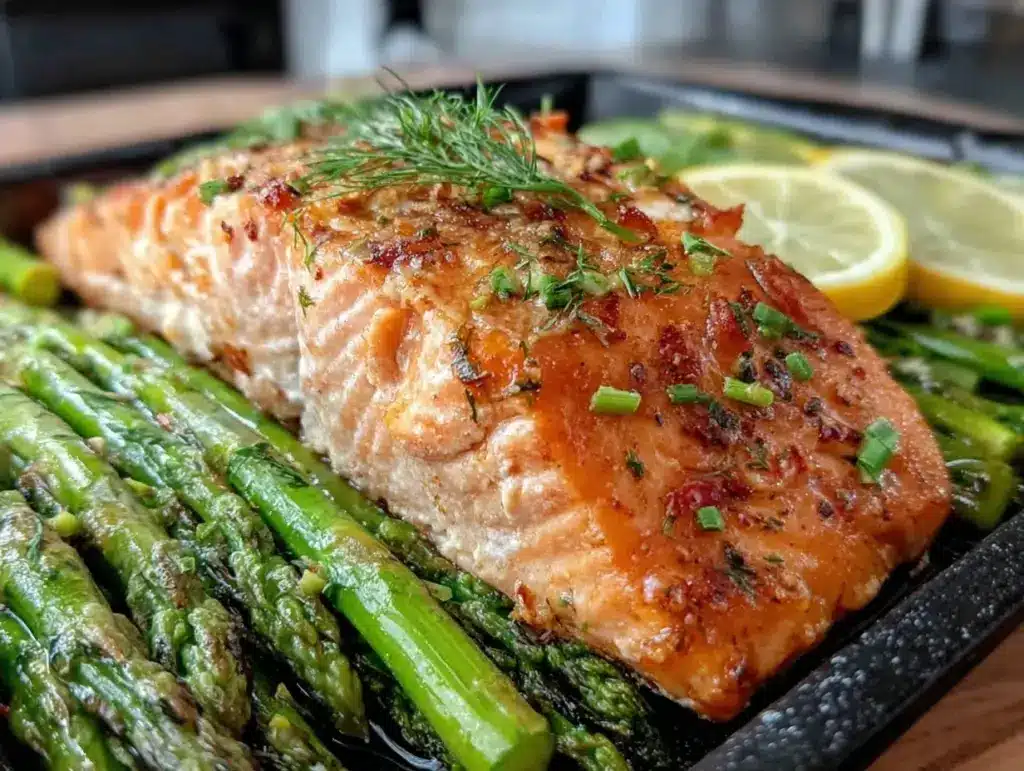
I have a confession to make. For the longest time, I treated salmon like it was this high-maintenance celebrity guest that required special handling, a specific playlist, and a very quiet dinner table. I’d buy it, stare at it in the fridge for three days, and then panic-cook it while it started to smell a little fishy. Spoiler alert: it never tasted good.
Then, about two years ago, I was feeling lazy. Not “I need a nap” lazy, but “I don’t want to wash five pots and a colander” lazy. I threw some salmon fillets on a baking sheet, tossed some asparagus next to it, drizzled olive oil and lemon juice over everything, and shoved it in the oven. I didn’t check on it. I didn’t fuss. I just waited.
When I pulled that sheet pan out, the kitchen smelled incredible—like a fancy spa day, but edible. The salmon was flaky, the asparagus had these perfect crispy edges, and there wasn’t a single dish to scrub except the baking sheet. It was so stupidly simple that I felt almost guilty for not making it sooner.
That was the moment I realized I didn’t need fancy techniques to make healthy seafood. I just needed a sheet pan and a little bit of faith. This Healthy Salmon and Asparagus Sheet Pan Dinner has been my anchor ever since. It’s the recipe I make when I want to eat well but don’t want to think about it. It’s the “if you can only make one thing this week, make this” kind of meal. And the best part? You really can’t mess it up. If you can pour oil and sprinkle salt, you can master this.
Why You’ll Love This Recipe
There are about ten reasons I keep coming back to this sheet pan salmon, but let’s be real. You don’t need ten reasons. You need to know that it works. Here is why this Healthy Salmon and Asparagus Sheet Pan Dinner belongs in your weekly rotation:
One Pan, Zero Drama — Seriously. You chop, you toss, you bake. That’s it. There is no sautéing, no watching a pan like a hawk, no splattering oil on your stove. Just a single baking sheet. If you hate doing dishes, this recipe is your new best friend. I’ve served this to friends who claim they “can’t cook,” and they were shocked at how easy it was.
Five Ingredients, Maximum Flavor — I’m not exaggerating. Salmon, asparagus, olive oil, lemon, and garlic (or garlic powder if you’re being lazy). That’s the whole list. But don’t let the simplicity fool you. The combination of bright lemon, salty fish, and earthy greens is restaurant-quality. It tastes like you spent an hour in the kitchen, but it takes about 15 minutes of actual work.
Foolproof Timing — Salmon cooks fast. Asparagus cooks fast. They finish at the exact same time. No more taking out the veggies while the fish is still raw, or vice versa. You throw them in together, and they come out together. It’s harmonious. It’s efficient. It’s perfect.
Healthy Without Being Boring — This isn’t “diet food” where you’re sad and hungry an hour later. Salmon is packed with protein and omega-3s. Asparagus is a nutritional powerhouse. But because we use olive oil and lemon, it feels indulgent. It feels like a treat. My kids actually ask for seconds, which is the highest compliment I can receive.
Pantry-Friendly — You probably have 80% of these ingredients right now. Even if you don’t have fresh asparagus, frozen works in a pinch (just thaw and pat dry first). This is the kind of recipe you can make on a random Tuesday in October or a sunny Sunday in July.
This is my go-to when I want to eat clean without feeling like I’m on a punishment diet. It’s reliable, it’s delicious, and it gets me out of the “what’s for dinner” rut faster than anything else.
Ingredients You’ll Need
Here’s the beauty of this Healthy Salmon and Asparagus Sheet Pan Dinner: the ingredient list is shorter than my grocery list for cereal. I’m particular about quality here, but not in a snobby way. Just in a “this makes a difference” way.
SALMON FILLETS (1.5 lbs / 680g) — I prefer wild-caught Atlantic or sockeye because they have better flavor and texture. Farmed is fine if that’s what your budget allows, but wild cooks a bit faster and has less fat. Look for fillets that are about 6 ounces each and roughly the same thickness so they cook evenly. Don’t buy those weird, jagged pieces from the center of the tray; ask the fishmonger for nice, even filets. It makes a huge difference.
FRESH ASPARAGUS (1 bunch / about 1 lb / 450g) — Look for spears that are bright green and firm. If the tips are wilting or brown, skip them. I like medium-thickness spears. Thin ones burn too fast, and thick ones take forever. If you can’t find fresh, you can use frozen asparagus spears, but you must thaw them completely and pat them super dry, or your sheet pan will end up steaming instead of roasting.
EXTRA VIRGIN OLIVE OIL (3 tablespoons / 45ml) — Use your good stuff here. Since there are so few ingredients, the oil is the main flavor carrier. I keep a bottle of mild extra virgin olive oil specifically for roasting veggies and fish. It adds that fruity, grassy note that makes everything taste fresh.
FRESH GARLIC (3 cloves, minced / or 1 tsp garlic powder) — Fresh garlic is ideal. Mince it finely so it doesn’t burn. If you’re in a rush, garlic powder works, but it won’t have that sharp, aromatic punch. Just don’t use the stuff in the green shaker bottle if you can help it—it’s too salty and dusty.
LEMON (1 large lemon) — You’ll use this for juice and zest. The acid cuts through the richness of the salmon and brightens the asparagus. If you don’t have fresh lemons, bottled lemon juice is a backup, but it lacks the floral notes of fresh. Squeeze it yourself. It takes five seconds and tastes worlds better.
SEA SALT AND BLACK PEPPER — Flaky sea salt is nice for finishing, but kosher salt is perfect for seasoning before cooking. Freshly cracked black pepper adds a little heat. Don’t skip the pepper; it balances the lemon.
OPTIONAL ADD-INS: I sometimes throw in cherry tomatoes (they burst and create a little sauce) or sliced red onion (if you like it sweeter). But honestly? The five ingredients above are all you need. Less is more.
Equipment Needed
You don’t need fancy gadgets for this. Here’s what I actually use, and why:
Large Baking Sheet — I use a standard half-sheet pan (18×13 inches). Make sure it’s big enough so the salmon and asparagus aren’t crowded. If they’re piled on top of each other, they’ll steam. We want them to roast. Parchment paper is optional but makes cleanup a breeze. I line mine every time because I hate scrubbing baked-on fish smell.
Small Bowl — For whisking the olive oil, lemon juice, and garlic. Keeps the mess to a minimum.
Knife and Cutting Board — For trimming the asparagus. A serrated knife works well if the stalks are woody.
Zester or Grater — For getting that lemon zest. If you don’t have one, just try to get the yellow part of the peel with your knife. Avoid the white pith; it’s bitter.
Spatula — A sturdy one for flipping the salmon if needed, though you mostly just pull it out when it’s done.
How to Make It: Step-by-Step
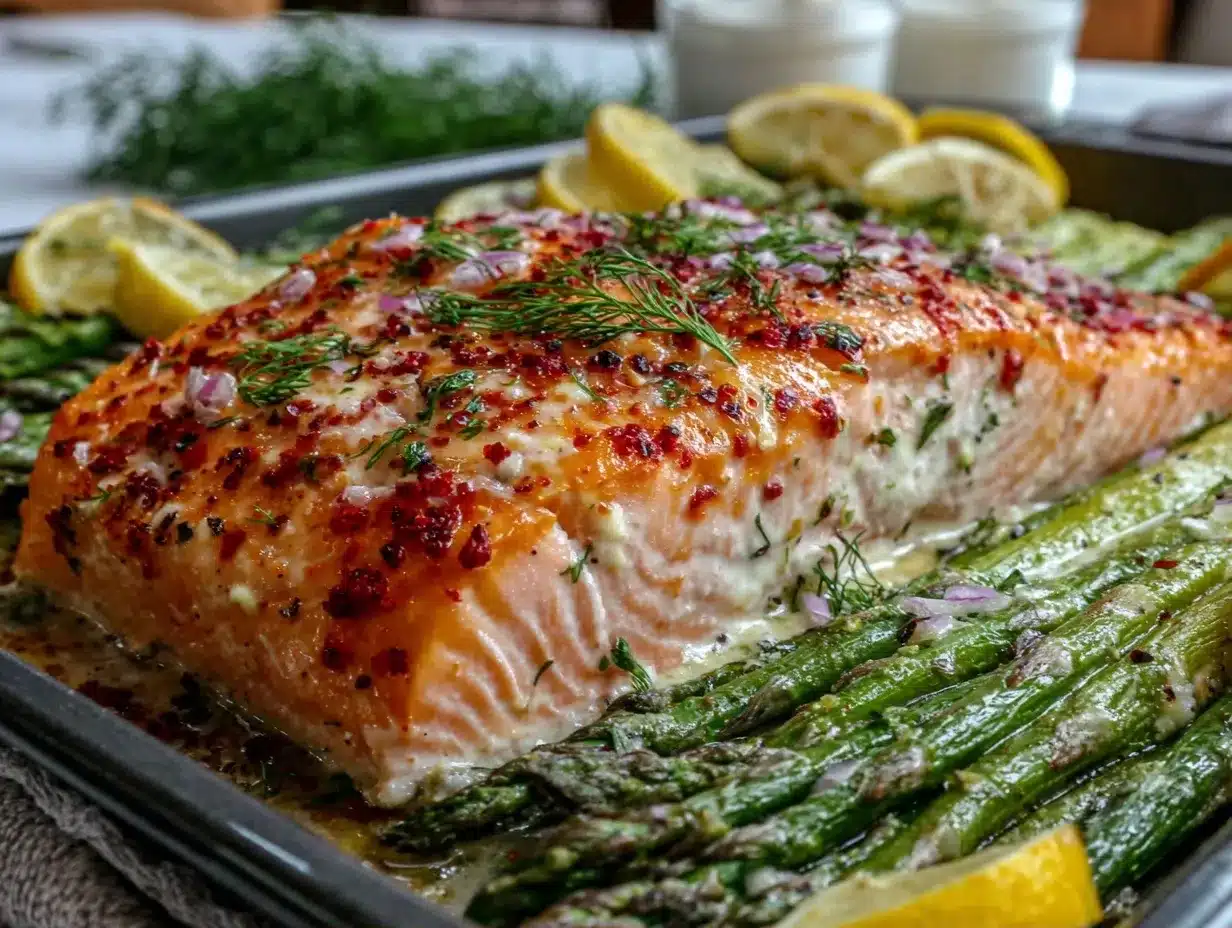
Alright, let’s make this! I’m walking you through exactly how I do it. It’s so simple that you might think I’m leaving something out, but I promise, that’s it.
Step 1: Prep Your Oven and Pan (2 minutes)
Preheat your oven to 400°F (200°C). This is the sweet spot. Lower temps make the fish dry out; higher temps burn the garlic. Line your baking sheet with parchment paper. It’s not strictly necessary, but it saves you from scrubbing the pan later. Trust me.
Step 2: Trim the Asparagus (3 minutes)
Wash the asparagus and pat it dry. Here’s the trick to trimming it quickly: grab a bunch of spears and bend them. They naturally snap at the point where the woody part ends and the tender part begins. Discard the tough ends. If you have thick spears, you might want to peel the bottom half with a vegetable peeler so they cook evenly, but for medium spears, just snapping is fine.
Step 3: Make the Dressing (1 minute)
In a small bowl, whisk together the olive oil, lemon juice, lemon zest, minced garlic, salt, and pepper. It should look like a cloudy, fragrant liquid. Taste it—it should taste bright and salty. If it tastes bland, add a pinch more salt.
Step 4: Arrange on the Sheet Pan (2 minutes)
Place the asparagus spears on one side of the baking sheet in a single layer. Drizzle half of the dressing over them and toss with your hands or tongs to coat. Place the salmon fillets on the other side of the pan. Drizzle the remaining dressing over the salmon. Make sure the salmon is in a single layer too. Don’t stack them!
Step 5: Roast (12-15 minutes)
Slide the pan into the oven. Bake for 12-15 minutes. The exact time depends on the thickness of your fillets. You’ll know it’s done when the salmon flakes easily with a fork and the asparagus is tender-crisp (fork-tender but with a slight bite). The salmon should be opaque throughout. If it’s still translucent in the middle, give it 2 more minutes.
Step 6: Serve
Remove from the oven. Let it rest for 2 minutes. This allows the juices to redistribute in the fish. Serve immediately, maybe with a squeeze of fresh lemon if you want extra zing. It’s that easy.
Expert Tips & Tricks
Here’s everything I’ve learned from making this dozens of times. These tips will save you from my early mistakes.
Don’t Overcook the Salmon
This is the #1 mistake. Salmon continues to cook slightly after you take it out of the oven. Pull it when it looks 90% done. Overcooked salmon is dry and rubbery. Undercooked is safe (if you like it rare) but usually people just want it flaky. Err on the side of slightly underdone.
Pat the Salmon Dry
Before you drizzle the oil, make sure the surface of the fish is dry. Wet fish steams. Dry fish roasts. If it’s sitting in a pool of water, blot it with a paper towel. It helps the seasoning stick better too.
Uniform Specks Help
If your asparagus spears vary wildly in thickness, trim the thick ones shorter. You want them to finish cooking at the same time as the thin ones. Uniformity = even cooking.
Garlic Burns Fast
If you’re using fresh minced garlic, keep an eye on the oven. Garlic can brown quickly at 400°F. If you notice it getting too dark, you can move the salmon to a slightly higher rack or tent the pan loosely with foil for the last few minutes.
Room Temp Fish
If you have time, let the salmon sit on the counter for 10-15 minutes before cooking. Cold fish going into a hot oven can cook unevenly. It’s not a dealbreaker, but it helps.
Variations & Substitutions
Once you’ve nailed the basic version, here’s how you can mix it up. I’ve tried all of these.
Herb-Crusted Version
Add 1 tablespoon of chopped fresh dill or parsley to the olive oil mixture. Dill and salmon are best friends. It adds a fresh, grassy note that pairs perfectly with the lemon.
Soy-Ginger Glaze
Swap the lemon juice for 2 tablespoons of soy sauce and 1 teaspoon of grated ginger. Add a teaspoon of honey. It’s a completely different flavor profile—Asian-inspired and savory. Great if you want to avoid citrus.
Spicy Kick
Add ½ teaspoon of red pepper flakes or a dash of cayenne to the oil mixture. If you like heat, this turns the meal into something bold and exciting.
Vegetarian Swap
Can’t eat fish? Use thick slices of firm tofu or even chickpeas. Toss them in the same oil mixture and roast. Tofu needs to be pressed well first, though. Chickpeas don’t need prep.
Gluten-Free
This recipe is naturally gluten-free. Just double-check your soy sauce if you use the Asian variation. Use tamari instead.
Serving & Storage
How to Serve:
I usually serve this straight from the sheet pan to the table. It looks rustic and keeps warm. I pair it with a simple side like quinoa, brown rice, or a crusty baguette to soak up the lemony oil. A green salad on the side is also nice if you want something lighter.
Leftovers:
Store leftover salmon and asparagus in an airtight container in the fridge for up to 3 days. The salmon will firm up a bit when cold, which is normal. It’s great cold in salads or warm the next day.
Reheating:
The best way to reheat is in a 350°F oven for 5-7 minutes. Avoid the microwave if you can—it tends to make the fish rubbery. If you must microwave, do it on low power for 30-second intervals.
Freezing:
I don’t recommend freezing this. The texture of the asparagus gets mushy, and the salmon loses its flakiness. It’s best fresh.
Nutrition Information
I’m not a nutritionist, but here’s the breakdown if you’re tracking. This is a high-protein, low-carb meal.
Per Serving (based on 4 servings):
- Calories: 320
- Protein: 28g
- Carbs: 6g
- Fiber: 3g
- Fat: 20g
- Sodium: 250mg (varies by salt used)
What’s Good:
Rich in Omega-3 fatty acids from the salmon. Good source of Vitamin D and B12. Asparagus provides folate and Vitamin K. It’s a nutrient-dense meal that keeps you full.
What to Know:
Higher in healthy fats from the olive oil and salmon. If you’re watching sodium, use low-sodium soy sauce (if using) and go easy on the salt.
My Take:
This is comfort food that doesn’t weigh you down. It’s light, fresh, and satisfying. I don’t feel sluggish after eating this, which is rare for dinner. It’s a win-win.
Final Thoughts
So that’s my go-to Healthy Salmon and Asparagus Sheet Pan Dinner! I’ve probably talked your ear off at this point, but when you make a recipe this often, you have a lot to say about it.
This meal has saved me from takeout more times than I can count. It’s my answer to “I want something healthy but I’m too tired to cook” when I’m actually not tired, just lazy. My family is happy, I’m happy because there’s one pan to wash, and we all get dinner on the table in under 20 minutes.
Make it yours! Try different herbs, swap the lemon for lime, or add some red pepper flakes. The best recipes are the ones you adapt to your tastes. And if you’re looking for other simple weeknight wins, you might also enjoy my honey garlic glazed salmon for when you want something sweeter, or my sheet pan chicken fajitas for a spicy twist.
If you make this, drop a comment and let me know what you think! I love hearing how recipes turn out in your kitchen. And if something doesn’t work, tell me that too—I’m here to help troubleshoot.
Happy cooking! And I hope your kitchen smells half as good as mine does right now.
Frequently Asked Questions
Can I use frozen salmon?
Yes, but you need to thaw it completely first. Pat it very dry with paper towels. If it’s wet, it will steam instead of roast. Thaw it in the fridge overnight or in a bowl of cold water. Fresh is always better for texture, but frozen works in a pinch.
How do I know when the salmon is done?
The easiest test is the fork test. Gently press a fork into the thickest part of the fillet and twist slightly. If the flesh flakes apart easily and is opaque (not translucent), it’s done. If it’s still jelly-like in the middle, give it 2 more minutes.
Can I add other vegetables?
Absolutely! Zucchini, bell peppers, and cherry tomatoes work great. Just keep in mind that some veggies cook faster than others. Harder veggies like carrots or potatoes need to be pre-cooked or cut very small. Softer veggies like zucchini can go in at the same time as the asparagus.
Why did my asparagus burn?
Probably the garlic. Garlic burns quickly at high heat. If you’re using fresh minced garlic, make sure it’s mixed well with the oil so it’s coated. If you notice it browning too fast, cover the pan loosely with foil for the last few minutes of cooking.
Can I make this in an air fryer?
Yes! Cook at 400°F for 8-10 minutes. You’ll need to do it in batches if your air fryer is small. Don’t overcrowd the basket. The result is slightly crispier on the edges, which is nice.
What sides go well with this?
Quinoa, couscous, roasted sweet potatoes, or a simple arugula salad with vinaigrette. I also love it with crusty bread to soak up the lemon oil. It’s versatile.
Pin This Recipe!
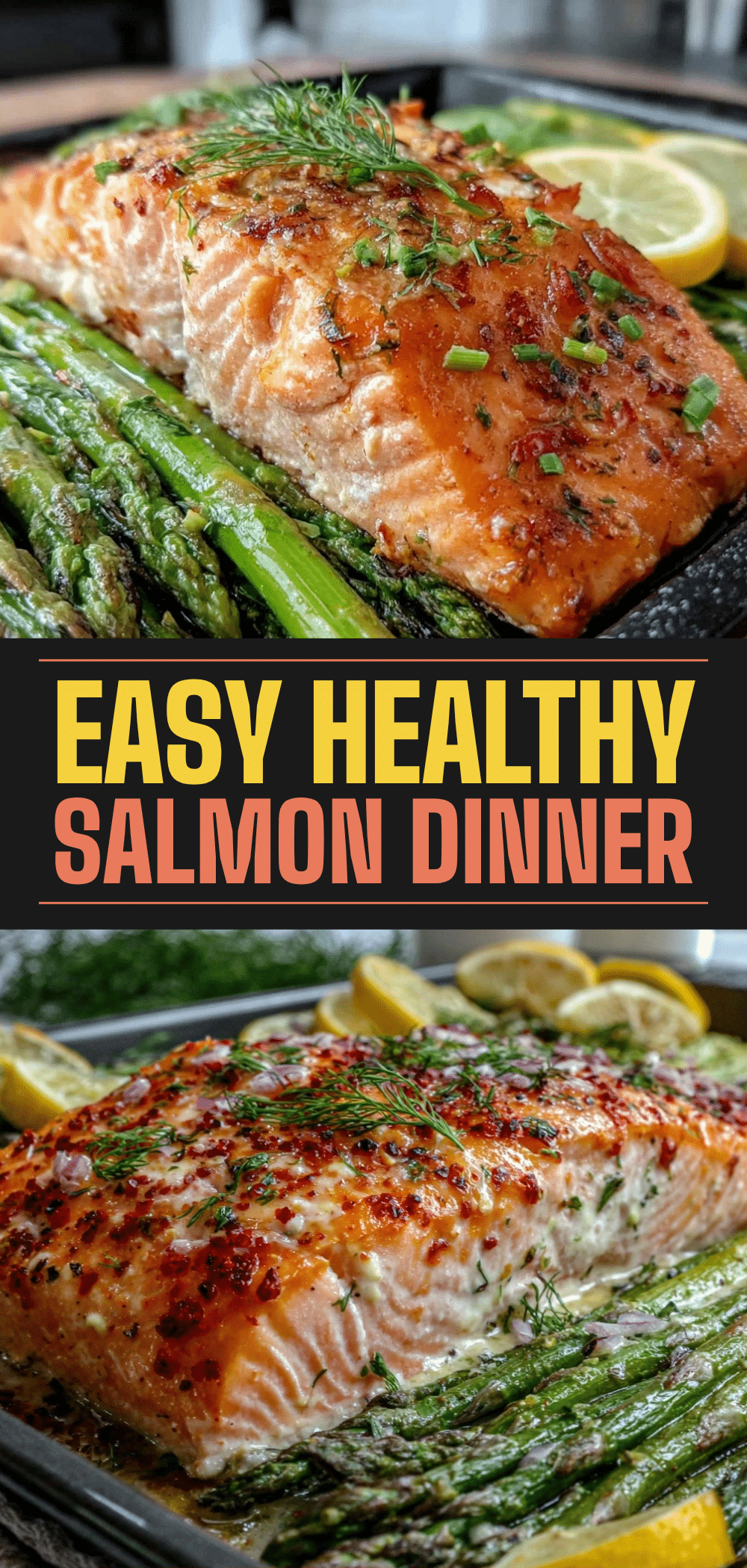
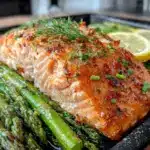
Healthy Salmon and Asparagus Sheet Pan Dinner: 5 Ingredients
- Total Time: 25 minutes
- Yield: 4 servings 1x
Description
A simple, foolproof sheet pan meal featuring wild-caught salmon and fresh asparagus roasted with olive oil, lemon, and garlic. It requires only five ingredients, minimal prep time, and results in a healthy, restaurant-quality dinner with easy cleanup.
Ingredients
- 1.5 lbs (680g) salmon fillets (wild-caught Atlantic or sockeye preferred)
- 1 bunch (about 1 lb / 450g) fresh asparagus spears
- 3 tablespoons (45ml) extra virgin olive oil
- 3 cloves fresh garlic, minced (or 1 tsp garlic powder)
- 1 large lemon (for juice and zest)
- Sea salt and black pepper to taste
Instructions
- Preheat oven to 400°F (200°C). Line a large half-sheet baking pan (18×13 inches) with parchment paper.
- Wash and pat dry the asparagus. Trim the woody ends by bending the spears until they snap naturally. If spears are thick, peel the bottom half.
- In a small bowl, whisk together the olive oil, lemon juice, lemon zest, minced garlic, salt, and pepper to create a dressing.
- Pat the salmon fillets dry with paper towels to ensure proper roasting.
- Arrange asparagus spears in a single layer on one side of the baking sheet. Drizzle with half the dressing and toss to coat.
- Place salmon fillets in a single layer on the other side of the pan. Drizzle with the remaining dressing.
- Roast in the preheated oven for 12-15 minutes, or until the salmon flakes easily with a fork and is opaque throughout, and the asparagus is tender-crisp.
- Remove from oven and let rest for 2 minutes before serving immediately.
Notes
[‘Do not overcrowd the pan; ingredients must be in a single layer to roast rather than steam.’, ‘Pat salmon dry before seasoning to prevent steaming.’, ‘Salmon continues to cook slightly after removal from the oven; pull it when it looks 90% done.’, ‘Fresh minced garlic burns quickly at 400°F; monitor closely or tent with foil if browning too fast.’, ‘For best results, let salmon sit at room temperature for 10-15 minutes before cooking.’, ‘Frozen asparagus can be used if thawed completely and patted very dry.’, ‘Leftovers store in the fridge for up to 3 days; reheat in a 350°F oven for 5-7 minutes.’]
- Prep Time: 10 minutes
- Cook Time: 15 minutes
- Category: Main Course
- Cuisine: American
Nutrition
- Serving Size: 1 fillet and approx.
- Calories: 320
- Sugar: 2
- Sodium: 250
- Fat: 20
- Saturated Fat: 3
- Carbohydrates: 6
- Fiber: 3
- Protein: 28
Keywords: salmon, asparagus, sheet pan dinner, healthy seafood, easy weeknight dinner, gluten-free, omega-3, one pan meal, lemon garlic salmon