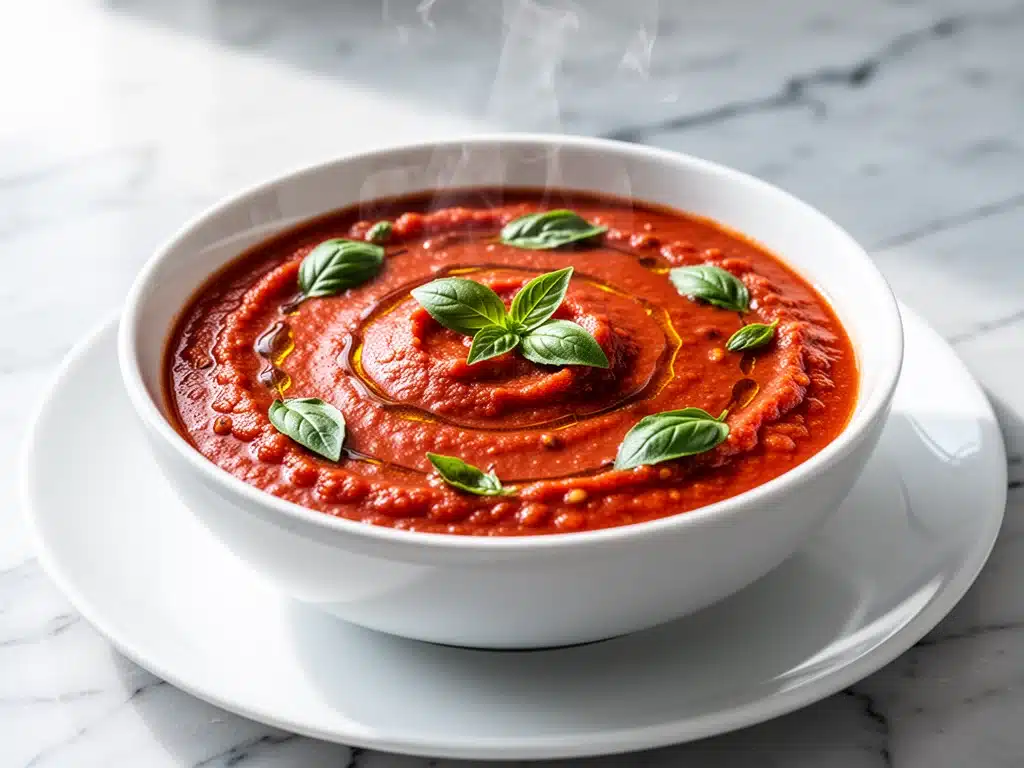
I still remember the summer I decided to can my first batch of marinara. I was standing in my kitchen, surrounded by jars that looked suspiciously like glass bricks, holding a ladle like it was a weapon. I had followed a recipe from a dusty cookbook my grandmother left behind, and what came out of the pot was… fine. It was edible. It was red. But it lacked soul. It tasted like tomatoes, sure, but it didn’t taste like summer. It didn’t taste like the vine-ripened, sun-warmed, garlicky goodness I was craving when the weather turned cold.
That batch of sauce sat in my pantry for six months. I used it once for a quick weeknight pasta, and my husband took one bite and asked, “Did the store-bought jar leak into the homemade batch?” Ouch.
So, I did what any obsessed home cook does: I started over. And over. And over again. I tested different roasting methods, played with herb blends, and even tried adding a splash of balsamic (spoiler: it didn’t work). The breakthrough happened when I stopped trying to boil the tomatoes down and started roasting them. Seriously. Roasting changes everything. It concentrates the sugars, caramelizes the edges, and creates this deep, complex flavor profile that boiling just can’t touch.
After 14 failed attempts and a lot of kitchen cleanup, I finally nailed it. This homemade roasted tomato marinara is rich, velvety, and packed with flavor. It’s the sauce I reach for when I want to impress guests or when I just need a hug in a bowl. And the best part? It’s incredibly easy to can, meaning you’ll have jars of this liquid gold ready to go all year long. Your pantry will thank you.
Why You’ll Love This Roasted Tomato Marinara
There are a lot of tomato sauce recipes out there. So why make this one? Here’s the real talk on why this roasted tomato marinara has become the backbone of my kitchen and why I’m confident it’ll become yours too.
- Deep, Complex Flavor — Roasting the tomatoes first caramelizes their natural sugars. This isn’t your average acidic, watery sauce. It’s sweet, savory, and deeply tomato-forward. I’ve blindfolded my kids for taste tests, and they can always pick this one out.
- Perfect for Canning — This recipe is specifically designed for water bath canning. The acidity levels are safe, the consistency is thick enough to hold up in jars, and it preserves beautifully. No more buying overpriced, sugary store-bought sauce in January.
- Freezer-Friendly Too — Not ready to can? No problem. This sauce freezes beautifully. I make a double batch, freeze half in quart bags, and have ready-made sauce for crispy baked chicken nuggets or spaghetti night in minutes.
- Simple Ingredients — You don’t need a pantry full of obscure spices. Just tomatoes, garlic, onions, olive oil, and a few herbs. If you can make pasta, you can make this.
- Versatile Base — This isn’t just for spaghetti. It’s amazing over meatballs, in lasagna, as a pizza base, or even as a dipping sauce for turkey cheddar pinwheels. It’s the ultimate kitchen workhorse.
Once you taste this, you’ll never want to go back to jarred sauce. It’s that simple.
Ingredients You’ll Need
One of the beauties of this homemade roasted tomato marinara is how few ingredients it uses. But quality matters, especially when you’re canning. Here’s what you need to get that perfect balance of sweetness and acidity.
For the Roasted Tomatoes
Plum Tomatoes (Roma) (6 pounds / 2.7 kg) — These are non-negotiable. They have less water and more flesh than beefsteak or cherry tomatoes, which means less boiling down and a thicker sauce. Look for ones that are bright red and slightly soft to the touch.
Extra Virgin Olive Oil (1/4 cup / 60ml) — Use a good quality oil here. You’ll taste it. I don’t skimp on this because it carries the flavor of the roasted tomatoes.
Garlic Cloves (10-12 cloves) — Yes, that many. Roasting mellows the garlic, turning it sweet and nutty. Don’t be shy. Fresh cloves only—jarred garlic has a metallic taste that ruins the balance.
Yellow Onion (1 large, chopped / about 250g) — Adds sweetness and body. I use yellow because they caramelize beautifully in the oven.
Sea Salt (1 tablespoon) — Helps draw out moisture and enhances flavor. Adjust to taste, but don’t skip it.
For the Simmering Sauce
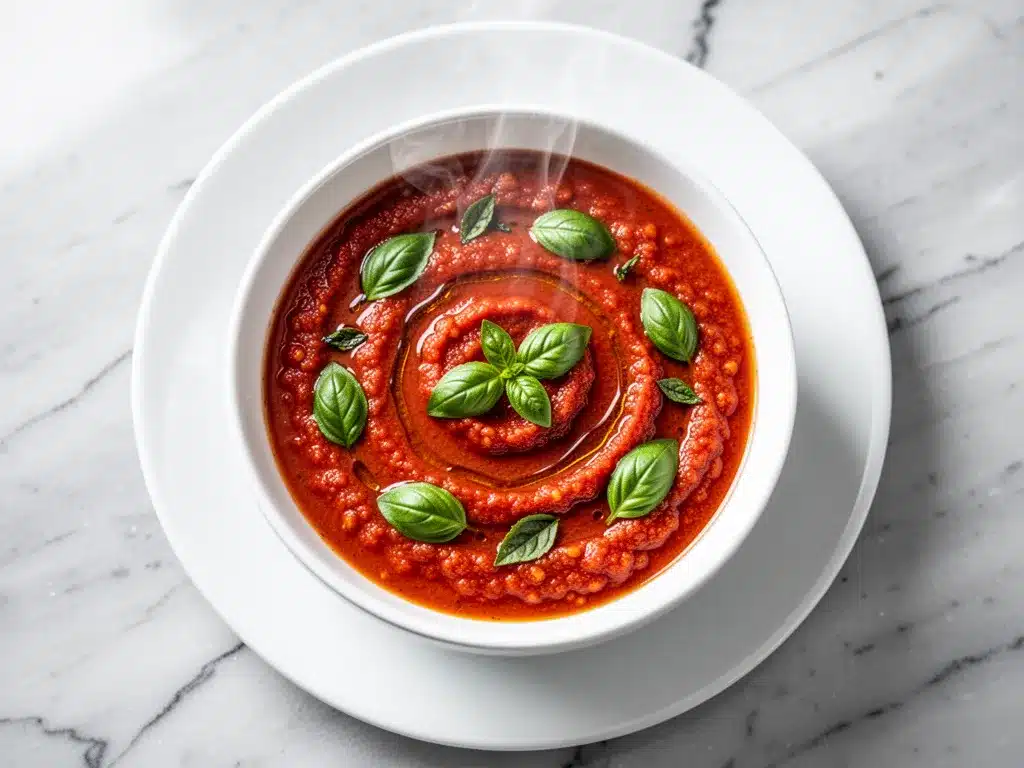
Crushed Tomatoes (Canned) (2 cans / 28 oz each) — I use San Marzano crushed tomatoes for the base. They have a low acidity and sweet flavor that complements the roasted tomatoes perfectly. If you can’t find San Marzano, any high-quality crushed tomato works.
Tomato Paste (2 tablespoons) — This thickens the sauce and adds a deep, umami richness. It’s the secret weapon for a restaurant-quality texture.
Dried Basil (2 teaspoons) — I prefer dried basil for canning because it holds its flavor better during the long cooking process. Fresh basil can turn black and muddy in preserved sauces.
Dried Oregano (1 teaspoon) — Adds that classic Italian herb note. Use Mediterranean oregano if you can find it—it’s more potent.
Red Pepper Flakes (1/2 teaspoon) — Optional, but I recommend it. Just a hint of heat balances the sweetness of the roasted tomatoes.
Black Pepper (1/2 teaspoon) — Freshly ground is best.
Balsamic Vinegar (1 tablespoon) — I know, I said no earlier, but a *tiny* splash at the end brightens everything up without making it taste like vinegar. Use a good quality one.
For Canning
Lemon Juice (Bottled) (1/4 cup) — This is crucial for safety. Bottled lemon juice has a consistent acidity level, which is required for safe water bath canning. Fresh lemon juice can vary in acidity, so stick to bottled for canning.
Canning Salt (1 teaspoon, optional) — I use canning salt because it doesn’t contain anti-caking agents that can cloud the sauce. Table salt works in a pinch, but you might get a slightly cloudy jar.
Equipment Needed
You don’t need a professional kitchen to make this. Here’s what I actually use, and what you can substitute.
Large Sheet Pans (2 large) — You need enough room to roast the tomatoes and onions in a single layer. Crowding them will steam them instead of roast them. I use two half-sheet pans.
Immersion Blender or Food Processor — I prefer an immersion blender because it’s easier to clean and I can blend the sauce directly in the pot. A food processor works too, but be careful—it can make the sauce too smooth. I like a little texture.
Large Stockpot (8-quart minimum) — You’ll be simmering a big batch. A heavy-bottomed pot prevents scorching. My 8-quart stainless steel pot is my best friend for this.
Water Bath Canner — A large pot with a rack that holds your jars submerged in water. You can use a large stockpot if you don’t have a dedicated canner, as long as the jars are covered by at least an inch of water.
Canning Jars (7-8 half-pint jars) — Standard mason jars work best. Make sure they’re free of chips or cracks.
Ladle, Funnel, and Jar Lifter — These are cheap tools that make the process so much easier. I can’t imagine canning without a funnel—it’s a game-changer for keeping your rims clean.
Non-Metallic Utensil — For removing air bubbles. A chopstick or a plastic bubble remover works fine.
How to Make It: Step-by-Step
Alright, let’s get to work. This process takes about 2-3 hours, mostly hands-off roasting and simmering. Here’s exactly how I do it.
Step 1: Prep and Roast the Tomatoes (30 minutes active, 45 minutes roasting)
Preheat your oven to 400°F (200°C). Wash the Roma tomatoes and trim off the stems. You don’t need to peel them—the skins add body and will break down during roasting. Chop the tomatoes in half lengthwise. Roughly chop the onion. Toss the tomatoes and onions on two large sheet pans with olive oil, salt, and minced garlic. Roast for 45 minutes, or until the tomatoes are wrinkled, caramelized, and starting to brown at the edges. This roasting step is what gives the sauce its depth.
Step 2: Blend the Roasted Vegetables
Let the roasted tomatoes cool slightly. Transfer them to a food processor or use an immersion blender to puree them directly in the pan. I like to leave a few small chunks for texture, but you can blend it completely smooth if you prefer. Set aside.
Step 3: Build the Sauce
In your large stockpot, combine the roasted tomato puree, the canned crushed tomatoes, tomato paste, dried basil, oregano, red pepper flakes, and black pepper. Stir well to combine. Bring the mixture to a gentle boil over medium-high heat, then reduce to a low simmer.
Step 4: Simmer and Reduce
Let the sauce simmer uncovered for 45-60 minutes, stirring occasionally. You want it to reduce and thicken. It’s ready when it coats the back of a spoon and leaves a clear trail when you run your finger through it. Taste and adjust seasoning. Add the lemon juice and balsamic vinegar now. Stir and simmer for 5 more minutes.
Step 5: Prep for Canning
While the sauce simmers, wash your jars and keep them hot in the canner or a separate pot of water. Heat your lids in a small saucepan of warm water (not boiling, just warm). This ensures the seals will form properly.
Step 6: Jar the Sauce
Using a jar funnel, ladle the hot sauce into the hot jars, leaving 1/2 inch of headspace. Wipe the rims with a clean, damp cloth to remove any residue—this is crucial for a good seal. Place the lids on the jars and screw on the bands fingertip-tight (don’t overtighten).
Step 7: Water Bath Processing
Place the jars in the water bath canner, ensuring they are covered by at least 1-2 inches of water. Bring the water to a rolling boil. Process half-pint jars for 35 minutes. If you’re making quart jars, process for 40 minutes. Adjust for altitude if you’re above 1,000 feet.
Step 8: Cool and Store
Remove the jars from the water and let them cool on a towel for 12-24 hours. You’ll hear the satisfying “ping” as they seal. Check the seals by pressing the center of each lid—it shouldn’t flex. Store in a cool, dark place for up to 12 months.
Expert Tips for Perfect Canning
I’ve made enough mistakes to save you from them. Here’s what I’ve learned.
Acidity is Safety — Never skip the lemon juice or citric acid. Tomatoes can be variable in acidity, and adding acid ensures the pH is low enough to prevent botulism. This isn’t optional.
Headspace Matters — Leave exactly 1/2 inch of headspace. Too little, and the sauce might sputter out during processing. Too much, and you might not get a proper vacuum seal.
Wipe the Rims — Any bit of sauce on the rim will prevent the lid from sealing. Use a clean cloth dipped in vinegar or hot water to wipe each rim before adding the lid.
Don’t Overtighten — Screw the bands on until they’re “fingertip tight.” If you crank them down, air can’t escape during processing, and the lids might pop off or not seal properly.
Altitude Adjustments — If you live above 1,000 feet, you must increase your processing time. At 1,001-3,000 feet, add 5 minutes. At 3,001-6,000 feet, add 10 minutes. This is critical for safety.
Variations & Substitutions
Once you’ve mastered the basic roasted tomato marinara, here are some fun ways to mix it up.
Spicy Arrabbiata — Add 1-2 teaspoons of red pepper flakes or a diced jalapeño with the garlic. Great for spicy pasta dishes.
Herb-Infused — Add a sprig of fresh rosemary or thyme to the roasting pan. It adds a woody, aromatic note that’s amazing.
Sweet & Tangy — Add 1/4 cup of red wine vinegar and 1 tablespoon of brown sugar to the simmering sauce. This version is perfect for meatballs.
Vegetable-Packed — Roast bell peppers or carrots along with the tomatoes for a sweeter, more complex sauce. Puree everything together.
Serving & Storage
How to Serve: This sauce is versatile. Toss it with your favorite pasta, use it as a base for lasagna, or serve it over grilled chicken. It’s also delicious as a dip for crusty bread.
Storage: Properly canned jars will last up to 12 months in a cool, dark place. Once opened, refrigerate and use within 7-10 days.
Reheating: Gently warm the sauce in a saucepan over low heat. If it’s too thick, add a splash of water or broth.
Nutrition Information
I’m not a nutritionist, but here’s the breakdown per 1/2 cup serving (based on 10 servings).
- Calories: 65
- Protein: 2g
- Carbs: 12g
- Fiber: 2g
- Sugar: 7g
- Fat: 1g
- Sodium: 150mg
It’s a relatively low-calorie, nutrient-dense sauce. The tomatoes provide lycopene, which is an antioxidant that’s actually more bioavailable when tomatoes are cooked. So yes, this is good for you.
Final Thoughts
Making your own roasted tomato marinara is a labor of love. It takes time, yes. But the reward is having jars of pure, flavorful sauce that you made with your own hands. It’s better than anything you’ll buy at the store, and it’s a great way to preserve the summer harvest.
I hope this recipe helps you build a pantry you’re proud of. If you make it, I’d love to hear how it turns out. Drop a comment below with your tips or questions. Happy canning!
Frequently Asked Questions
Can I use fresh tomatoes instead of canned?
Yes, but you’ll need to peel and seed them first, and the yield will be lower. Roma tomatoes are best for this. Roasting them first, as I describe, is the key to getting enough flavor and thickness.
Why did my jars not seal?
Common reasons include dirty rims, damaged lids, or not enough processing time. Make sure you wiped the rims clean and used new lids every time. If a jar doesn’t seal within 24 hours, refrigerate it and use it within a week.
Can I freeze this sauce instead of canning?
Absolutely. Let it cool completely, then freeze in freezer-safe bags or containers. Leave 1/2 inch of headspace for expansion. It will last up to 6 months in the freezer.
Do I need to add sugar?
Not if you roast the tomatoes. Roasting brings out the natural sweetness. If your tomatoes are very acidic, you can add a teaspoon of sugar, but taste first.
Can I use citric acid instead of lemon juice?
Yes. Use 1/4 teaspoon of citric acid per half-pint jar, or 1/2 teaspoon per quart jar. This is often preferred for canning because it’s more consistent than lemon juice.
Pin This Recipe!
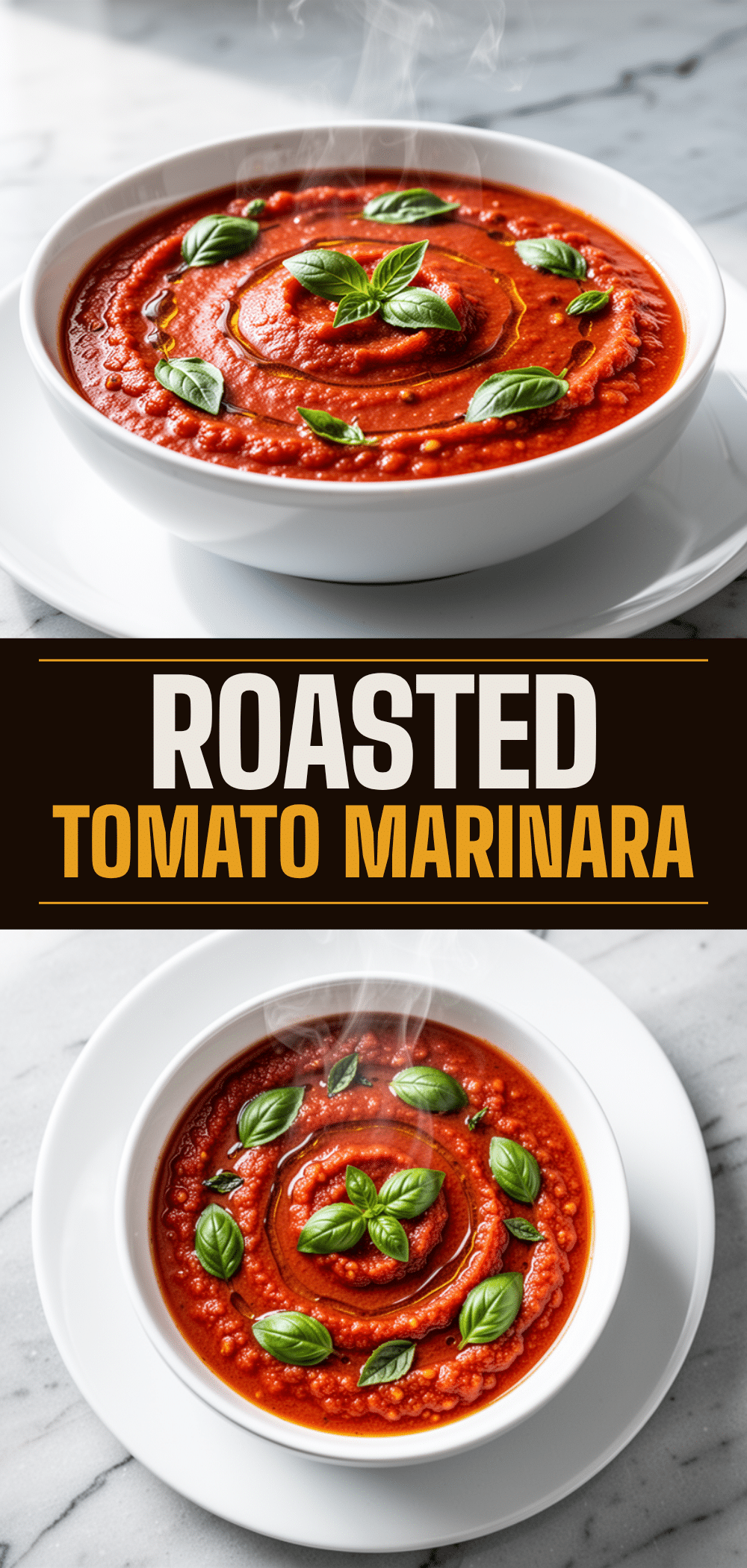
Homemade Roasted Tomato Marinara: Easy Canning Recipe
- Total Time: 2 hours 30 minutes
- Yield: 7-8 half-pint jars 1x
Description
A rich, velvety homemade roasted tomato marinara sauce that is perfect for canning. By roasting the tomatoes first, this recipe concentrates natural sugars for a deep, complex flavor that is superior to store-bought alternatives.
Ingredients
- 6 pounds (2.7 kg) Plum Tomatoes (Roma), halved
- 1 large Yellow Onion, chopped
- 10–12 cloves Garlic, minced
- 1/4 cup (60ml) Extra Virgin Olive Oil
- 1 tablespoon Sea Salt
- 2 cans (28 oz each) Crushed Tomatoes (San Marzano recommended)
- 2 tablespoons Tomato Paste
- 2 teaspoons Dried Basil
- 1 teaspoon Dried Oregano
- 1/2 teaspoon Red Pepper Flakes (optional)
- 1/2 teaspoon Black Pepper, freshly ground
- 1 tablespoon Balsamic Vinegar
- 1/4 cup Bottled Lemon Juice
- 1 teaspoon Canning Salt (optional)
Instructions
- Preheat oven to 400°F (200°C). Wash tomatoes, trim stems, and halve lengthwise. Roughly chop the onion.
- Toss tomatoes, onions, olive oil, salt, and minced garlic on two large sheet pans in a single layer.
- Roast for 45 minutes until tomatoes are wrinkled, caramelized, and browning at the edges.
- Let roasted vegetables cool slightly. Puree them using an immersion blender or food processor, leaving some texture if desired.
- In an 8-quart stockpot, combine roasted tomato puree, canned crushed tomatoes, tomato paste, dried basil, oregano, red pepper flakes, and black pepper.
- Bring mixture to a gentle boil over medium-high heat, then reduce to a low simmer.
- Simmer uncovered for 45-60 minutes, stirring occasionally, until sauce thickens and coats the back of a spoon.
- Stir in lemon juice and balsamic vinegar. Simmer for 5 more minutes.
- While sauce simmers, wash canning jars and keep hot. Heat lids in warm water.
- Ladle hot sauce into hot jars, leaving 1/2 inch headspace. Wipe rims clean.
- Place lids and bands on jars, tightening fingertip-tight.
- Process jars in a water bath canner covered by 1-2 inches of water. Process half-pint jars for 35 minutes (quarts for 40 minutes). Adjust for altitude if above 1,000 feet.
- Remove jars and let cool on a towel for 12-24 hours. Check seals and store in a cool, dark place.
Notes
Acidity is crucial for safety; do not skip the bottled lemon juice. Leave exactly 1/2 inch headspace in jars. Wipe rims clean to ensure a proper seal. If living above 1,000 feet, increase processing time by 5-10 minutes depending on altitude. This sauce can also be frozen for up to 6 months.
- Prep Time: 30 minutes
- Cook Time: 2 hours
- Category: Condiments
- Cuisine: Italian
Nutrition
- Serving Size: 1/2 cup
- Calories: 65
- Sugar: 7
- Sodium: 150
- Fat: 1
- Carbohydrates: 12
- Fiber: 2
- Protein: 2
Keywords: roasted tomato marinara, homemade pasta sauce, canning recipe, water bath canning, tomato sauce, Italian sauce, preserve tomatoes


