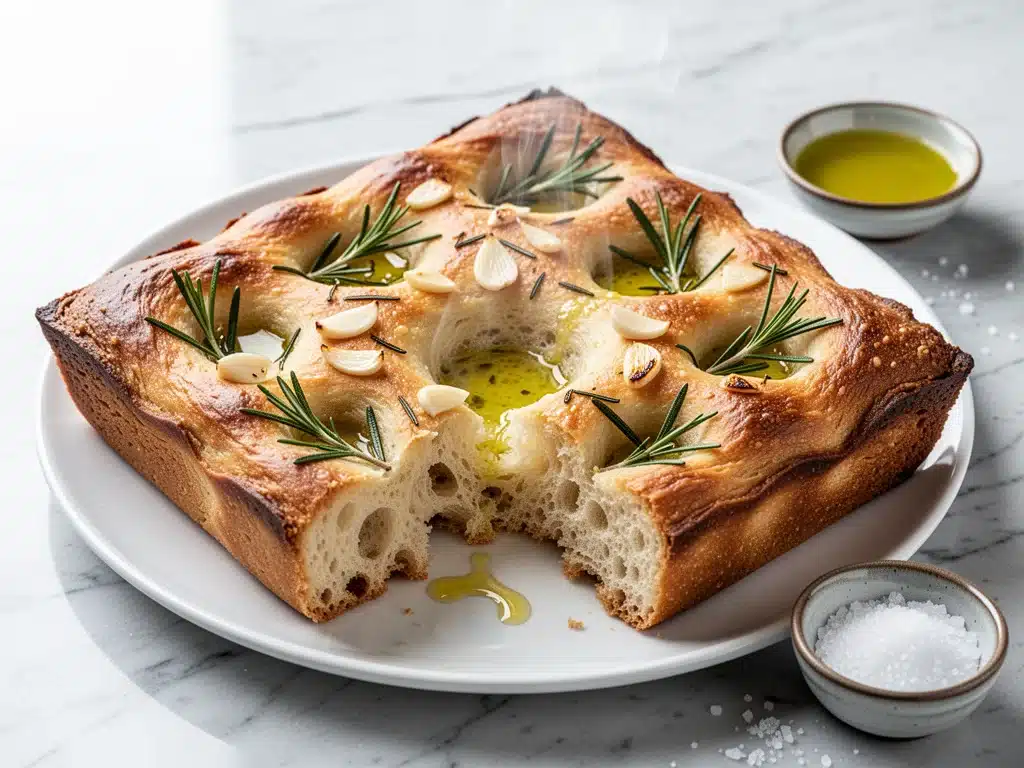
I still remember the exact moment I knew I’d never buy store-bought bread again. It was a rainy Tuesday in November, the kind of day where the cold seeps into your bones and you just want something warm and comforting. I had a half-risen ball of dough sitting on my counter, looking a bit sad and deflated. I was worried I’d ruined it. But then I pressed my fingers into it, drizzled it with olive oil, scattered rosemary and garlic, and put it in the oven. When it came out an hour later, the kitchen smelled like an Italian bakery. The crust was shatteringly crisp, the inside was pillowy soft, and the aroma of garlic and rosemary made my husband walk into the kitchen without even being asked. That was the day I fell in love with rosemary garlic focaccia. It’s not just bread; it’s a hug in food form.
I’ve made this recipe dozens of times since then, tweaking the garlic amount, the rosemary ratio, and the hydration level until I landed on the perfect balance. This isn’t a complicated sourdough project that requires three days of starter feeding. This is a straightforward, forgiving yeast bread that rewards you with restaurant-quality results. Whether you’re serving it alongside a hearty soup or just tearing into it straight from the pan with your hands, this rosemary garlic focaccia has a way of making any meal feel special. It’s become my go-to for impressing guests without spending hours in the kitchen.
What makes this bread so addictive is the texture. The dimples hold pools of olive oil that crisp up in the oven, creating these little pockets of savory goodness. The garlic gets roasted until it’s sweet and mellow, and the rosemary adds that piney, aromatic kick. It’s simple, yes, but it’s also deeply flavorful. I’ve served this at dinner parties where people were asking for the recipe before the main course even arrived. It’s the kind of bread that disappears fast, so you might want to make two loaves. Trust me, you won’t regret it.
Why You’ll Love This Recipe
There are plenty of bread recipes out there, but this rosemary garlic focaccia stands out for reasons that go beyond just taste. Here’s why it has earned a permanent spot in my weekly rotation:
- Stupidly Simple — Seriously, if you can mix flour and water, you can make this. I’ve walked my teenage son through the entire process over the phone while I was at work. No kneading machine, no complex techniques. Just mix, rise, dimple, bake.
- Lightning Fast (For Bread) — While yeast breads usually take all day, this one is ready in about 2.5 hours from start to finish. That includes rising time, but you’re only actively working for about 20 minutes. It’s perfect for a weekend project or even a slow weeknight.
- Impressive Results — It looks like something you’d buy from a high-end bakery. The golden crust, the glistening olive oil, the fresh herbs—it’s visually stunning. I’ve served this to food-savvy friends who were shocked to hear it came from my home oven.
- Super Versatile — It’s great on its own, but it also elevates other meals. I use it for dipping, for sandwiches, or as a side to grilled meats. It pairs beautifully with crispy baked chicken nuggets for a kid-friendly dinner or with a simple salad for a light lunch.
- Freezes Like a Dream — This bread actually tastes better the day after it’s baked. And if you have leftovers (unlikely, but possible), it freezes beautifully. Just reheat it in the oven to crisp up the crust.
This recipe has saved me more times than I can count. When I’m hosting a last-minute dinner or just want something homemade and comforting, I know I can pull this together. It’s reliable, delicious, and always makes people happy.
Ingredients You’ll Need
One of the best things about this rosemary garlic focaccia is how few ingredients it uses. You probably have most of them in your pantry already. Here’s what you need and why each one matters:
For the Dough
Warm Water (1 cup / 240ml) — The water needs to be warm, not hot. Think bathwater temperature. If it’s too hot, it’ll kill the yeast; too cold, and it won’t activate properly. I test it on my wrist—it should feel warm, not burning.
Active Dry Yeast (2 packets / 14g) — Standard yeast works great. You don’t need fancy sourdough starter for this. Just make sure it’s not expired. If it’s been sitting in your cupboard for years, it might be tired.
Granulated Sugar (1 tablespoon) — This feeds the yeast and helps with browning. You can use honey if you prefer, but sugar is what I always have on hand.
All-Purpose Flour (3 ½ to 4 cups / 450-500g) — I use all-purpose flour because it gives that perfect balance of chew and softness. Bread flour makes it chewier, which is nice, but all-purpose is more forgiving for beginners.
Salt (2 teaspoons) — Essential for flavor. Don’t skip it. I use kosher salt, but table salt works too—just use a bit less.
Extra Virgin Olive Oil (2 tablespoons, plus more for the pan) — This is non-negotiable. Good olive oil makes a huge difference in the flavor of the dough and the crust. I keep a bottle of decent quality oil specifically for bread baking.
For the Topping
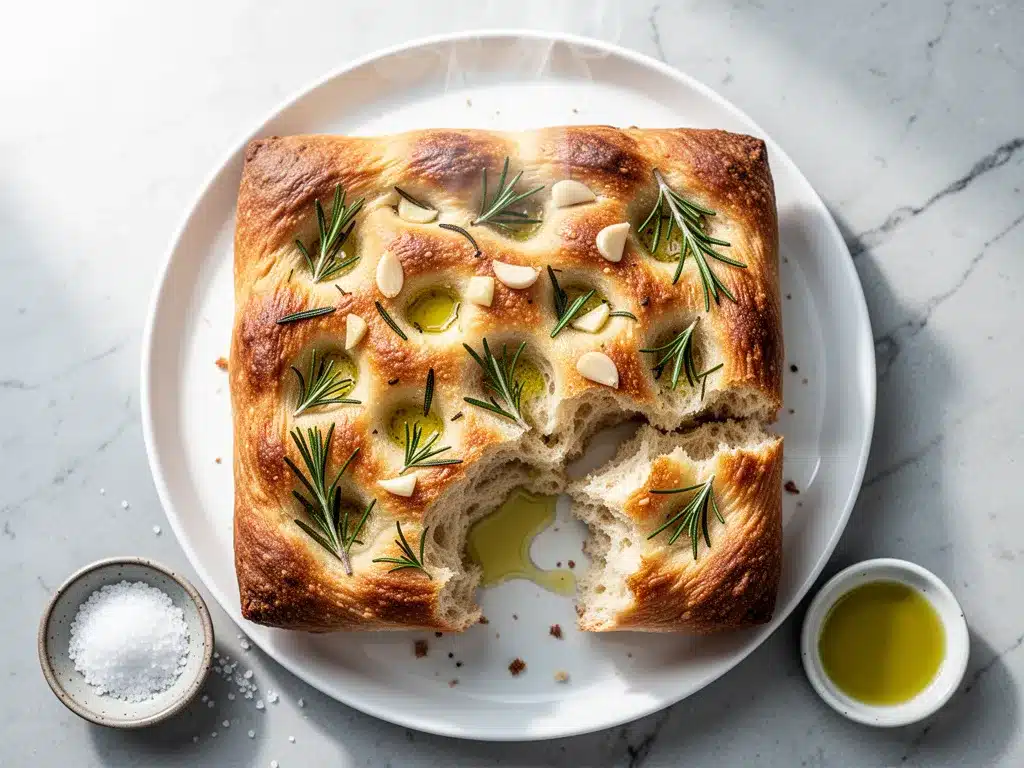
Garlic Cloves (4-6 cloves, minced) — Fresh garlic only. No jarred stuff. Mince it finely so you get those little bursts of flavor in every bite. I like to use 6 cloves because I’m a garlic lover, but 4 is plenty for most people.
Fresh Rosemary (2-3 sprigs, leaves stripped and chopped) — Fresh rosemary is key. Dried rosemary is too woody and lacks the bright, piney aroma. If you can’t find fresh, you can use dried, but reduce the amount to 1 teaspoon.
Flaky Sea Salt (for finishing) — This is the secret weapon. Sprinkling flaky salt on top before baking gives you those crunchy, savory bites that contrast with the soft bread. I love Maldon salt for this.
Optional: Parmesan Cheese (½ cup, grated) — If you want an extra layer of savory flavor, sprinkle some parmesan on top with the garlic and rosemary. It melts into the crust and adds a delicious umami boost.
Equipment Needed
You don’t need fancy equipment to make this rosemary garlic focaccia. Here’s what I actually use:
9×13 Inch Baking Pan — A metal pan works best because it conducts heat well and helps crisp the bottom. Glass or ceramic pans work too, but the bottom might not get as crispy. I use a standard baking pan, not a deep dish.
Mixing Bowl — A large bowl for mixing the dough. I like a glass bowl because I can see through it to check the consistency.
Measuring Cups and Spoons — Standard stuff. I recommend using a kitchen scale for the flour if you want precise measurements, but volume works fine too.
Plastic Wrap or Damp Towel — To cover the dough while it rises. This keeps the surface from drying out.
Parchment Paper — Optional, but I like to line the pan with parchment for easy cleanup. It also helps prevent sticking.
Pastry Brush — For brushing the top with olive oil. A silicone brush is great because it’s easy to clean.
Fork or Fingertips — To create the dimples. I use my fingertips because it’s more satisfying, but a fork works if you’re in a hurry.
How to Make It: Step-by-Step
Alright, let’s make this rosemary garlic focaccia! I’m walking you through exactly how I do it, including the little tricks I’ve picked up over the years.
Step 1: Activate the Yeast (5 minutes)
In a large mixing bowl, combine the warm water, sugar, and yeast. Stir gently and let it sit for 5-10 minutes. You’ll know it’s ready when it becomes foamy and bubbly on top. If it doesn’t foam, your yeast might be dead, and you’ll need to start over. This step ensures your bread will rise properly.
Step 2: Mix the Dough (10 minutes)
Add the olive oil and salt to the yeast mixture. Then, gradually add the flour, one cup at a time, stirring with a wooden spoon or dough hook. Stop adding flour when the dough starts to come together and pull away from the sides of the bowl. It should be slightly sticky but not wet. Don’t add too much flour, or your bread will be dense.
Step 3: Knead the Dough (5-10 minutes)
Turn the dough out onto a lightly floured surface. Knead it for 5-10 minutes until it’s smooth and elastic. If you’re using a stand mixer, use the dough hook on medium speed. The dough should pass the “windowpane test”—stretch a small piece thin enough to see light through it without tearing. This develops the gluten and gives the bread its chew.
Step 4: First Rise (1-2 hours)
Place the dough in a lightly oiled bowl, turning to coat. Cover with plastic wrap or a damp towel. Let it rise in a warm, draft-free spot for 1-2 hours, or until it has doubled in size. This is when the magic happens—the yeast creates air bubbles that make the bread light and airy.
Step 5: Prepare the Pan and Second Rise (30 minutes)
Preheat your oven to 425°F (220°C). Generously oil your 9×13 baking pan. Transfer the dough to the pan and press it out to the edges. If the dough resists, let it rest for 5 minutes, then try again. Cover and let it rise again for 30 minutes. This second rise ensures the bread is light and fluffy.
Step 6: Add Toppings and Dimple (5 minutes)
Remove the cover. Drizzle the top with olive oil. Using your fingertips, press deep dimples into the dough all over. Push down until your fingers reach the bottom of the pan. This is the signature look of focaccia. Scatter the minced garlic and chopped rosemary over the top. Press them gently into the dimples so they stick. Sprinkle with flaky sea salt (and parmesan, if using).
Step 7: Bake (20-25 minutes)
Bake for 20-25 minutes, or until the top is golden brown and the bottom sounds hollow when tapped. If the top is browning too quickly, tent it with foil. Let it cool in the pan for 5 minutes, then transfer to a wire rack. The smell will drive you crazy—it’s that good.
Expert Tips & Tricks
Here’s everything I’ve learned from making this rosemary garlic focaccia dozens of times. These tips will save you from my mistakes.
Don’t Overbake — The bread continues to cook after you take it out of the oven. Remove it when it’s golden, not dark brown. Overbaked focaccia is dry and tough.
Use Good Olive Oil — Since the oil is a key flavor component, don’t skimp. Use a high-quality extra virgin olive oil for the best taste. Cheap oil can taste bitter or metallic.
Let It Cool — It’s tempting to slice into it immediately, but let it cool for at least 10 minutes. The steam inside needs to settle, or the bread will be gummy.
Customize Your Toppings — While rosemary and garlic are classic, you can add cherry tomatoes, sliced olives, or caramelized onions. Just press them into the dough before baking.
Store Properly — Store leftovers in an airtight container at room temperature for up to 3 days. For longer storage, freeze slices in a freezer bag. Reheat in the oven to crisp up.
Variations & Substitutions
Once you’ve mastered the basic version, here’s how you can mix it up. I’ve tried all of these:
Sun-Dried Tomato and Basil — Skip the rosemary and garlic. Add chopped sun-dried tomatoes and fresh basil leaves. Drizzle with a bit of balsamic glaze after baking for a tangy twist.
Herb and Cheese — Add a mix of dried oregano, thyme, and basil to the dough. Sprinkle with mozzarella cheese before baking for a cheesy, herby bread.
Garlic and Jalapeño — Add finely chopped jalapeños along with the garlic for a spicy kick. Great with crispy baked chicken nuggets for a fun dip.
Gluten-Free — Use a 1:1 gluten-free flour blend. The texture will be slightly different, but it still works. Add a bit more water if the dough seems too dry.
Dairy-Free — This recipe is naturally dairy-free, but if you add cheese, use a dairy-free alternative. The base dough has no dairy, so it’s easy to modify.
Serving & Storage
This rosemary garlic focaccia is versatile and delicious in many ways. Here’s how I serve and store it:
How to Serve: Tear it into chunks and serve warm. It’s perfect for dipping into olive oil and balsamic vinegar, or alongside a bowl of tomato soup. I also use it for sandwiches, especially with crispy baked chicken nuggets for a kid-friendly meal.
Side Dishes: Pair it with a simple green salad, roasted vegetables, or a hearty stew. It’s also great with turkey cheddar pinwheels for a lunch spread.
Storage: Store in an airtight container at room temperature for up to 3 days. For longer storage, freeze slices in a freezer bag. Reheat in the oven at 350°F for 10 minutes to crisp up.
Freezing: This bread freezes well. Wrap individual slices in plastic wrap and then in foil. Thaw at room temperature or reheat directly from frozen.
Nutrition Information
I’m not a nutritionist, but here’s the breakdown if you’re tracking. Per serving (based on 12 servings):
- Calories: 220
- Protein: 5g
- Carbs: 32g
- Fiber: 1g
- Sugar: 2g
- Fat: 8g
- Saturated Fat: 1g
- Cholesterol: 0mg
- Sodium: 350mg
This bread is relatively high in carbs due to the flour, but it’s also a good source of energy. The olive oil adds healthy fats. If you’re watching your intake, pair it with a protein-rich meal to balance it out.
Final Thoughts
So that’s my go-to rosemary garlic focaccia! I’ve probably talked your ear off at this point, but when you make a recipe this often, you have a lot to say about it. This bread has saved weeknight dinners more times than I can count. It’s my answer to “what’s for dinner” when I’m tired, don’t want takeout, and still want something that tastes really good. My kids are happy, my husband’s happy, and I’m happy because I’m not stressed about cooking.
Make it yours! Try different add-ins, swap in your favorite vegetables, adjust the garlic (though more is always better in my opinion). The best recipes are the ones you adapt to your family’s tastes. If you make this, drop a comment and let me know what you think! I love hearing how recipes turn out in your kitchen. And if something doesn’t work, tell me that too—I’m here to help troubleshoot. Happy cooking! And I hope your kitchen smells half as good as mine does right now.
Frequently Asked Questions
Q: Can I use bread flour instead of all-purpose flour?
A: Yes, you can. Bread flour will give you a chewier, denser crumb, which some people prefer. All-purpose flour gives a softer, lighter texture. I use all-purpose because it’s more forgiving for beginners.
Q: Why didn’t my dough rise?
A: This usually means the yeast was dead or the water was too hot. Make sure your water is warm, not hot, and check the expiration date on your yeast. If the yeast didn’t foam in step 1, start over with fresh yeast.
Q: Can I make this ahead of time?
A: Yes! You can mix the dough the night before and let it rise slowly in the fridge. In the morning, take it out, let it come to room temperature, and continue with the recipe. This can actually improve the flavor.
Q: How do I get those deep dimples?
A: Use your fingertips, not a fork. Press down firmly until your fingers reach the bottom of the pan. The dough should be well-risen before you dimple it, or it will spring back.
Q: Can I freeze this bread?
A: Absolutely. Let it cool completely, then wrap slices in plastic wrap and foil. Freeze for up to 3 months. Reheat in the oven to crisp up the crust.
Q: What if I don’t have fresh rosemary?
A: You can use dried rosemary, but use less. Dried herbs are more potent. Use 1 teaspoon of dried rosemary for every 2 tablespoons of fresh. Chop it finely to distribute the flavor.
Q: Can I add cheese to this?
A: Yes! Parmesan, mozzarella, or gouda all work well. Sprinkle it on top with the garlic and rosemary before baking. Just be aware that cheese can burn if the oven is too hot, so keep an eye on it.
Pin This Recipe!
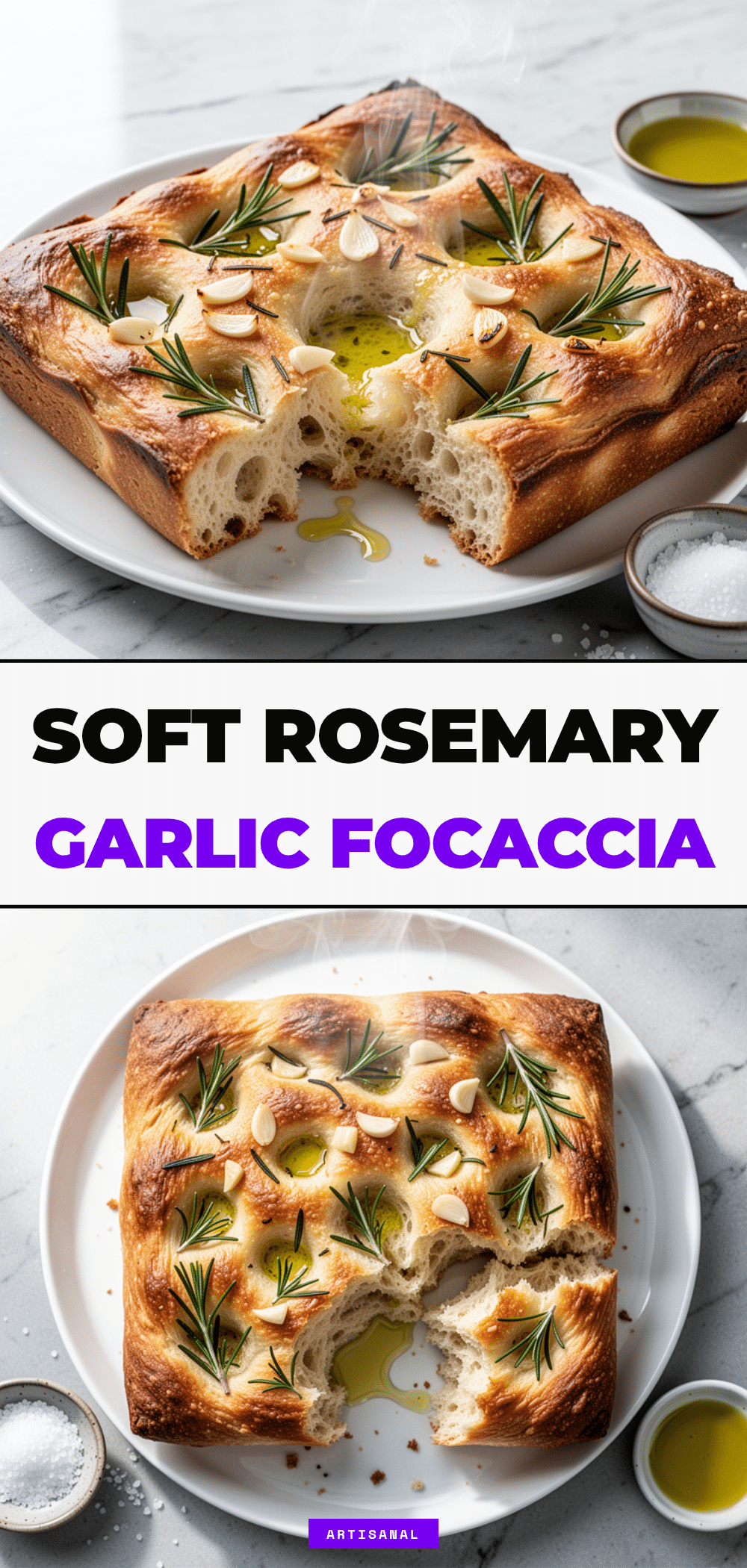
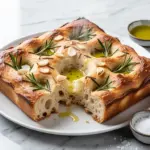
Rosemary Garlic Focaccia: 3 Easy Steps
- Total Time: 2.5 hours
- Yield: 12 servings 1x
Description
A straightforward, forgiving yeast bread that rewards you with restaurant-quality results. This rosemary garlic focaccia features a shatteringly crisp crust, pillowy soft interior, and pools of savory olive oil, rosemary, and roasted garlic.
Ingredients
- 1 cup (240ml) warm water
- 2 packets (14g) active dry yeast
- 1 tablespoon granulated sugar
- 3 ½ to 4 cups (450-500g) all-purpose flour
- 2 teaspoons salt
- 2 tablespoons extra virgin olive oil (plus more for the pan)
- 4–6 cloves garlic, minced
- 2–3 sprigs fresh rosemary, leaves stripped and chopped
- Flaky sea salt (for finishing)
- Optional: ½ cup grated Parmesan cheese
Instructions
- In a large mixing bowl, combine warm water, sugar, and yeast. Stir gently and let sit for 5-10 minutes until foamy and bubbly.
- Add olive oil and salt to the yeast mixture. Gradually add flour, one cup at a time, stirring until the dough comes together and pulls away from the sides. It should be slightly sticky.
- Turn dough onto a lightly floured surface and knead for 5-10 minutes until smooth and elastic, passing the windowpane test.
- Place dough in a lightly oiled bowl, cover with plastic wrap or a damp towel, and let rise in a warm spot for 1-2 hours until doubled in size.
- Preheat oven to 425°F (220°C). Generously oil a 9×13 inch baking pan. Transfer dough to the pan, press to edges, cover, and let rise for 30 minutes.
- Drizzle top with olive oil. Use fingertips to press deep dimples into the dough all over. Scatter minced garlic and chopped rosemary over the top, pressing gently into dimples. Sprinkle with flaky sea salt and Parmesan (if using).
- Bake for 20-25 minutes until golden brown and bottom sounds hollow when tapped. Tent with foil if browning too quickly. Cool in pan for 5 minutes, then transfer to a wire rack.
Notes
Ensure water is warm, not hot, to avoid killing the yeast. Use high-quality extra virgin olive oil for best flavor. Let bread cool for at least 10 minutes before slicing to prevent gumminess. Store leftovers in an airtight container at room temperature for up to 3 days, or freeze for longer storage.
- Prep Time: 20 minutes
- Cook Time: 25 minutes
- Category: Side Dish
- Cuisine: Italian
Nutrition
- Serving Size: 1 slice
- Calories: 220
- Sugar: 2
- Sodium: 350
- Fat: 8
- Saturated Fat: 1
- Carbohydrates: 32
- Fiber: 1
- Protein: 5
Keywords: rosemary garlic focaccia, Italian bread, yeast bread, homemade focaccia, easy bread recipe, garlic bread, rosemary bread